The Writer and the Underground Man
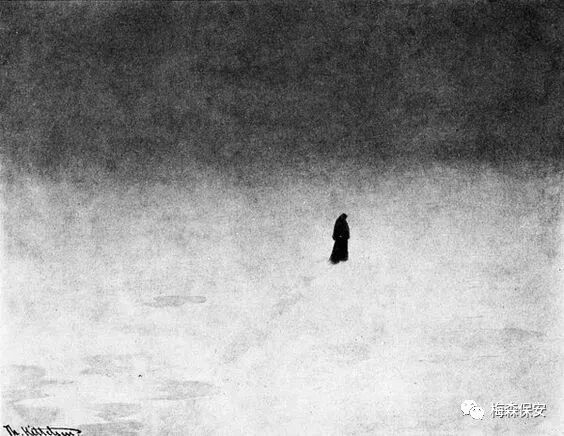
Underground Man was the name the Writer gave Underground Man. It echoed a famous book the Writer had not read. And Writer was Underground Man's form of address for the Writer.
Underground Man had lived for a long time in the basement of an old residential compound. A long time could be divided into two phases. During the first, Underground Man still went aboveground frequently. His activities there included work, eating in restaurants, dates (with no more than three women), and night runs (when his weight fluctuated violently).
During the second, Underground Man hardly left the basement. His room circulated air with limited efficiency through one quarter of a window (the other three quarters were below ground). Seen from outside, the window resembled the slot of a letterbox, or a neatly cut mouse hole. When parking an electric scooter, a resident of the compound would intentionally or unintentionally brush dust into the basement. It settled on Underground Man's bed, the takeout boxes beside it, and the various plastic wrappers.
During this phase, Underground Man never complained. He hid where daylight could hardly reach (fortunately, because the window was small, this area occupied most of the basement). He played mobile games. As one can see, Underground Man no longer performed any occupation aboveground. Instead, he piled great quantities of time into a perennially popular mobile game with a stable virtual-to-real transaction model, helping paying clients acquire various treasures in exchange for a meager income in the real world.
Then the mobile game's developer changed its strategy, further squeezing the space available to free players. The value of Underground Man's time dropped sharply. Through the rapid decline of his savings (from an already small base), Underground Man perceived the ominous trend. His solution was online microloans, endorsed by celebrities, offered by taxi, takeout, shopping, and even search platforms. Before long, he needed to borrow money from several acquaintances who had never realized he had vanished from the human world, in order to repay the loans. After that, he borrowed from people from his home region whom he barely knew in the great city.
One of these people casually complained to another friend about Underground Man's ridiculous conduct. The other friend made a mental note, because concern for people at society's margins was among his many writing projects awaiting commencement. This was the opening through which the Writer entered Underground Man's life.
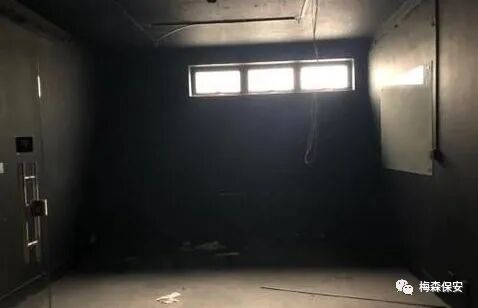
The Writer and Underground Man met in the basement. In preparation for the Writer's visit, Underground Man tidied the room for the first time in a long while, switched on a small electric fan to circulate the air, and went aboveground to take out the rubbish. The surface caused him tremendous discomfort. Several meters short of the bins, he hurled every bag he carried. Takeout boxes, disposable chopsticks, underwear never washed, tissues covered in semen scattered through the air. He turned his back and ran toward the basement with greater speed and resolve than during any of his night runs, then gasped, shaken.
Underground Man waved to the Writer from the entrance of the old building. He stood halfway along the stairs between basement and ground level, so the Writer saw only a head and a hand slightly above it, apparently waving. The Writer followed Underground Man. Underground Man walked ahead with his back hunched, continually turning to make sure the Writer had not lost him.
On the way, the Writer passed the homes of other underground people. Half their doors stood open. Many basements housed more than one underground person. An absence of sound was the common feature of these rooms. Underground Man lived at the far end of the basement level. He pushed open his door. There was no lock.
Underground Man offered the Writer a bottle of Coke he had treasured for a long time. The Writer politely declined. Underground Man invited him to sit on the cleanest portion of the bed (because of the angle, the compound resident with questionable motives could never brush dust into that spot) and closely watched the Writer's face change. The reactions he feared—the Writer covering his nose or knitting his brows—did not occur.
But Underground Man suspected that they did not occur because the Writer deliberately prevented them, so as not to give him the impression that the Writer considered him inferior or abnormal. Underground Man thought this proved precisely that he was an inferior and abnormal person with a disproportionate sense of self-respect. Otherwise, no one would need to protect his feelings. After all, why would a writer care about the life of a normal person? Before the Writer even began, Underground Man had resolved to disclose his life in full. Before a person filled with kindness, it would be shameful to pretend he was normal.
The Writer asked whether he minded being called Underground Man. A name, the Writer believed, always produced misunderstanding and problems of privacy, whereas a designation did not, because a designation presupposed fiction and the unreliability of reference.
Underground Man said he did not mind. Would you mind if I called you Writer? he asked.
The Writer smiled and shook his head.
Without many questions from the Writer, Underground Man began narrating his life. He devoted a great deal of space to the appearance and personality of the three women he had dated (one of whom had made it clear that Underground Man misunderstood the nature of their meeting: she did, not, in any way, consider it a date). In his description, every woman was impossibly radiant, talkative, brilliant, and kind.
When speaking of his own activities aboveground, however, Underground Man equivocated, passing over them with words such as “work” and “eating out.” The Writer asked him to use less abstract language: what work had he done? Which restaurants? What cuisine had he eaten most often?
Underground Man fell silent. Not because he intentionally avoided the truth, but because habitual forgetfulness made the questions difficult to answer. He could offer only a certain impression. He once had a job that required a great deal of talking. He seemed often to stand where crowds were thick. Sales, perhaps? About his more recent and completely subterranean life, he could say even less. Once he named the mobile game that had drawn him into trouble, he lost speech entirely.
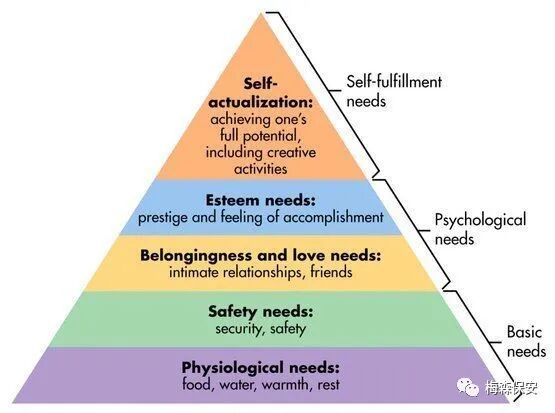
The Writer listened to Underground Man's account. When Underground Man became speechless, the Writer attempted a provisional summary. This both confirmed whether he had understood correctly and provided clues for further description. Citing Maslow's hierarchy of needs, the Writer drew Underground Man a pyramid on a piece of paper. Physiological needs lay at the bottom. Then safety, love and belonging, esteem, and, at the peak, self-actualization.
Human beings possess these five ascending levels of need. Do you agree? the Writer asked.
Underground Man spent little time understanding the pyramid and more studying the Writer's expression.
I agree, he declared boldly, as though placing a wager.
Good. According to the two phases you just described, the highest point you once reached was here—the Writer pointed to love and belonging—and now, to put it somewhat unpleasantly, you are only here. He pointed to physiological needs.
Underground Man examined the chart.
Mm. You must know more about this than I do.
The Writer analyzed: If, simplistically, we divide your experience into an aboveground and an underground period, was there some decisive sudden event between them? Or some apparently insignificant event that evoked a depression from childhood, even infancy?
Can babies be depressed? Underground Man asked.
The instant your mouth leaves your mother's nipple, the Writer said. You realize the external world is no longer a phantom limb you can manipulate at will.
Actually, I don't have strong impressions of either parent, Underground Man said. I'm not sure it was Mother who nursed me.
That is unimportant, the Writer said.
Underground Man suddenly understood. Are you saying I might have made my life worse and worse because I was depressed?
Let us preserve the possibility for now, the Writer said. But I prefer caution with the word depression. Today, its meaning and category have become so broad that it can describe every state while precisely describing none.
But I hope you will not pay too much attention to the use of words, the Writer continued. Turn your attention instead to recalling your own concrete experience. My responsibility is the opposite of a doctor's. A doctor uses a library of treatments corresponding to a whole disease category to solve your individual problem. I hope to begin from your individual problem and reveal the predicament of an entire group. The group may never have been named; perhaps a qualitative name would dilute the complexity of what it faces. What matters is that through you, through the problem of you alone, the group is revealed, as a biologist discovers a mushroom or a mathematician a prime number. This is why I call you Underground Man. Underground Man is not only you.
While Underground Man contemplated this, the Writer changed strategies and presented a new question:
For now, let us stop speaking of aboveground and underground periods. Let us assume that the two are continuous, with a common thread. All right? Now, if you recall the whole of your life, can you find a motif that concerns and encompasses everything you consider important?
Everyone has a motif, the Writer added. Every moment of a life seems to echo it across a distance. Freedom, for example. Love. And people who possess these motifs often lack the quality the motif demands: a weak person longs for freedom, an indifferent person for love. Of course, the motif need not be an abstract word. It can be money, bread, sex.
As Underground Man continued to digest and consider the new question, the Writer hinted: Equality, perhaps?
The Writer's acuity startled Underground Man into a cold sweat, but Underground Man honestly told him that equality was important, but not yet—not the motif.
The Writer smiled as he had when first entering the room, then quietly waited for Underground Man's answer. Underground Man had long possessed the answer, but took considerable time to speak it. Saying an abstract word embarrassed him, especially since the Writer had asked him to avoid using abstractions to summarize his life. In the end, courage did not arrive. Guilt at making the Writer wait so long made him open his mouth.
Words, he said.
Works? the Writer asked. In the aesthetic sense? Works of art, such as oil paintings?
No. Words as in speaking, Underground Man said. My motif is words.
The Writer remained composed and nodded at an appropriate rhythm.
Why? he asked.
He asked not because he did not know the answer, but because his training required the subject, rather than himself, to offer the interpretation aloud. Otherwise, the future narrative would be unfair and monophonic.
But Underground Man said, I won't say.
Why won't you say? the Writer asked.
Don't want to talk anymore, Underground Man said.
They sat silently on the bed. The Writer looked at Underground Man with encouragement. Underground Man avoided his eyes out of shame.
Finally, the Writer took out two hundred yuan and offered it to Underground Man.
Please continue speaking, he said.
Underground Man returned the money. Sorry, he said. I really won't talk anymore.
Faced with Underground Man's wavering gaze, the Writer firmly stuffed the two hundred yuan into his hand. Then don't talk. But please take this. You need it.
No need, no need, Underground Man said quietly.
But the Writer was resolute, and the two hundred yuan remained in Underground Man's palm.
The Writer said goodbye and left the basement. Through one quarter of a window, Underground Man watched him go.