The Man Who Eats Napkins
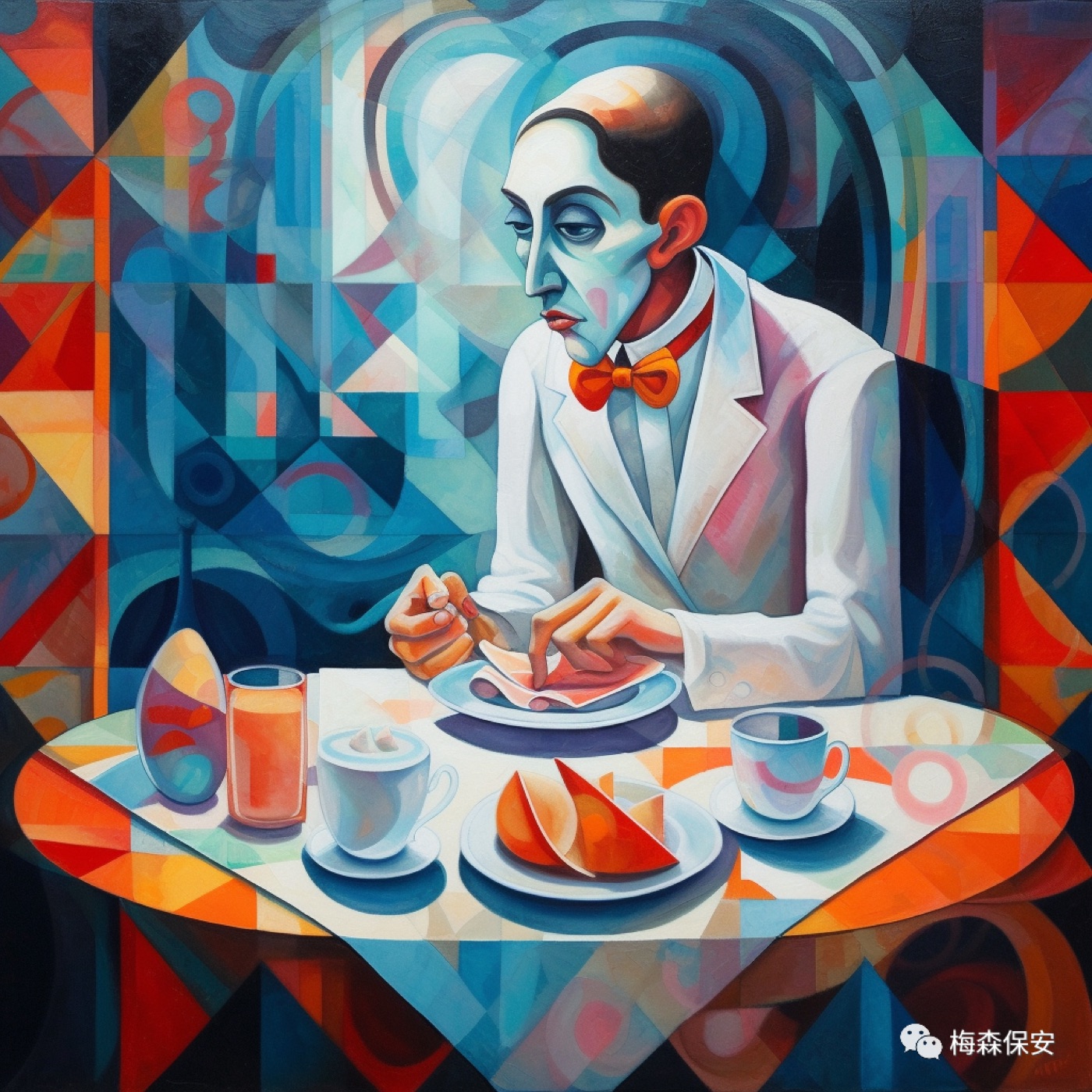
All right. He likes eating napkins. But to begin our examination from this feature would be unfair. It would be like examining the man's accidents before his form, placing our gaze upon his branches and leaves before asking what kind of person he is or what history produced him. Of course, this method of examination is a shortcut and good for attracting attention. One popular idea says that a person is, first of all, his branches and leaves.
We shall see, at the opening of the first act, how he stares beneath the bedroom's night-light at the half-empty pack of Vinda tissues on his bedside cabinet. Excluding the quarter-pack used to blow his nose, wipe his mouth, and masturbate, he has eaten the other quarter. He has even eaten most of the former—the Vinda tissues already used by various routes. The taboo of their filth lends tremendous excitement to his eating, though he would never admit it under any circumstances. He does not admit the pleasure of dirt. Nor can he accept his habit of eating tissues. So he turns his head away and pretends there is no half-eaten pack beside him.
If at this moment a hidden teardrop camera is filming him—this is how he thinks; he always feels someone watching, especially in these secret moments—the picture shows him calmly reading a book or sliding a finger across his phone. His toes emerge from the white bedding because it is a season uncertain between spring and summer and he feels hot. He is about to sleep. Perhaps he will soon turn off the night-light. Yet his head possesses one angle toward which it absolutely will not turn, and the Vinda tissues happen to lie within the field of vision at that angle.
Then his left hand gropes through this region where his eyes could under no circumstances be looking and quickly locates the tissues. The hand proceeds to hide the pack beneath the pillow. Thus, even if he suddenly turns his head and reaches the angle currently inaccessible to him, he cannot see the bodily form of the pack; and because he has already eaten half of that body, the remaining half is inviting him to eat it too. Therefore, he must not see it. No one eats tissues, including him. Still less would anyone want to watch another person eat tissues with relish, especially him.
At this hour, one in the morning, his mind is already unclear, like every normal person's. He gives a long yawn and uses his right hand to set tomorrow morning's alarm. But after completing its mission of hiding the tissues, his left hand has not actually left the underside of the pillow. One index finger continually rubs the edge of the slightly deflated rectangular solid, then strokes the tissue itself, a material between soft and rough, like dry northern skin. In the image from that nonexistent teardrop camera whose presence he nonetheless always perceives, his left hand seems not to belong to him, seems to harbor another plot—or as if he is performing an advanced dance. His right hand switches off the light with practiced speed. Only a rustling remains. The picture darkens.
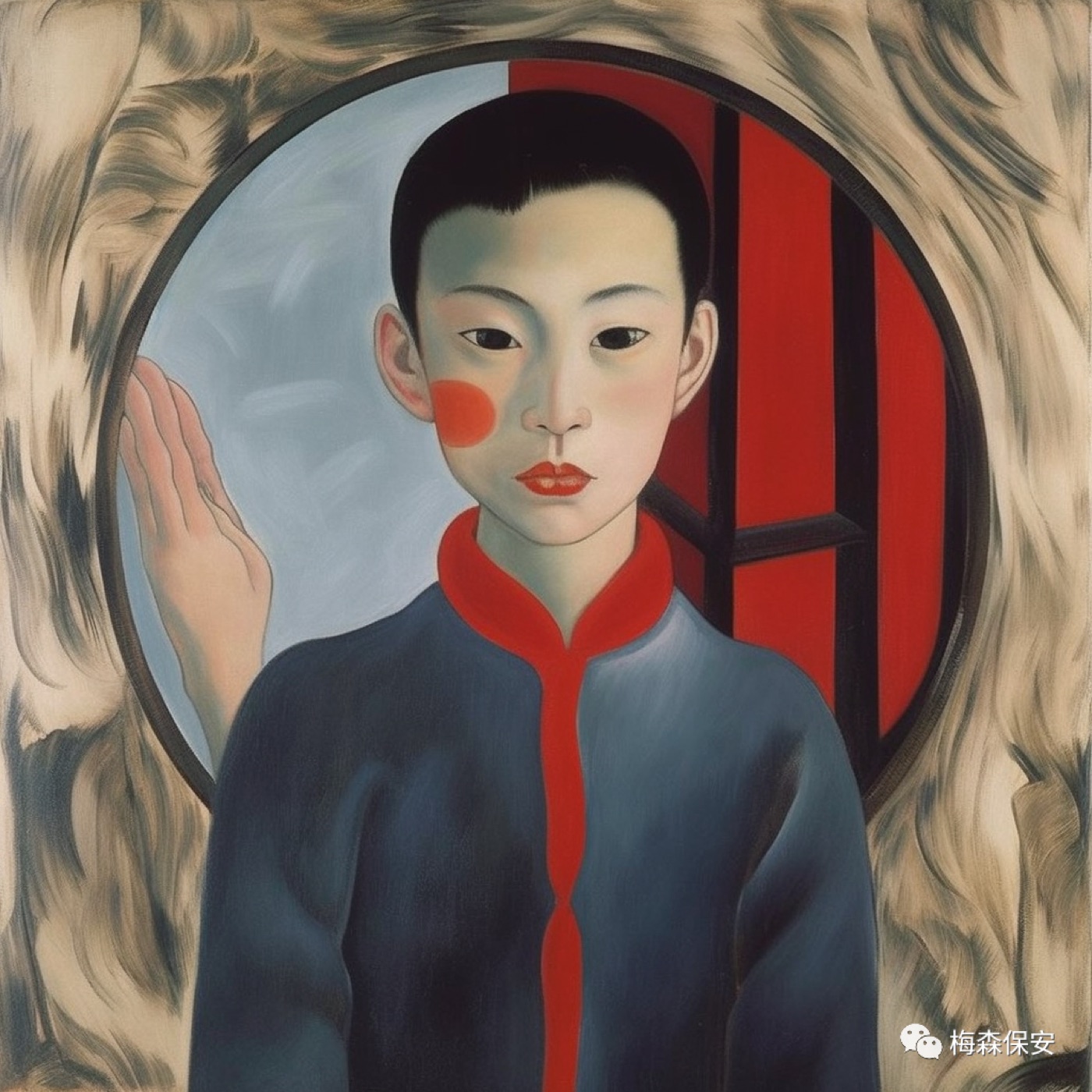
We next see his face. It was deliberately hidden in the previous act. His precise age is difficult to judge from it. Twenties, perhaps thirty. His skin is extremely white, almost unlike that of a yellow person, causing us to wonder whether he uses some special whitening product and then to suspect his sexual orientation. Beneath one cheekbone is a black mole with a radius of five millimeters. He often believes his white skin magnifies its visual effect, just as stripes on clothing can alter the perception of a person's weight. He cares deeply about the mole. He even feels it was not present at birth. He discovered it suddenly at the age of ten, while looking into a mirror.
He tried to pick it away. He could not be called handsome, but on the whole he was a clean person. He picked continuously, using the freshly trimmed nail of his left index finger, like worrying at the grain of a stone in a futile attempt to smooth it. He tried not to blink. At first the skin reddened. Under his contemptuous effort, the skin around the mole began to turn upward. Pain evolved his sense of purpose into an order that had to be carried out. Half the mole had been lifted. He needed to remove it before anyone discovered it. Tissue fluid and something perhaps blood seeped out.
He believed the mole was a sticker, possibly punitive, attached because he had failed to detect some unclean act or had not been perfectly vigilant toward his surroundings. Here one can already smell the beginnings of the habit that will run through his life: his left hand, slave to the desires of his mind, faithfully carries out decisions that do not depend upon reason. At last, his index finger stopped. The black-mole sticker, together with the surrounding skin, had fallen away in one piece. With some pride, he admired the ulcerated region of his face.
He could accept ulceration. By ten, he had already learned to accept this compromise: To be born into this world is to be wounded and recover, over and over. But he could not accept the adhesion of permanent filth, even when, like the black mole, that adhesion was only symbolic. Before the mirror, he did not anticipate that as the ulcer healed, the mole symbolizing impurity would return as well, reminding him that he was incomplete, suspended between mud and angel, muddling through, without recourse, weak weak weak and powerless.
To prove that he was not self-pitying from beginning to end, he once picked up a ball of wastepaper left by someone in a park, holding it between thumb and index finger, threw it into a bin, and washed his hands in a public restroom, all in front of his girlfriend. This also proved that he remained a clean person, even after understanding his limitations.
The next step is to examine the soil from which the phenomenon grew. Why does he enjoy eating napkins? Through this analysis, we shall transition vaguely into a judgment of his character.
First comes his obsession with cleanliness. The sensitive viewer can already perceive that the napkin is an important symbol in this fetish. But something must have produced the obsession. After all, a popular idea tells us that human disposition is determined entirely by environment. So we hear a sound arriving from childhood. Click, click. The childhood of Judas. Some say that the death of Jesus must be told from the childhood of Judas. Click, click, click. One stroke at a time. From the childhood bedroom. Mother is clipping his nails.
Mother clipped them once every two days. He sat on the edge of the bed, extending one foot or hand perpendicular to the rubbish bin. Mother knelt on the floor. One hand gently held his knuckle while the other concentrated upon an extraordinarily precise pair of clippers. It was difficult to say whether her movements were tender or brutal. She needed to ensure that no white free edge appeared at the top of the nail. At the corners, she often boldly inserted the clippers into the flesh.
Mother, too, was obsessed with cleanliness. In their home, a rag appeared to grow from her palm. The moment a guest stepped through the door to leave, she sprayed alcohol on every handle they had touched. She was strict with him, especially about behavior. Haircut every week: keep it cropped. Chest out, head up. Do not resemble your absent father. She took him to the city's most fashionable Western restaurant. In the early twenty-first century, newly opened Western restaurants were usually called Something-or-Other Steakhouse. Mind your manners, she reminded him. You need to remain aware of your surroundings at all times. Lay the napkin flat across your thighs. Do not fidget. Do not leave it teetering. Ask for steak medium or medium-well. Do not make a fool of yourself.
Thus our examination of him extends into an examination of his family. The family shaped him. A form of inheritance. Yet his mother's own obsession with cleanliness had nothing to do with inheritance. She came from a rural family with many children. The children rolled in mud; porridge mixed with soil; certain pampered younger sons spat into a large pot of porridge to claim it all for themselves.
At this point, class enters. Class consciousness. In the examination of Mother, self-respect emerges as the essential theme. Self-respect begins in a denial of one's origins, a behavioral cutting-away from one's environment. She—as an older sister, a daughter who accidentally encountered magazines and books in adolescence—began paying attention to washing her face and hands, holding her chest up and head high, keeping clothes neat, finding every possible way to prevent the soles of her feet from touching mud. Become a freak in the eyes of others. Become a woman who fancies herself a city person. Amid mockery, take the first successful or unsuccessful step away.
Nor can the era be ignored! The camera pulls back. Like the opening of a city promotional film, it looks down upon the high, phallic human creations of the delta. At the same time, we see a mysterious virus sweep the region at the beginning of the twenty-first century. The camera cannot actually depict it because it is transparent and colorless, but sinister music makes us feel danger lying in wait. SARS. A name for an abnormal state, even though no one had figured out the appearance and habits of a virus in its normal state.
He (not yet eating napkins) and his family answered the virus with the simple methods of medieval congregants who believed devoutly in astrology and the transmutation of elements: stop breathing when another person sneezes or coughs; stay away from public places; repeatedly press the upper edge of the mask against the bridge of the nose with index and middle fingers to ensure a seal; stay away from working people, people riding bicycles, people whose clothes do not fully cover their bodies, people living in open areas of the city center, country people, outsiders.
The attempt. A first fall is always a probe. If the first thing he ate had been feces, in the first act we would have seen him put his head into the toilet and try to reach the solid or liquid matter with the tip of his tongue. But his neck would not be long enough, forcing him to lean farther forward, until his fringe soaked into the water… But he did not. He ate the cleanest thing beside him: a fresh tissue.
The sensation of a foreign body. But a foreign body was precisely what he craved, so it only needed not to taste too bad. He had never examined a tissue. Now he could, because first of all he was permitting himself to do something forbidden. A tissue. Slightly translucent, less close-woven than a curtain. A finger moving behind it like shadow puppetry, like a swaying jellyfish. Closer, one could see its tiny pattern. Like a fingerprint, it appeared only when the eyes focused. Eating the tissue, one could feel the same pattern. Saliva quickly soaked it. It entered a state in which it could not be chewed apart easily, yet its pattern imprinted itself clearly upon the tongue. Not so difficult to swallow. Not so difficult.
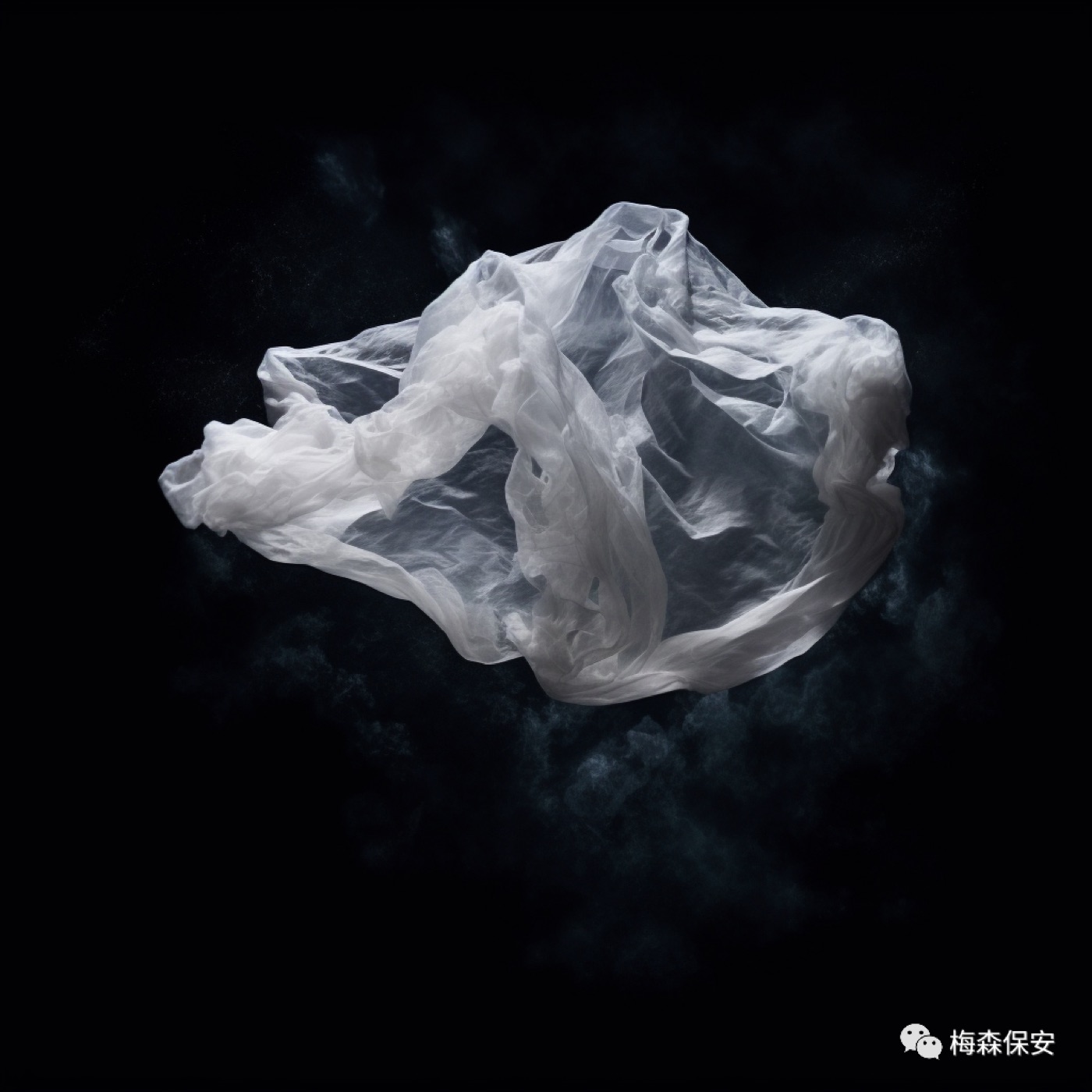
The second time, he was taking an examination that made him nervous. He pulled out a napkin to wipe his mouth or his sweat. He was working on a difficult problem. He had traced the first word of his solution repeatedly with his pen, demonstrating that he did not know how to solve it. One second, his left hand was kneading the used napkin. The next, the tissue had been crumpled into a ball and stuffed into his mouth.
From the perspective of that hidden camera watching him at every instant, this made him resemble a clown with a red ball gag in his mouth, or the victim of robbers tied to a chair and gagged with whatever came to hand so that he could not cry out. In any event, his images of himself always took this form. He did not spit out the ball of paper. He tested it with the tip of his tongue. Saltier than the first, perhaps the imagined flavor of something used. He continued retracing the word Solution.
He habitually ate everything on his plate. Often, he wolfed it down. His father, a city person absent most of the time, mocked him for this when taking him to Something-or-Other Steakhouse. Look at the way you eat. Called him uncivilized—an insinuation about his mother's composition. Said that bringing him out was an embarrassment—an insinuation about the difference between himself and Mother. He stopped swallowing and casually pulled two tissues from the edge of the table. He did not yet know that he should actually remove the napkin lying motionless across his knees, if he really minds his own manners. He wiped his mouth with the tissues, wiped away the hot fat left by his medium steak.
His tongue touched again that white material between soft and rough. A bourgeois symbol of cleanliness, nobility, ease, refinement, ready availability. He felt that, compared with swallowing it, he now had to make a choice not to swallow.
Eating napkins became a task, a habit. Like masturbation, alcohol. He did not know who issued the orders or the daily quota. It became an essential part of making his life complete. Yet when he ate the napkins, he felt himself to be a broken person, living a life that could not remotely be called complete. His stomach and intestines developed problems. He believed these resulted from wolfing his food, or at least that this was the central cause. He carefully explained to people who did not actually care whether his digestion was troubled (and whom he considered friends) that because he ate too quickly without chewing, food fell directly into his stomach as though he were a ruminant (his joke; no one laughed), causing tremendous disruption to his daily life and requiring him to remain within thirty meters of a toilet. He never mentioned, and absolutely refused to accept, that he had acquired another habit, especially now that it had produced real consequences in his life.
Someone said he ate an entire pack of tissues. The person said he had seen it with his own eyes. Seen him hiding in a restroom, placing tissues one by one into his mouth and swallowing them. He consumed the final half-pack rapidly, like a greedy snake swallowing prey too large for its intestines. Apart from the hidden camera, this was the first time a real person saw his secret and exposed it to him and to others.
You must have seen it wrong, he said.
Then he immediately revised himself. Yesterday, he said, he had felt dizzy and nauseated and had again suffered diarrhea. This might have made him perform certain strange actions, behavior absolutely outside the normal range. So perhaps the person had not seen it wrong. Like when someone gets drunk, you know what I mean? The next day you don't remember anything.
The final act continues the first. After the light went out, what was he eating in all that rustling? The audience hopes for a new climax in this tedious film: that he has graduated to eating masks, perhaps, or to the stage of drinking disinfectant as Trump suggested. After all, another new virus has arrived, and people have become more closed, fragile, absorbed in salvation. The audience therefore guesses that this patient, created with such trouble by the director, should be more entranced by his condition, more drowned within it.
Otherwise, this is a tedious film. Tedious and shallow, because its category cannot transcend itself. At minimum, it should answer a basic question: Are the minute habits and illnesses of human beings evidence of character, or do they fundamentally shape character? But the director does not answer. Instead, just as the audience least wishes to see, he zooms in beneath the bedding. There we see him greedily eating napkins. The black mole on his cheekbone shines behind a curtain of white tissues.
He believes that if he covers himself with the duvet, the camera cannot film him. He therefore eats with exceptional abandon, like eating steamed buns: several sheets in his left hand, several in his right, swallowing before his mouth has finished chewing, then stuffing in those he holds. Visceral, in a literal sense. Soon he will have diarrhea. He will collapse. Thinking of these consequences excites him more.
All right. Now we understand. The cameraman and director behind the hidden camera is the napkin eater himself. This is his monologue. He needs such a film to explain himself, to perform himself. Are not all monologues performances? Do they not all seek healing and consolation through their howling?
All right. The final frame. By the light emitted from the mole on his cheekbone, let us see his satisfied, constrained, ethereal gaze. Look at him. Don't look at him. Look at him. Look at him.