Sketch 5: Vietnam
On your final day in Hanoi, you went to learn how to make a bowl of soup. You were genuinely curious about its secret, because it was the broth beneath the phở sold on every street and alley. Tourists lingered over the bowl on low stools at roadside stalls, even though the yellow grains wriggling among the accompanying lettuce leaves would challenge them sooner or later. Most of the vendors were women. They wore locally manufactured designer T-shirts with one or two letters misspelled. They stood with brows always furrowed. As though no number of customers could make them happy. As though life was not a movement toward somewhere, but an effort to avoid some black hole in the past. Beside each woman was a broad-mouthed pot, as deep as an oil drum. The soup boiling inside made people linger. The soup contained secrets that made you curious. Because food honestly confesses certain things that people will not.
Your cooking instructor, Pickle, led you through making the broth. He called himself Pickle because, when he used to work as a kitchen helper, his sweat smelled like pickled cucumber. "I have been a chef for fourteen years," he said. "My mother was a cook in the countryside. She was the first to teach me." He told his story while mincing the pork at hand. "I am thirty-five this year. My family is poor, so now I work two jobs. At noon, I teach people to cook at this restaurant. After the class, I go into the kitchen and cook. When I finish at ten at night, I go to another restaurant and work until two in the morning, then get up again at seven," Pickle said. "So I have some wrinkles. Look. There is no other way, you know. Rent in Hanoi is very high. I have two children. My older brother died, and I have to give money to his children too."
Pickle took you through a Hanoi market to find the ingredients you needed: you, B, and two elderly women from Florida. When they heard you were from China, they asked, "Is it true that everyone in China is subjected to strict censorship?" The market was in Hanoi's Old Quarter. As usual, there were no traffic lights. Cars and motorbikes used their horns to signal that they were slowing or turning. Most of the vegetable sellers were still middle-aged or elderly women. There were no smiles on their faces; the corners of their mouths fell naturally. Along with the ordinary vegetables found in China, they sold banana leaves, fresh rice noodles, spring rolls, pork patties, and sun-blackened pods that were said to make hair darker each time you washed with them.
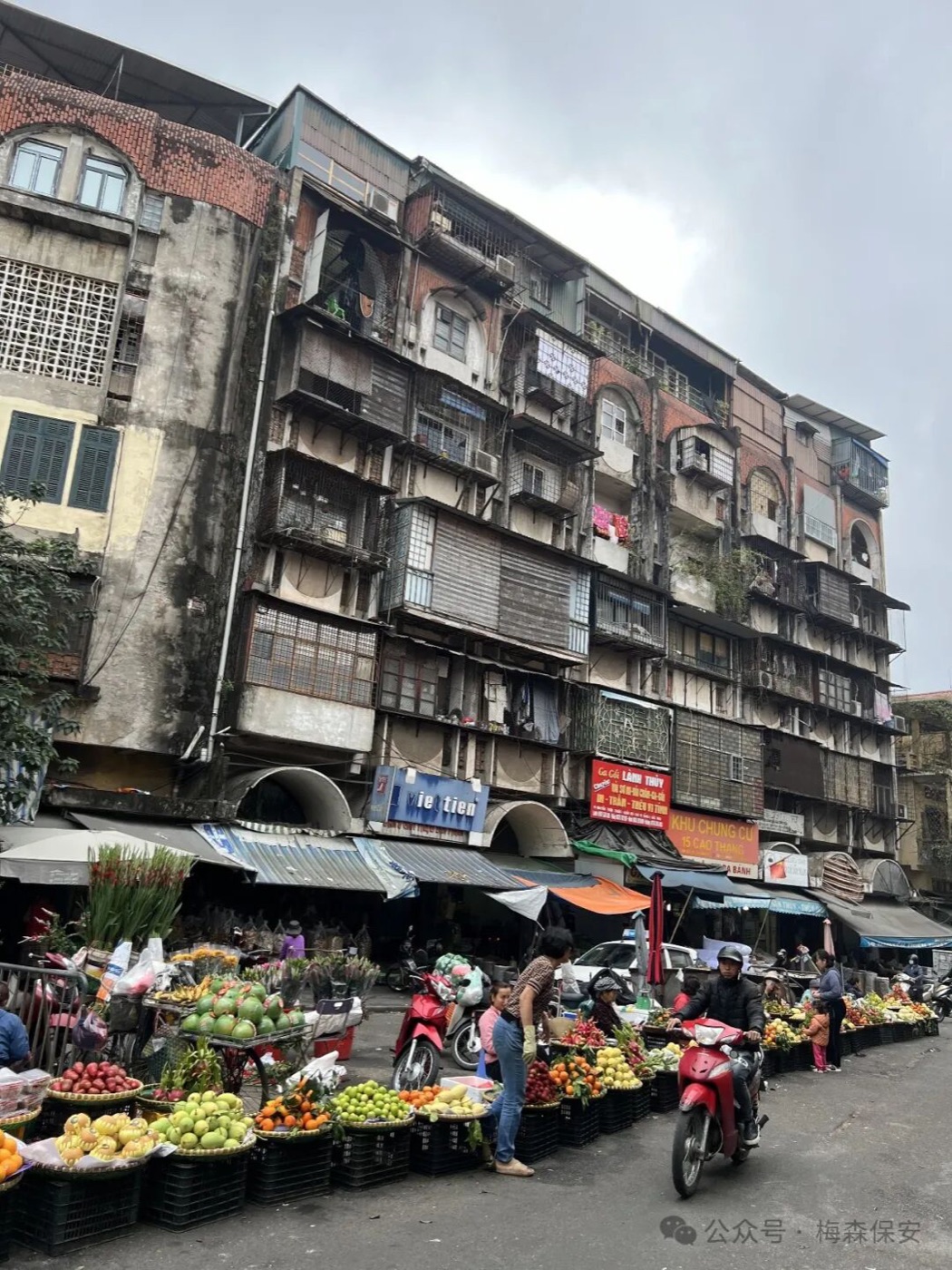
(A market in Hanoi)
Everywhere you looked were middle-aged and elderly women selling produce. It was not that old men never kept stalls, only that there were few of them. Was this a cultural habit, or simply because there were not many elderly men? Vietnam was fighting wars and losing people until the 1980s. Millions upon millions died. Colonial war gave way to civil war. By the American war in 1965, the United States carried out more than two hundred thousand bombing sorties in three years. Every day, B-52s crossed the Vietnamese sky and carpet-bombed the land. "A kilometer away, the thunder of a B-52 tore the eardrums. Many who lived in the jungle became deaf..." one Vietnamese person recalled. "The great bombardment produced a psychological terror branded deep into our hearts, day and night, year after year, impossible ever to erase." Another remembered friends killed by bombs. "They found a small tuft of hair and several pieces of flesh. That was how one of Vietnam's finest young composers died."
Then what is the secret of Vietnamese broth? Beside the cheerful sour sweetness of Thai food and the bright savory heat of Yunnan food, Vietnamese cooking is like the plain bowl of soup at a banquet. It does not present itself through one flavor. It relies entirely on depth. You drink and feel something profound, feel the weight of the bowl, the great labor expended upon it. Pickle said every pot had to simmer for more than eight hours, sometimes as long as two days. Into a deep pot go beef bones, dried sandworms, cinnamon, cardamom, star anise, onions, shallots, ginger, a little pepper, and a great deal of fish sauce. In the coastal villages of Vietnam, Pickle said, every household makes fish sauce. But fish sauce is not simple. You wait for sea fish to ferment and release their liquid, a process of several months.
If Vietnamese food has an essence, perhaps it is fish sauce and long simmering. People search decay for salt and savor. Then they wait.
You arrived in Hanoi during the Lunar New Year. You and B, two friends carrying separate troubles and repeatedly warning yourselves and each other that you should stop drifting, met once again in a place chosen at short notice. In truth, you selected Vietnam according to airfare and the standard of its massages, not from any ardor for Vietnamese culture. You still remembered your anthropology adviser mentioning fieldwork in Hanoi many years before. "Where, Hanover?" you asked. "Hanoi," she said. "Surely you know it?"
You felt ashamed. Ignorance of this degree was inexcusable. Perhaps some part of you still regarded Vietnam as a province of its suzerain empire several centuries ago. Unable to answer for its history before an intellectual from a former colonial empire, one gifted at irony, you felt humiliated. At the time, you knew only that Hanoi was not far from the China-Vietnam border. That it was Vietnam's capital. It was a footnote in your maternal grandfather's account of his army years. He appeared to have worked in logistics during the 1979 war we called the "Defensive Counterattack Against Vietnam." A friend died on the battlefield. He mentioned it once.
Your measure of all Vietnam rested on isolated impressions. It always appeared in the aspect of a victim. Like the famous photograph taken when the Vietnam War had reached stalemate: a naked girl burned by napalm runs crying toward the camera with her arms open, South Vietnamese soldiers carrying rifles behind her. The people of this country seemed like a swarm of insects beaten flat. Throughout a long history, they raised their heads, spilled blood, raised their heads, spilled blood. So you felt you could understand it. Because this was also how you understood your own country, and the inside of yourself.
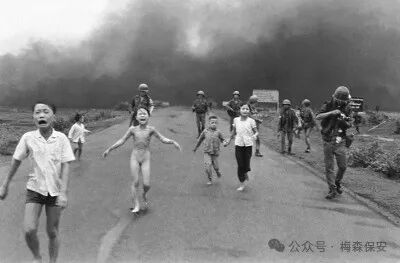
(By Huỳnh Công Út, known as Nick Ut; licensed for use through Wikimedia Commons.)
When Nixon first saw the photograph, he suspected it was fabricated. Like Pol Pot of the Khmer Rouge, who after slaughtering a quarter of his country's population insisted that he was innocent and unaware, that his pure wish had been misunderstood by his subordinates. The subject of the photograph, Phan Thị Kim Phúc, suffered for years from the pain of the burns and the torment of shame. She thought of suicide. Christ gave her hope. "Christ taught me to forgive, no matter what those people did to me." In 1992, while traveling with her husband to Moscow for their honeymoon, Kim Phúc applied for political asylum in Canada. They have lived there ever since and have two children. The scars still burn every day.
For most of its history, Vietnam was the vassal of an empire. Only the imperial center changed, from China to France and America. It existed as a frontier, a colony, a slave, an object for abuse and the discharge of rage. Though, in its own history, it colonized Champa and the Khmer in the same manner. Faced with imperial cruelty, Vietnam resisted continuously. It always paid a brutal price. The empire sent armies to kill, killing the chicken to frighten the monkeys. Vietnam was always the bloody head held up as warning.
So you guessed that Vietnam must bear a pathology familiar to you. After the plane landed in Hanoi, you squeezed into a minivan and spent the entire journey in traffic. There were almost no lights in the Old Quarter. Motorbikes passed close beside you and raised clouds of dust. At every intersection, masses of motorbikes and cars sounded their horns. The entire city was dust, rubbish, napkins discarded on the ground. Some people burned paper. Silent banyan trees witnessed the dirty streets. You knew this illness. You guessed it hid behind the loud calls from roadside phở stalls, behind the motorbike noise that never stopped—because you could hear no innocent happiness, because everyone's forehead bore the trace of having furrowed, because only someone who has been sick works so hard to bury the symptoms. The illness was a shallow cry, almost a laugh.
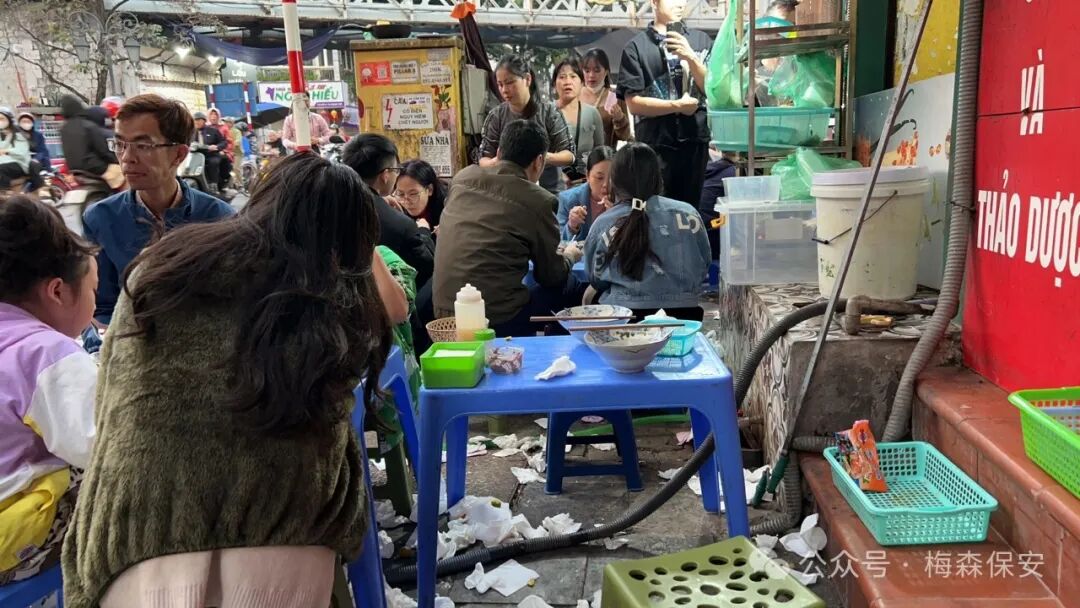
"We throw napkins on the ground because we Vietnamese like the table clean," Lin said. By then, you had reached Huế, the imperial city. Lin was a local food guide. He was twenty-four, with arms as thin as reeds, like the Vietnamese boys commonly seen in the streets. "Eat like a local" was the slogan he had written for himself online. At night, he led you through small lanes and placed into your bowls whatever he thought tasted good.
Huế is in central Vietnam, near the now-fashionable coastal city of Da Nang. Three hundred years ago, it was the imperial city of the Nguyễn dynasty. Emperors' tombs and gardens stand everywhere. The city is sealed beneath the pressure of its own history.
The story begins in the sixteenth century, when the Vietnamese people were still concentrated in what is now the country's north. In 1527, the rebel minister Mạc Đăng Dung usurped the throne and overthrew the Lê dynasty. Supporters of the Lê, Nguyễn Kim and his son-in-law Trịnh Kiểm, raised armies against the Mạc. But General Nguyễn Kim was killed by a Mạc agent. Trịnh Kiểm seized the opportunity to attack the Nguyễn faction, intending to take all Đại Việt for himself. Nguyễn Kim's son, Nguyễn Hoàng, endured the humiliation and led his people into the south. Unexpectedly, he fell in love with the foreign land.
Over several generations, the Nguyễn developed the Indian Ocean trade around Huế, south of the Red River, with great success. But everything has its beginning and end. The Nguyễn and Trịnh fought for more than two hundred years. Then new protagonists appeared: three peasant brothers from the hamlet of Tây Sơn, Nguyễn Nhạc, Nguyễn Lữ, and Nguyễn Huệ. In the eighteenth century, under Nguyễn and Trịnh alike, peasants had no means of life. When the Tây Sơn brothers raised an army, people answered from every direction. First they destroyed the Nguyễn lords and drove the crown prince Nguyễn Phúc Ánh into Siam. Then they destroyed the Trịnh, who had hoped to use them. Finally, in one stroke, they defeated the great Qing Empire, which had come to "suppress the bandits." The age of Nguyễn-Trịnh division ended. Three peasant brothers united Vietnam.
"We love him," Lin said, referring to Nguyễn Huệ, the Quang Trung Emperor. "Because he drove out the Chinese!" Vietnamese people still celebrate the victory in that war of independence.
And after independence? Brothers slaughtered brothers. The eldest, Nguyễn Nhạc, was first to gather troops and declare himself emperor, but he neglected affairs of state and murdered meritorious officials. Nguyễn Huệ, the most capable of the three, soon declared himself emperor as well. Legend says his army pressed up to the walls of Nguyễn Nhạc's city. Seeing cannon fire fill the sky, Nguyễn Nhạc climbed the wall and shouted, "A cauldron made from hide boils the flesh beneath it. How can a younger brother bear this?" The hide of the hunted animal had become the pot in which its own flesh was cooked: why were those born of the same root so eager to destroy one another? Nguyễn Huệ was moved and withdrew. After his death, the Tây Sơn dynasty scattered at once.
The wind blew back toward the Nguyễn lords. Nguyễn Phúc Ánh, long in hiding in Bangkok, had slept on brushwood and tasted gall. He made an agreement with the French and built an alliance of many ethnic forces around Saigon, Chinese among them. He marched north, recovered all Vietnam, proclaimed himself the Gia Long Emperor, and founded the country's final monarchy: the Nguyễn dynasty.
"We hate him," Lin said. "Gia Long brought in the French."
Most of Gia Long's imperial city is now broken wall and ruin. From the middle of the last century, North and South Vietnam fought fierce street battles here. Every day brought bombing. Before that, the city must have shone. Each emperor had his own bronze urn, carved with words signifying auspicious things. Vietnam's modern national script had not yet been introduced, and scholars still wrote in Chinese. We ran our hands over the poetic reliefs and words: "cicada," "horse," "sun," "scallion," "lotus," "royal screen," "moon," "glutinous rice," "cardamom," "Venus"... Everything they protected has disappeared. How did the words themselves survive the napalm? Through beauty alone?
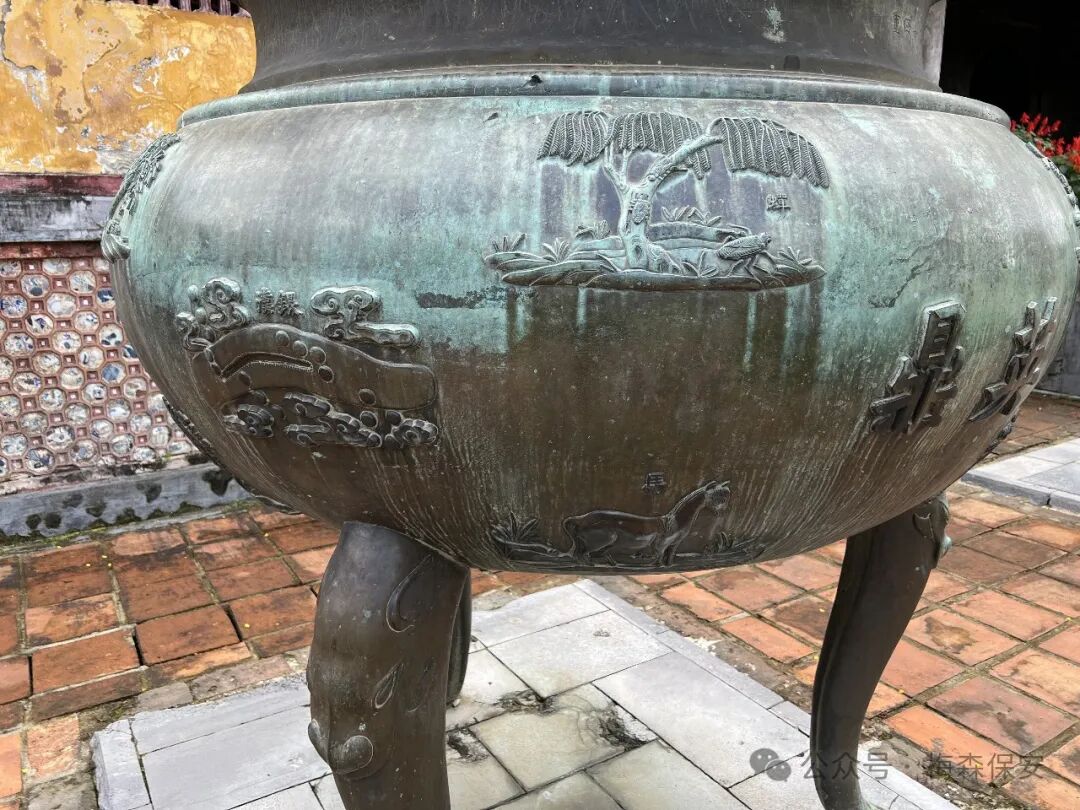
Gia Long's son, the Minh Mạng Emperor, proved that diligent government could also bring a country deep and lasting disaster. Born at the end of the eighteenth century, Minh Mạng in fact carried the afterglow of the Enlightenment and believed that reason could govern a nation. He wanted to find a road all Vietnamese people could accept and mend the country's wounds. But when he looked for a model, he chose the Qing dynasty, already sinking toward sunset. Under him, the Nguyễn court imposed Confucian doctrine with force, closed the country, and bloodily oppressed Catholics and religious minorities. It brought order, certainly. Just not for the ten thousand generations he imagined.
By the middle of the nineteenth century, when the Tự Đức Emperor took the throne, he still wanted to follow Minh Mạng's hard road, but the road no longer went anywhere. China and Britain had fought the First Opium War, and France had fixed its eyes on East Asia's fertile land. During Tự Đức's thirty-six-year reign, the French invaded again and again. One treaty of cession followed another. Confucian doctrine no longer worked, but they continued deceiving themselves until everything shook in wind and rain. In 1885, after the Sino-French War, the Qing withdrew from Vietnam and France began assembling its Indochinese Federation in Southeast Asia. The Nguyễn became a French puppet.
"Minh Mạng, we do not like him, because he closed the country. Tự Đức, we do not hate. He was only weak. But by his time, there was really nothing he could do," Lin said.
After graduating from university, Lin came to Huế to work in tourism. "I study English every day until midnight. Learning English is practice, practice, practice. Most of my guests come from the West." The contradiction in him was clear. He possessed a powerful national identity and felt the deep shame of colonial history. Yet his main work was leading visitors from the West through the streets to eat. Walking by the river, Lin excitedly pointed things out: the hotel where Chaplin stayed on his honeymoon, the bridge built by the French. The French were so confident, he said, they thought the bridge would never fall. "They said, if this bridge collapses, we will give Vietnam its independence. And guess what? It collapsed the next year!" After downing a beer at a stall, he was plainly a little drunk and trusted you more. He asked an Estonian woman in your group, "In all your years in China, did you ever like a Chinese man?" After another beer, he asked, "Why do Western women all think that we, Vietnamese men, are small?" Carefully, he sounded her out. "Is it true?"
After Vietnam and France signed the Second Treaty of Huế in 1884, Vietnam became a French colony in full. But not everyone surrendered.
One force was the monarchist faction later known as the Cần Vương movement. In 1885, it called on all Vietnam to support the king and resist France. Even after the French captured the Hàm Nghi Emperor three years later, the movement struggled on for another eight. Its representative figure was the former court official Phan Đình Phùng. Christopher Goscha's Vietnam: A New History describes his story in detail.
It is said the French hired Hoàng Cao Khải, Phan Đình Phùng's closest friend since childhood. Hoàng wrote to Phan that, now the French army had arrived, resistance could achieve nothing and would only increase the people's suffering. Then his brush turned. If Phan did not submit, Hoàng threatened, they would dig up every ancestral grave of the Phan family and dismember Phan's imprisoned brother.
Phan Đình Phùng received the letter. He answered only with contempt. "He told those around him that, at this point, it was no longer possible to think only of his own family. He had to think of 'saving all the other brothers in our country.'" He said, "If anyone cuts my brother apart and boils him into soup, do not forget to send me a little broth to taste." He also said, "Now there is only one road left to me: death."
Several years later, Phan's force barely survived deep in the mountains. The emperor captured by the French had already been exiled to Algeria. Resistance—for whom, for what? His old friend Hoàng Cao Khải wrote another letter. "Can a person remain in history if he is loyal only to the emperor and forgets the hopes of the common people?... If resistance continues, not only will the population of our villages be destroyed; our entire country will become mountains of corpses and seas of blood." From a certain angle, Hoàng was not wrong. Phan's ancestral graves had already been dug up, his entire family imprisoned, and the French were executing peasants at will. But in his reply, Phan reminded his old friend that he was not the cause. The French were. "They annexed our mountains and rivers in a single stroke and turned them into foreign soil. These events affect the entire country, the entire people. Those who suffer in this trial belong to no particular region and no particular family."
Phan Đình Phùng died. Hoàng Cao Khải "dug up his grave, burned his body, packed the ashes into shells, and fired them away." The French would remain in Vietnam for more than fifty years.
But resistance did not end. The French preached republicanism and treated Vietnam like livestock. Even fifty years later, during the war, they still cut off Vietnamese heads and planted them in rows along the roadside in response to resistance and as warning. But resistance did not end.
Great upheaval breeds action. Disorder gives birth to thought.
At the beginning of the twentieth century, Vietnam was a colonial member of French Indochina, ruled through the Nguyễn dynasty's puppet emperor. Thousands upon thousands of French officials settled there and governed it with full legitimacy. New crops were introduced, new industries raised: arabica trees, mines, coalfields. A new script was imposed, replacing Chinese characters with the Latin-based quốc ngữ.
Through violence, the world became connected. Colonies covered the blurred regions of old maps. The road to the future remained unclear. Two thinkers disagreed over Vietnam's future: Phan Bội Châu and Phan Châu Trinh.
For Phan Bội Châu, author of History of the Loss of Vietnam, the hatred of a lost country lay deep in his heart. He founded the Duy Tân Hội in 1904. While lobbying in Japan in 1905, he met Liang Qichao. He wrote History of the Loss of Vietnam in Chinese, and Liang published it. In the book, Phan Bội Châu bitterly recounted how Vietnam had fallen under French rule. National self-determination mattered above all. The Duy Tân Hội slogan, "Drive out the French bandits, restore Vietnam," agreed with Sun Yat-sen. Phan's plan was to use Japan's strength to weaken French colonial rule. Japan was his model. In only several decades, it had entered the ranks of the world's great powers. If Japan could do it, Vietnam could too.
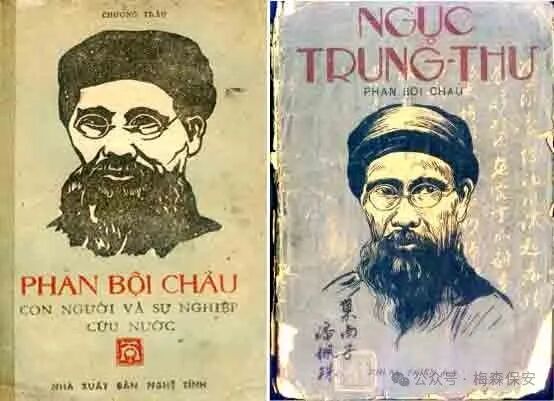
(Phan Bội Châu)
To his contemporary Phan Châu Trinh, however, a short period of French colonial rule might not be entirely bad, because it could help eradicate the worst sediment of Vietnamese history: monarchical power. If the republican conscience of the French could be awakened and the creation of a republic advanced, that would truly renew Vietnam's future. Bearing humiliation and a heavy burden, Phan Châu Trinh traveled through Vietnam and France. He petitioned powerful and knowledgeable people in France, hoping to establish friendly and nonviolent colonial cooperation and, through the spread of republican ideas, bring a new Vietnam into being—an independent new Vietnam.
Phan Bội Châu and Phan Châu Trinh both wanted independence and a republic. Their disagreement was over which had to come first. Phan Bội Châu believed it was an independent nation-state. Phan Châu Trinh believed it was a new republic. They searched among neighboring countries for their respective allies and hoped to realize their ideals with outside help. In fact, the imagined allies wished to give them neither independence nor a republic.
Phan Châu Trinh traveled through Europe and wrote to the governor-general condemning the colonial administration's indiscriminate killing of peasants. No reply came. He died in 1926, one year after returning to Vietnam, before his great undertaking could begin. Phan Bội Châu, meanwhile, had lost hope in Japan after witnessing its atrocities in Korea. Inspired by the Xinhai Revolution, he founded the Việt Nam Quang Phục Hội, but in 1925 Japanese agents arrested him in Shanghai. He was confined in Huế until his death in 1940. During his final fifteen years, what he witnessed was a world sinking further into degradation.
Their efforts were not without effect. Hồ Chí Minh, born in 1890, grew up among these currents of thought. In Huế in 1908, he saw Vietnamese peasants protest excessive forced labor before the colonial government and be met with gunfire.
At first, Hồ Chí Minh was an internationalist. He traveled from country to country, working as a helper and gardener while exploring a road to national salvation. But he went farther and became a communist. He helped establish communist organizations not only in Vietnam but in Indonesia, Malaya, and elsewhere. He held no hope for peaceful transition and argued fiercely with Phan Châu Trinh. "Hồ Chí Minh warned that, if true reform did not quickly become reality, the Vietnamese must recover their rights by force: 'We are human beings and should be treated as human beings. Anyone unwilling to treat us as equals is our enemy.' Phan Châu Trinh answered: 'With what would you have our unarmed compatriots oppose the Europeans and their weapons? Why make the people die for nothing when nothing can be achieved?'"
Their exchange recalls the letters between Phan Đình Phùng and Hoàng Cao Khải several decades before. Of course, the two men now spoke with greater sincerity. But the question remained. Do people choose dignity, or life? Is there a middle road?
Violence rich in passion and imagination is immensely contagious, but its cost is inevitably immense. Hồ Chí Minh chose that road early and traveled farther and farther upon it. He became the father of the nation. He became the emblem of Vietnam. In the personality cult fashioned by the Vietnamese Communist Party over later decades, his power reached its summit. But innumerable people also died for his ideal. Not only soldiers of North Vietnam, but those called South Vietnamese, conservatives, traitors, rich peasants, capitalist roaders, enemies. Were they treated as human beings, as Hồ Chí Minh first proclaimed they must be?
Must every idea that eventually wins passage through the modern world first possess the seduction of violence and overthrow? What troubles you is that people do not merely want urgently to see an ideal realized. They actively choose the tools of violence to realize it, as if violence added luster to an ideal's purity. Perhaps the lingering epidemic is romanticism. It tells people that right and wrong do not matter. What matters is strength. Strength from within.
One evening, you went out alone and walked through the streets of Hanoi. Everything around you was quiet, something rarely encountered in the Old Quarter. Only later did you learn that you had been walking beside the national defense complex. You passed supermarkets, cafés, antique shops. Apart from a few more varieties of instant phở, the supermarkets differed little from 7-Elevens around the world. The cafés sold egg coffee. Legend says that, unable to obtain milk but wanting to reproduce the effect of a cappuccino, Vietnamese people whipped together egg yolks and condensed milk. The antique shops sold clocks. Antique mantel clocks covered the walls, European in style, products of some unknown era. One or two people talked inside. When you pushed open the door, they waved to show the shop had closed and shut you outside that piece of time.
Before 1945, France was preoccupied on the European battlefield, giving the Japanese army an opportunity in Vietnam. The colony changed hands. When the Second World War ended, Japan too could no longer hold it. The League for the Independence of Vietnam—the Việt Minh—led by Hồ Chí Minh declared the Democratic Republic of Vietnam. But de Gaulle would not release this prize France had held for decades, and the First Indochina War began. The Battle of Điện Biên Phủ was a bloodbath late in the war. Vietnamese troops charged without regard for cost and forced a French surrender while taking several times the casualties. The Geneva Conference brought negotiations. Vietnam was divided north and south. In the north stood the Democratic Republic of Vietnam, the communist region, now with the Soviet Union and China as allies. The south was noncommunist, backed by France and the United States.
France no longer had the national strength to sustain the war. The United States, however, invested more and more in its new strategic map of the Asia-Pacific. North and South Vietnam were each ruled by strongmen. In the north were Hồ Chí Minh and several ruthless generals. In the south were the Ngô brothers, represented by Ngô Đình Diệm. Washington once placed great hope in the Catholic-born Diệm, who in a short time used diplomacy and an iron hand to unite South Vietnam's complex factions. But democracy was only his cover. He persecuted opponents, manipulated elections, and declared himself the first president of the Republic of Vietnam with 98 percent of the vote. Diệm was executed in a coup in 1963. The American military entered the battlefield in full.
Then came the American war, terrible beyond description. It was said that every day the American B-52s dropped as many bombs as were dropped in both months of bloodshed at Điện Biên Phủ. Fifty-eight thousand American soldiers died. Yet the dead who left such a deep historical wound in the United States amounted to only two percent of the Vietnamese death toll. At least two million Vietnamese died; some estimates exceed three million. Great forests dissolved under chemical weapons. Countless people covered their ears and imagined they might escape the artillery.
The souvenir shops all sold much the same goods. This was one characteristic of Vietnam: once one shop on a street sold something, seven or eight shops within fifty meters sold the same thing, as though competitiveness came not from diversity but from forceful visual repetition. The most popular object bore the image of a Vietnamese woman. She stood with her back turned, wearing a conical hat, a short length of braid visible above her graceful body. The picture condensed Vietnam into something mysterious, weak, sensual, easily violated. This self-Orientalism was popular. It was printed on postcards, scarves, cloth bags, sometimes three or five women in a row.
At the end of the road, a great many tourists suddenly appeared. Everyone was waiting for the train to pass through the Old Quarter. On either side of the railway were train-themed cafés and restaurants whose main attraction was the close view of a passing train. Legend said that the beef phở called "locomotive" had been born nearby. Tourists stood shoulder to shoulder. Europeans, Chinese, Koreans, and a local old woman pushing her goods and demanding that everyone except the train give way. Peoples who had slaughtered one another several decades before were forced to stand together, curious or anxious, waiting for the train. Then, as in Benjamin's angel of history, a storm blowing from Paradise—the storm people call progress—lifted your hair.
The day before leaving Vietnam, you saw online that local swing dancers in Hanoi would hold an outdoor social beside the post office at Hoàn Kiếm Lake. You and B followed sparse clues from the internet around the lake, looking for them. Hoàn Kiếm lies at the center of Hanoi. Tourists walked slowly in the afternoon sun holding Mixue ice creams and Zhengxin fried chicken—the lines for both were long. You made a full circuit and finally found the dancers in a park behind the post office.
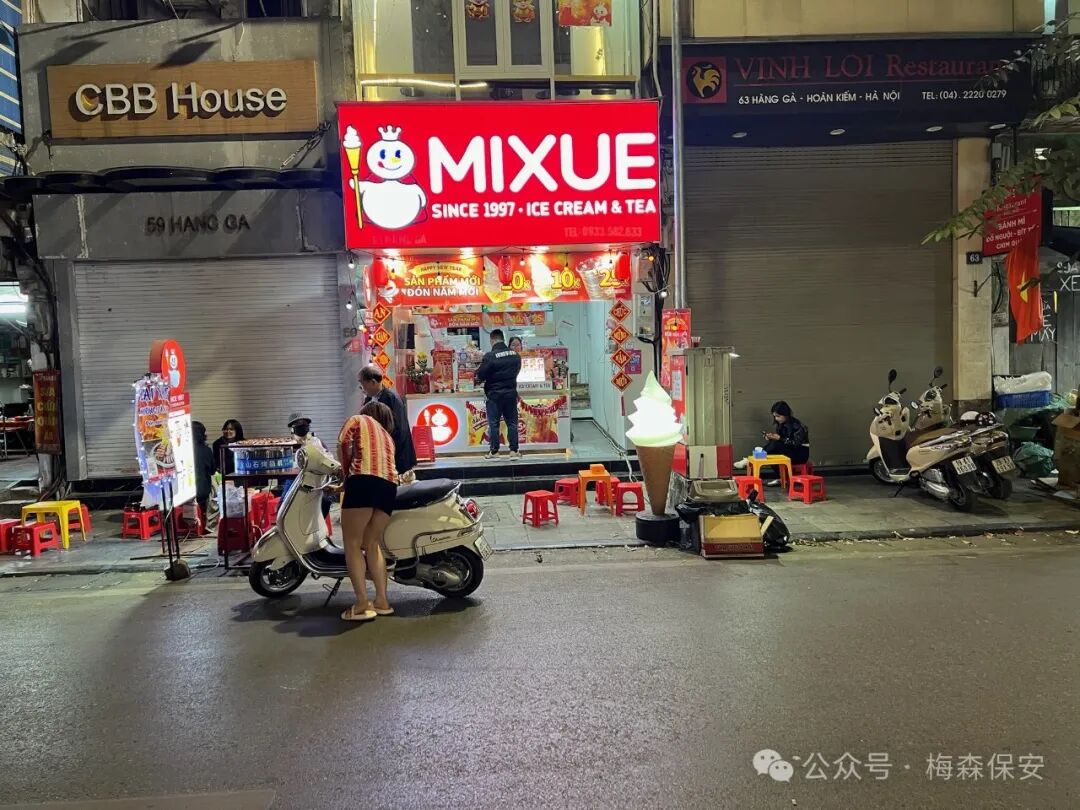
(Mixue, everywhere)
Beneath a statue, a girl held up a speaker playing jazz from the 1920s. She explained that central Hanoi was too loud. If the speaker sat on the ground, no one would hear it. Some people sat beneath the statue and talked. Some danced beside the speaker. Swing is a common language. No introductions are needed. You step forward and smile, and a connection forms between two people.
In China, swing was first brought by foreigners who liked to dance. They danced in bars and gradually attracted curious local people. Those people became dancers, then spread the culture, giving swing both global and Chinese parts. The story in Vietnam was similar. A young man said he first learned swing five years earlier from a Sri Lankan who had come to live for a while, then taught the dance to friends around him. This is what is special about cultural exchange. It spreads through eyes and ears, not hands, feet, and weapons. It appeals to the senses and mind rather than force. It does not have to achieve anything. But people learn to appreciate and understand one another.
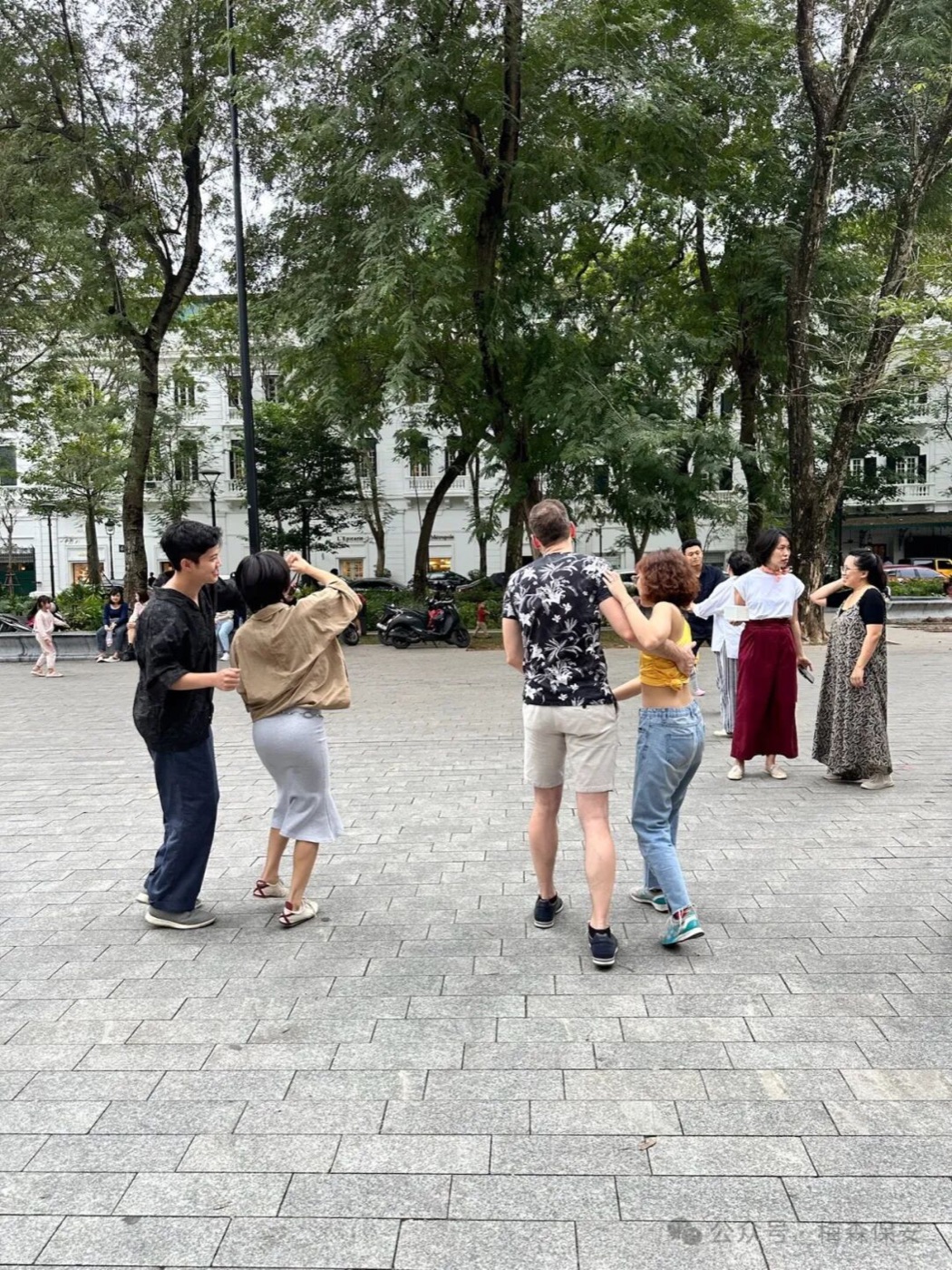
(Swing in the park)
The young man was twenty-seven and sold software. Several nights each week, after work, he taught enthusiasts to dance in a wood-floored classroom beside an apartment building. They could not go past ten thirty, or residents would complain. At night, he watched videos of master dancers on YouTube.
When the dancing ended, you went to a nearby side street for a sweet drink. It was a brown rice soup with the flavor of black sesame paste. You sat on low stools. There was a Hungarian, a graphic designer, a singer, a pianist, a software tester, the young software salesman, and a leftist. Someone brought up eating mushrooms. The singer had made some at home. The Hungarian said that, in the Netherlands, he had endless mushrooms to eat. You asked whether mushrooms were legal here. Of course not, the leftist said, but you could find some in the prime minister's drawer.
The leftist wore his long hair tied behind his head. He said he was a Marxist. At present, he was organizing Vietnamese students to support Palestine. He showed you a poster they had made: Vietnamese and Palestinians standing together and shouting "From the river to the sea." This was a slogan of Palestinian nationalists, meaning that the territory between the Jordan River and the Mediterranean should belong to them. "They are an organization with a conscience. They supported Vietnam in the eighties, during the China-Vietnam war, when almost every country was condemning Vietnam," he said. "So now we condemn Israel too. They are acting unjustly. Of course, we have to be very discreet."
Almost every Vietnamese person you met had complicated feelings when speaking of China. "Disgust and admiration," everyone said. Naturally, this was not only because of the swiftly concluded war more than forty years ago, which people in both countries now avoided mentioning. "For more than a thousand years, China has appeared as a giant," the leftist said. "From ancient times until now, we have always felt very unsafe. But we could only compromise."
And the admiration? Lin in Huế said, "We visit your country and think you are very advanced, with highly developed technology. We also watch your television series from thirty years ago, Romance of the Three Kingdoms. Do you know how popular it is in Vietnam?" The Hanoi leftist said, "Because Vietnam learned its own techniques of colonization from China. China provided a model and used it on Vietnam; Vietnam used the same model on its neighbors, Champa, the Khmer, and Laos."
Often, when they spoke of admiration, you argued. "The technology may not be as advanced as you imagine." "The Romance of the Three Kingdoms from thirty years ago? Congratulations. You have missed nothing in the last thirty years." "From the art of colonization to TikTok, our cultural exports continue." Why are you ashamed of yourself? B asked when you returned. Why be cynical? Why refuse to admit that we have indeed moved a little farther forward than Southeast Asia?
You had never considered the question. You realized that years of resistance to the mainstream narrative seemed to have altered the way you saw things. It often left you unable to enter a conversation with dignity.
In Vietnam, you traveled mainly by motorbike. Sometimes you rented one yourselves. After one short ride, B refused to let you sit in front again. Riding into the wind, you shouted to ask where he had last driven a motorbike. "Dali!" he shouted back. "Me too!" you said. You asked when. "A month ago! You?" he said. "Seven years ago!" you answered. After you finally managed to park, he told you carefully, "Honestly, I am a little worried."
Other times, you each ordered a motorbike taxi through Grab. A young man in a green helmet would ride toward you. Usually, he spoke no English, so communication was impossible. When he reached you, he braked, set one foot to the side, and pointed at his phone. If you pointed at yours, he took a helmet from the box and handed it over. You sat behind him and lightly circled his bony waist. Then he carried you away at speed.
They seldom followed traffic rules. They loved their horns. They passed other vehicles without end. Neither of you spoke. You traveled through forests, stone houses, low shops, broken walls, tombs, monuments, places where soldiers once fell like kites. A kind of trust formed. He understood better, after all, how to move and survive on this land. Those whirlpools of history remained in the moments when their brows tightened, when they hesitated, when they stared into space. But they had passed.
References
Christopher Goscha, Vietnam: A New History
Phan Bội Châu, History of the Loss of Vietnam