Pull the Teeth!
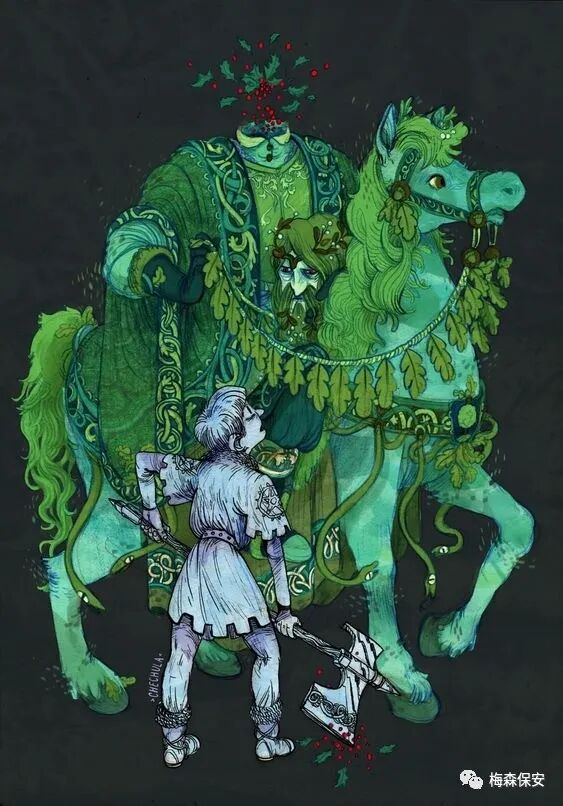
It looked less like an operating lamp than a piece of colored glass from a child's kaleidoscope. This hardly counted as an operation, after all. Just two wisdom teeth being pulled. There were two handles beside the bulb so the dentist could move it around and illuminate the dark cavity of my mouth. The light came on. (Before some major operation begins, do patients, too, waver between keeping their eyes open and shutting them against the pain and dizziness?) A young female dentist with small eyes told me to open wider. I opened wide and asked, Aah ya ya ya ah? She said, What did you say? Close your mouth first. I can't understand you. I asked whether I should close my eyes. She said I could close them or leave them open. I asked, Will it hurt? She said no. I said, Then why haven't I heard any screaming? She said, Because it doesn't hurt. Then she drove the anesthetic needle deep into my gums. Part of my sensory nervous system went offline. The small-eyed dentist narrowed her eyes and said, Numb is what we want.
As the anesthetic entered my gums, I thought: one ought to marvel that humans have learned to make medicines at the molecular level. When Leeuwenhoek first discovered microorganisms near the end of the seventeenth century, people thought he was mad. His neighbors had no idea that this honest man, who spoke nothing but Dutch, kept a hidden room of his own. In it, he ground the finest lenses in the world—not only the finest lenses of his time, but the finest for more than a century afterward. Through those lenses, humans saw with their own eyes, for the first time, a world beyond the reach of sight. A world hidden in broad daylight, blurring the boundary between you and me, less credible than hallucination. And now we command that world like a puppeteer. We make antibiotics. Synthesize proteins outside the body. Deliver RNA into cells. Meanwhile, most human brains are deteriorating. A man is slowly going blind; his eyes can barely focus anymore. Yet he is seated in a powerful carriage. All he needs to do is crack the whip, and he can race down the dark avenue. The moment he blindfolded himself, the devil's promises sounded all around him.
She was sawing into the tooth with an electric saw. Up, down, left, right—it must have followed some order, but my mouth was numb and I could not feel it. The saw stopped abruptly. The small-eyed dentist shook its cord the way one shakes a pen that has stopped giving ink. Broken, she said. Same as this morning. It's just broken. My mouth was still propped open. Enunciating as completely as I could, I asked whether it was domestic or imported. She did not answer. Only then did I notice that another dentist, this one with medium-sized eyes, was holding my mouth open. At the same time, she was using a little vacuum-cleaner tube to suck blood from it. It was rather comfortable. I asked her, Who are you? The small-eyed dentist, still changing saws, answered for her: My assistant. I asked Medium Eyes, How do you make sure my tongue doesn't get sawn off? Medium Eyes said nothing. I asked, So this tube is specifically for sucking blood, right? She rolled her two medium-sized eyes to indicate speechlessness. By then Small Eyes had repaired the saw. The cutting resumed. Open a little wider. Up, down, left, right. Particles scattered like sparks.
I was devising a story. Nowhere near writing it down, of course—especially since this is not an age that makes one particularly eager to express oneself. Merely devising it. A hallucinogenic story, for anesthesia. I had begun fermenting its setting long ago. It takes place on another planet, so that I can rewrite history at will without offending anyone. At the beginning of the story, a spherical probe reaches this beautiful planet. Later, we gradually learn that it came from our home planet, Earth. It does not answer questions about Earth's history. It only exchanges nursery rhymes and poems with other civilizations, without purpose and without charter. Perhaps that is why it alone is still wandering among the stars. The beautiful planet on which it lands is so like Earth that the two might be twins, except its orbit is so short that its seasons seem to play at double speed: spring departs, and autumn comes again.
In a forest, the probe discovers a statue covered in roses. Its arms encircle some object, while its lowered face looks elsewhere. Throughout the forest, leaves fall and vanish as new leaves grow from the branches, like layers of dark-green jellyfish drifting upward. Across the statue, the roses rise and fall, withering and blooming like colored pores opening and closing to breathe. The probe pushes apart the thorny branches and removes the object from the statue's arms. Petals leave scratches on its surface. The statue does not resist. It is a book.
Petals can wound it but cannot erase it, while everything that called itself everlasting has disappeared. The writing in the book comes from an alien world, but the probe can decipher it, because it follows forms similar to human writing. The clever reader will already have realized that this alien world and human civilization are somehow connected, though both are now extinct. The book contains an endless long poem, recording every trace of that alien civilization in exhaustive detail: the sudden ascent of heroes and the lifetimes of the lowly, loyalty and betrayal, regret and greed, reproduction and exhaustion. It only describes. It tries to be fair, avoiding anything that might resemble summary or argument. It also records the conflicts between civilizations. One civilization, weary of the planet's prolonged experiments in self-destruction, lifted an entire landmass into space and flew elsewhere in the universe, searching for a longer spring. They chose to regress and begin again, but the potential of the mind had already been inscribed in their cells, like a blessing, like a curse.
The small-eyed dentist showed me the remains of my wisdom teeth. Two teeth, three corpses in all, naturally still smeared with plenty of blood. I remembered how, when I was little, my mother took custody of every tooth I lost. They were hidden in a transparent bag on top of a cabinet. I still remember where the cabinet stood. During the magical hour each day, the evening sun would fall upon the teeth, making them more lustrous than when they first came loose. I asked Small Eyes whether I could keep my two wisdom teeth. If you insist, she said, I'll give them to you. Then she changed her mind. They're too dirty. Better throw them away. Everyone else does. By then, a woman beside me had run out of patience. She wanted her operation to begin immediately, quick battle, quick victory. Her scan showed all four wisdom teeth lying sideways on either side of her mouth, like four buried bullets ready for 007 to pull and fire. The woman had already lain down on the operating chair of her own accord. Small Eyes gave me her final instructions: spit out the cotton ball in twenty minutes; no water for two hours; no exercise for a week; come back in a week to have the stitches removed. I asked her, How many teeth do you pull in a day? Small Eyes said, I start pulling teeth when my shift begins, and I pull until it ends. That's it.
The following night, I was already at the gym doing aerobics, which would ensure that my toothache lingered like a ghost. Thirty seconds of jumping jacks. Five seconds left, three, two, one, one, one—all right, stop! Thirty seconds of battle ropes. Perhaps what I do not want to admit is that, inwardly, I enjoy repetition. I enjoy rhythm, sleep, reproduction, three meals a day, the rise and fall of the belly. I enjoy working over and over alongside other people toward some indistinct purpose. I enjoy having wisdom teeth pulled, nails and hair clipped, a correct time appointed for me. Two days earlier, I had read a report about a thirty-three-year-old man who was back in school preparing for his thirteenth attempt at the gaokao. The horror of the story was that he knew perfectly well he ought to leave senior year behind and begin a real life. Yet whenever he finally made up his mind, some small temptation would lure him back. One year, he was ready to enroll at a university of political science and law. Then he went home and saw a school's notice promising 100,000 yuan to repeat students who had scored above 600. So he stepped into the classroom again, pretending that next time he might make it into Tsinghua. Toiling people wait to be struck by something. Inside the drum of the washing machine, they wait not merely to spin, but to be flung through the glass door by some mysterious error at the quantum level.