Portrait 8: Letter of Denunciation
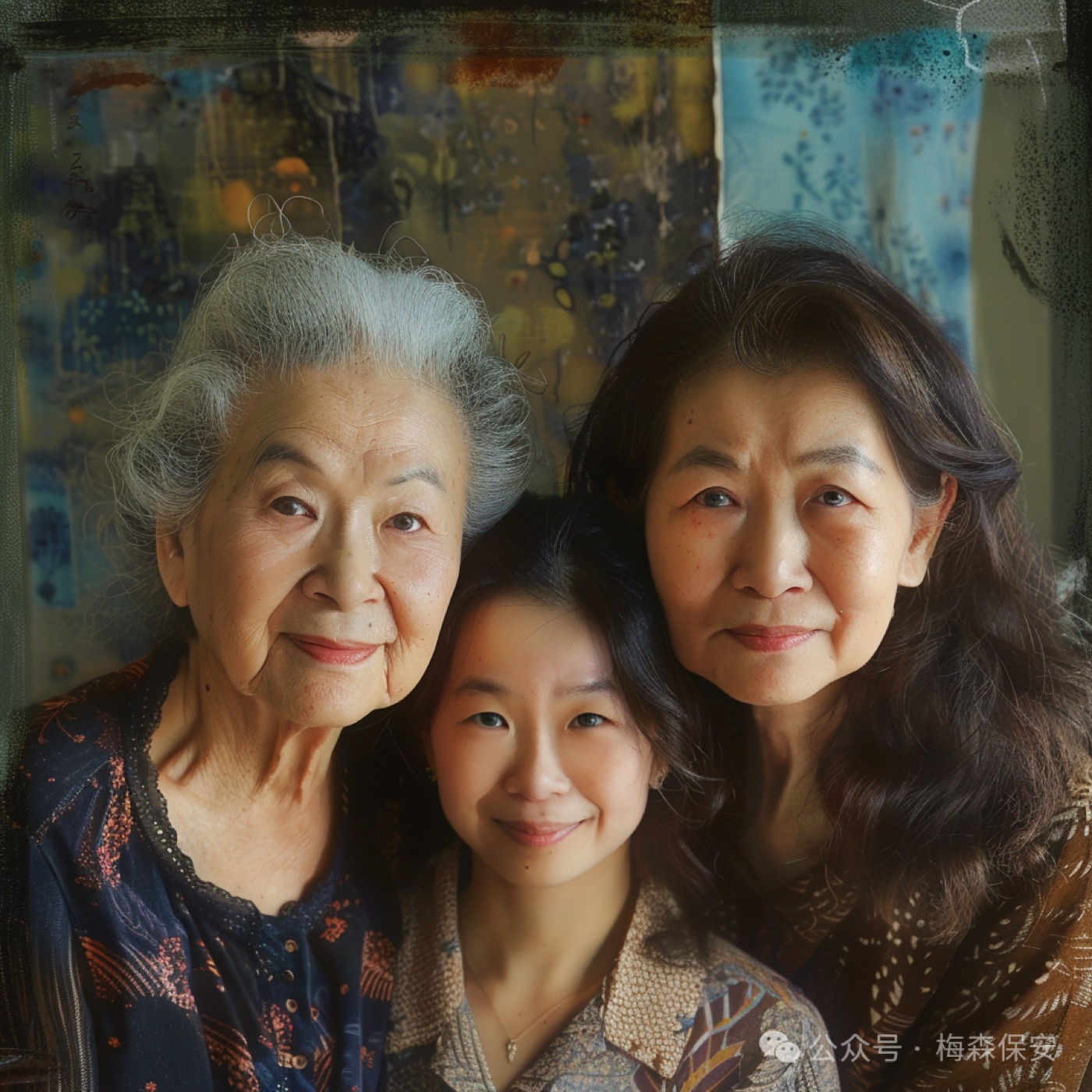
Material for denunciation:
Esteemed readers, superiors, censors. The following evidence comes entirely from my memory. It can prove my innocence. It can prove that the many petty acts attributed to me in other people's denunciations—so-called disloyalty, impropriety, and moral deficiency—have their origin in my family life. That is to say, in two other women. My daughter, the person to whom I gave birth and whom I raised; and her maternal grandmother, the person who gave birth to and raised me.
I am unable to respond to the material denouncing me. First, I have not personally seen it, nor do I know who denounced me. A neighbor? A colleague? Someone who habitually follows me? Second, I paid little attention to the detailed record of my daily actions and therefore cannot distinguish truth from falsehood. Did I once curse a security guard whose status was plainly beneath mine and who therefore had no means to retaliate? Did I use false receipts to reimburse a few personal expenses? Did I casually carry away someone else's designer bracelet? Even if such details surface during sincere interrogation of myself, they may be fabrications arising from some psychological schema, a structure of psychological knowledge founded on fear and shame. Like indistinct spots on a highway at night. Can you tell whether one comes from a concrete object beneath the nocturnal light, or from a defect in your retina?
I therefore submit to you the following evidence concerning my daughter and her grandmother. I shall endeavor to prove that, even if the denunciations against me are factually correct, they cannot constitute an accusation. Because the person I am in life is coerced. Shaped. Powerless. Unaware of herself. It was these two other women who deformed me into the composite image assembled in the denunciations.
First, I present the woman who gave birth to and raised me. My daughter's grandmother. Please open the door and enter our living room. She is there. She is always there, sitting on the sofa without leaning her back against its cushions. Her back has an uprightness rare at her age, even a slight inward curve, as if it belonged to a ballet teacher. Of course, there is no possibility that she studied ballet as a child. She grew up in an extreme era, more extreme even than the present. In that era, every beautiful thing was treated as a burden and a crime. I therefore suspect that she subjected herself to strict and prolonged training in dignity. Her back is proof of that enduring tension.
She sits on the sofa facing an old television. Above her, an electric fan runs at its lowest setting, dust joining the blades like blood vessels. The television is not on. You know that people who survived that era all learned to save electricity. She stares blankly at the screen. In its curved surface, you can see her widened reflection, hands braced on her knees, face grave and faintly distorted, like a spring wound slightly but not yet far enough to recoil, a state out of equilibrium. She is not in the here and now. But if you interrupt her and ask what she is thinking, she will say, Nothing. She has “gone blank.” “What is there to think so much about?” Her previous second was the instant before she sat down. Her lifespan is the time she remains alive minus all the blank time in every hour of every day. She says it is a habit. She does not know when it began.
During her nonblank time, however, she makes exceptionally clear and despotic moral judgments about everything. One of her favorite phrases is: “Hah. One look and I can tell whether someone is good or bad.” The woman on the bus who picks up her senior transit card is good. The woman at the market who gives her one fewer scallion is bad. Animal manure that helps her vegetable garden grow is good stuff. But whenever a neighbor's pigeon flies over, it is a “dog-shit thing.” She pronounces the shit with particular savagery, almost turning it into die. Practically no neighbor is good. At best, one might be an “idiot,” slightly better than a “bad person,” a term reserved for elderly people who greet her after entering the elevator but forget to press a floor, or even forget where they are going. As they totter out, she murmurs rhetorically, “Stupid?” Their absurdity exists only to set off her own moral judgment.
Esteemed censors, if you find in the material denouncing me any trace of vulgarity or vicious temper, I can swear that it came from this woman. I feared her from childhood. I watched her roam the home passing judgments of “bad” upon tables, beds, pots, and stoves. And I knew that in her eyes I was weak, impure in composition, deserving of contempt. Her daughter was a bad person. Her granddaughter, however, was a “good person.”
That is correct. In this way, two utterly different women separated by two generations formed a conspiracy inside my family. Throughout the thirty years of my daughter's life, the only hobby she has consistently maintained is lying on the sofa beside her grandmother and inserting her feet between Grandmother's spine and the back cushion. She takes out her phone and watches who knows what. Often the phone falls onto her face. They possess a silent form of communication. Do they obtain mutual understanding from it? I do not know. This communication excludes me.
My daughter is a typical relativist raised in the 1990s. I find it difficult to imagine that her grandmother tolerates her. More than once, she has retorted in a frivolous tone: “What you consider good and bad applies only to you and your generation.” From matters as small as the style of a braid to plans for life's major events, she fobs me off with this doctrine. I try to reason with her calmly, merely to help her avoid the harm I once suffered. She remains in a state of muted anger, answering with a succession of flippant “hmphs” and “hahs.”
I admit that during arguments with my daughter, I often become blind. Especially when I think of the tacit understanding in her silent exchanges with her grandmother, emotion swallows me completely. At such moments, I willingly perform the vulgar mother. “Do you still plan to find a partner?” I ask. Or: “How far have you got with the civil-service exams?” Naturally, she does not answer. She reclines on the sofa like a statue holding up a phone. I wrap a rag around my hand, wipe the table twice, the television twice, never stopping, all so that she will see. “Like a dead pig. Lazy enough to die. Don't know why anyone bothered raising you,” I say. “I suppose you want someone too. Your standards are just higher than your ability. Have you looked at yourself? You think you're some beauty, some rich young lady?”
Although she keeps the same posture, I can feel a string has been plucked. From my lungs comes a sigh—“Hah…”—the sound of a woman who has worked too long, or a spiritual devotee taking a deep breath in meditation. “I have to accept my fate,” I say. “This is the fate I got. Heaven wants me to suffer. What can I do? Accept it. Die early, go meet Marx early.”
She usually does not argue. She only breathes heavily, like exhaust sputtering intermittently from a blocked vent. Several times, during adolescence, I think, she exploded. “I never begged you to give birth to me. Throw me away, then!” Or: “I am useless. If you regret it, go find another man and have another one.” Such weakness enraged me. I would rather she curse me than describe herself as worthless. Then I thought of my own wasted lifetime, and an intense jealousy swallowed me again. I envied the era into which she was born. I raged at her ingratitude, at the way she abused a freedom obtained entirely by hitching a ride on the favorable winds of her time. Of all the things she could do, she chose to lie down and look at her phone. She chose to become a rotten person.
Several times, I smashed her phone. She silently knelt and gathered it up. Once, I read every one of her chats and discovered that she never called me Mother when speaking to her friends. She called me “that woman.” Another time, I slapped her. We looked into each other's eyes, almost like enemies. Then I entered her room and carried her favorite pale-green floral blouse into the living room. Before her eyes, wearing the same flippant expression she habitually used, I cut it to pieces with scissors. Her grandmother had made that blouse for her.
In the extreme era in which her grandmother grew up, Grandmother once said, she secretly sewed clothes at night after the day's labor had ended. Clothes for her own grandmother. She used whatever fabric was at hand. That old woman lived far away in a great city and had raised her patiently as a child. Naturally, she never saw her grandmother again. She herself had been sent away to a frontier province. What she believed would be two years of reform through labor became most of her life.
Her own mother had denounced her and caused her exile. Her mother was a singer of some minor fame. To lessen the suspicion that she had consorted with the enemy party before the war, the mother recorded—or fabricated—every detail of her daughter's conduct at school and at home, every untimely pursuit of beauty (what her mother called bourgeois aesthetics). The daughter might put a gold border around a mirror, for example, or wear an open collar at home. Her mother wrote these details into a letter of denunciation, seeking exceptional mercy for herself. The organization promptly sent the daughter to the frontier for reform. She was fifteen and barely knew how to perform farm labor.
She had no trust whatsoever in systems, institutions, men, or blood relations (her granddaughter was the exception). When speaking of the local powerful, she used words more vicious than “idiot” and “bad person.” While I was growing up, I reminded her countless times that the mistaken era had passed. Now was a good time. You know, history is like a pendulum: however bad your time was, ours is equally good. The systems that persecuted you learned their lesson and now lead us toward a good life. You know, they are not even the same people. The people now are all good. The whole world recognizes us. Even America is friendly with us.
She would only sit with her chest rigidly upright and listen. Then her mouth emitted endless vicious phrases—“dog-fucking bastards,” “born of a mother but never raised by one,” “may heaven strike them dead”—to describe vast things she did not remotely understand. Then she turned and looked at me with utmost coldness. “What? You want to be an accomplice too?” Turning back, she said, “You're in league with the woman who gave birth to me.”
She gave birth to me at sixteen. She never mentioned this part. Perhaps she was raped. Or perhaps, I speculate, she hoped that giving birth to me might bring some exemption. The father I never met may have been a poor peasant who could buffer her class status. The plan clearly failed. She mentioned many times that not long after my birth, she was taken into the desert. Plainly, those evil people took her there to torment her, then leave her to live or die. “No one had to answer for anything then,” she said. They could treat her like livestock and it did not matter.
At some point, she ran while they were not looking. Like a drowning tank, she lurched left and right across the desert, fragments of clothing hanging from her shoulders. The dunes grew steeper. She was about to crest one. Then someone behind her raised the back of a blade and brought it down hard upon the rear of her skull. Her body softened and sank into the sand.
Why did he use the back of the blade instead of cutting her with its edge? If he used the back, did that mean he had not killed her, that her death counted as being left to live or die? For the rest of her life, she studied details like these, considering the motives of evil. She was buried in the sand. She did not know how much time passed before she woke. When she did, she resembled a mummy, only her face above the surface. One hand after the other, she crawled free. She crawled for a day and a night until she reached a household. From that time onward, she trusted only the desert.
She possessed an animal commitment to survival. Sometimes I would say at home, “What reason is there to keep living in a world like this?” It enraged her immediately. She slapped her chopsticks against the table. “Try saying that again?” Another time, shortly before COVID arrived, she abandoned all dignity while panic-buying food at the supermarket. She pushed potatoes into spaces in her basket that could hold nothing more, making root vegetables roll across the floor. Amid the crowd, she lay over the basket and guarded it with her belly, reaching for white radishes that had been trampled underfoot.
Even in the 1990s, after we had returned to the city of her birth, she remained trapped in hallucinations of persecution. She locked several doors when she slept. She never invited anyone into the home or visited another's. She appeared not to realize that, outside our door, people no longer needed to pounce upon food like starving tigers.
At twenty, I wanted to go out into the world. Over dinner one day, I said to her: “I hear there are many opportunities in the south now.”
“Mm,” she said.
“Many of my classmates went south and made money. Once you make money, you can open a factory, and once you have a factory, you can make even more.”
“Oh,” she said.
“People say I am pretty, and my voice is good. They say there is something inspired in my singing.”
“You believe whatever other people say.”
“Maybe I can be a singer. Maybe one day I'll become a great star. Like the people in Hong Kong.”
Without raising her head, she said, “You might as well say you want to become a prostitute.”
I did not go south. Several years later, I met a man and told myself that I loved him. In fact—as I reflect now—I still measured love through my daughter's grandmother's eyes: by the degree to which he could assist my survival. I had long stopped thinking of becoming a singer.
Like every man, after I gave birth to our daughter, he slipped away and left us. He left behind an apartment in an old residential compound, slightly better than the one we had before. We moved in. The home had no south-facing windows and carried a cold dampness. After we began living there, it also carried the dank, airless smell of cheap sanitary pads. Sometimes, outside, when I met with one man or another, I wondered which sex I hated more. When men spoke about their careers, their eyes shone with a look of never giving up. When they spoke of family, every one adopted the posture of a victim, voicing roundabout complaints before saying he did not want to hurt his insane wife. They wanted me to be moved and place my hand in theirs. Then they could raise their eyebrows, slowly meet my eyes, and move the hand to other parts of my body.
But I always put my hand in theirs. I needed them to use me, to exploit me. Sometimes I cried. I thought of the grandmother I never met. She, too, must have hated her own weakness.
Inside this family, I am an enemy.
Sometimes I come home and see my daughter standing beside her grandmother, who sits at the sewing machine in the corner making a blouse. They seem to possess an innate intimacy unrelated to ideas. Sometimes I suspect they have never discussed their respective positions at all. With my own eyes, I have seen my daughter point to a garment in progress and say, “That looks nice.” In a softness I have never heard, her grandmother quietly answers, “Doesn't it?”
Sometimes I try on the clothes my daughter's grandmother makes for her. After midnight, very quietly. I rotate my hips. I even put on lipstick. Most of the clothes do not fit. I no longer possess my daughter's figure, though I can force myself into them. Before returning a garment to its hanger, I tear the collar or sleeve very slightly. My heart has already snapped with a clean sound.
Esteemed censors, please do not misunderstand me. I write this letter of denunciation neither to take revenge upon them nor to defend myself. First and foremost, I bring profound repentance to the task of examining how I became a flawed woman. In looking back again, I have discovered that my obedience and my hesitation at critical moments were important causes of the present situation. But my heart is not bad. This I know very clearly. The hearts of my daughter and her grandmother may not be bad either. Yet their conspiracy inside my family life, their respective partial ideas, caused me to deviate from the model as well. I implore you to understand and grant exceptional mercy. Transforming my present life would not be so difficult. Our generation is accustomed to living like mud loaches.
We have arrived in that era again, haven't we? The pendulum of history has swung back. Dear censors, please do not misunderstand. I am not saying the present is bad. On the contrary, history always progresses. Did Hegel not say that history rises in a spiral? Like DNA. New contradictions are born in the new history, and then we humans solve them. Once they are solved, history becomes more advanced. Family relations, intimate relations: these might perfectly well obstruct our solution. They might exploit our nostalgia and resist the advent of the new history. But I firmly believe that I can overcome them.
I am innocent. The innocent will go on living.