Portrait 5: The Urinal
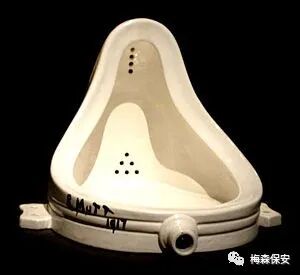
Duchamp called it a fountain. At the J. L. Mott Iron Works on Fifth Avenue, he bought a porcelain urinal, turned it on its back, signed it “R. Mutt 1917” in black paint, and submitted it to an art exhibition. The exhibition's society rejected him, but the upturned urinal became one of the twentieth century's most famous works of art. The dispute over whether Fountain is art has never ended. From another perspective, though, the urinal is indeed the most beautiful object in the contemporary men's room. Lighter than the toilet, more at ease than the sink.
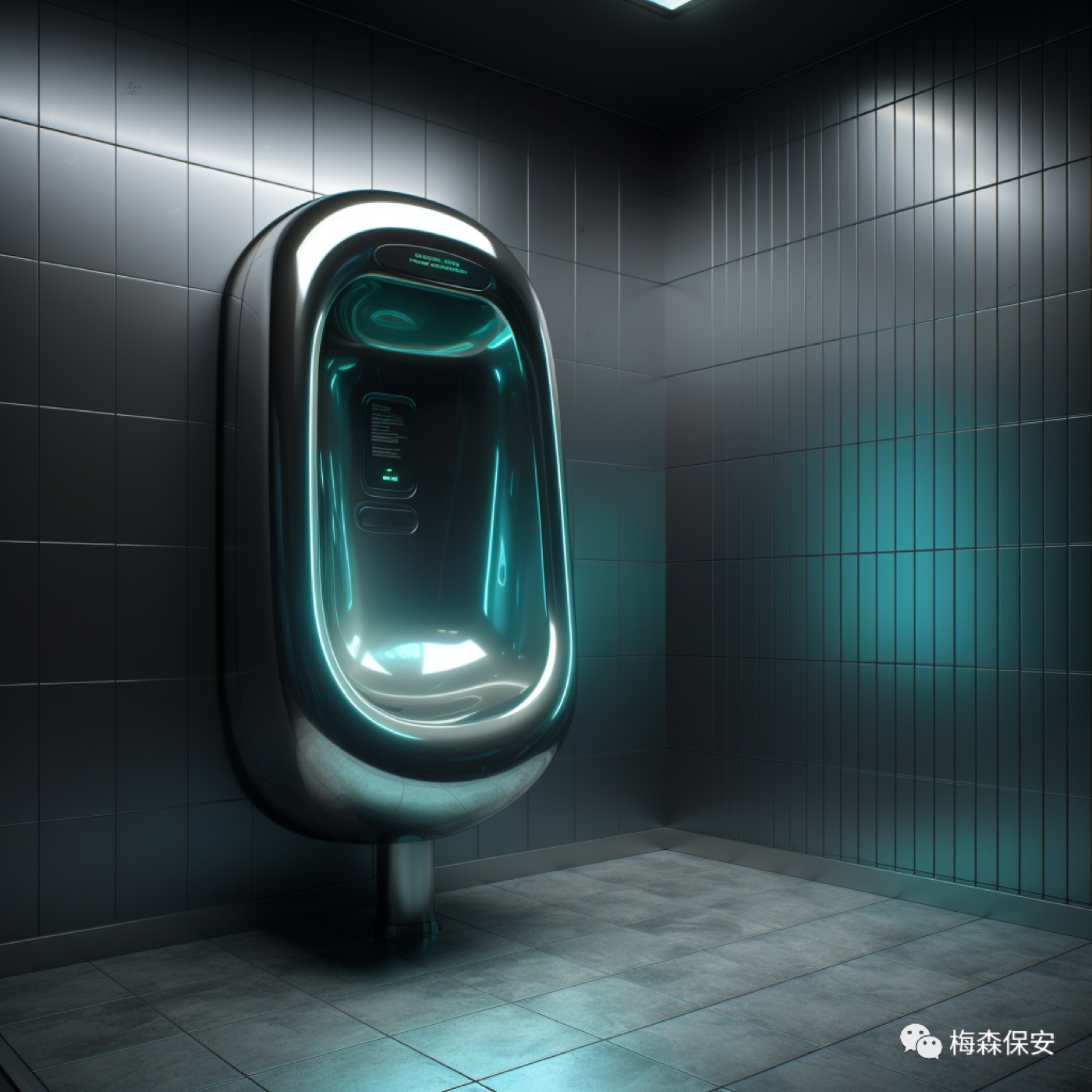
It resembles a half-open embryo. The pipe at its base joins the city's maternal body like an umbilical cord, feeding into a vast sewer system. It also resembles female genitalia. The comparison is difficult to avoid, even if this was not what its designers intended. In any case, this object unique to the men's room—which, from its own perspective, spends every day watching all varieties of men lower their trousers—continually suggests the presence of another sex.
Except in a collective setting. In schools, factories, and high-traffic public restrooms, one can still find a wall-mounted urinal trough the size of a curtain wall. Usually made of stainless steel. No partitions. Several people may stand before it at once. Thus gentlemen can more easily glance at how the neighbor's urination is going, without having to prick up their ears or crane their necks around a partition. Water runs almost ceaselessly down the urinal trough, indiscriminately washing away everyone's urine. Had Duchamp been born in a socialist country, his fountain might have been renamed Waterfall.
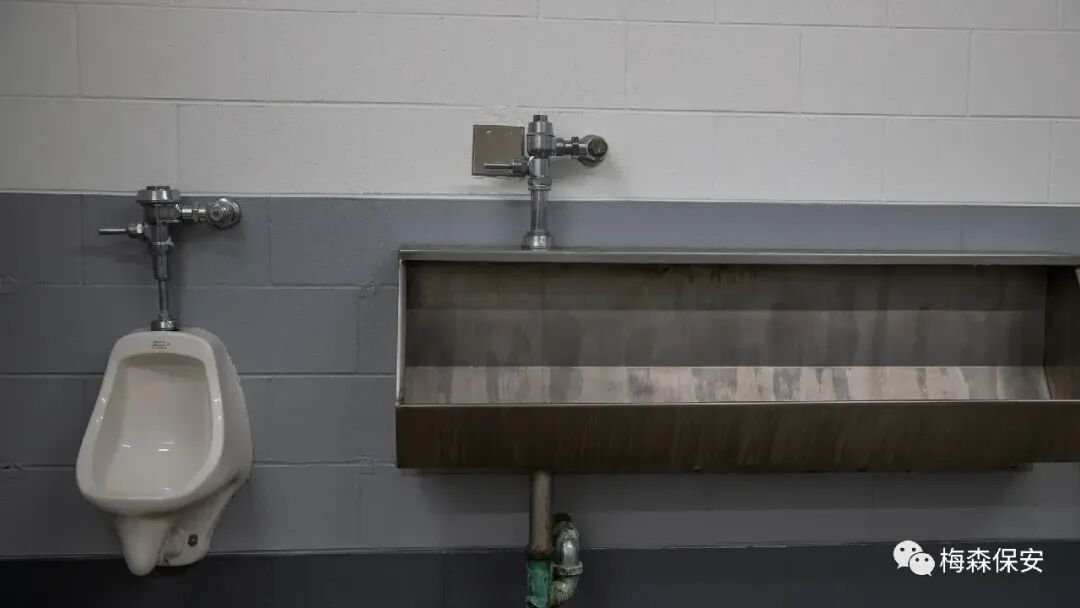
The difference between a fountain and a waterfall reveals that in our time, privacy is not something a person necessarily needs. Of all the sovereignties that belong to us, it is among the first needs we can compromise away. No rule explicitly says that only one person may use a urinal at a time. Yet the way urinals are arranged in a men's room, and the way partitions are placed between them, make two or more people sharing one urinal extremely rare. Unless the extra users have unusual proclivities and extraordinary confidence in their urinary technique. With the front of the urinal already occupied by its principal user, it is nearly impossible for a second user to urinate into it from the side without ricochet, collateral damage, or a complaint from the principal. A urinal, then, is first of all a form of temporary property. Even though it is temporary and public, even though it was invented for efficiency and to save space, it remains a scarce resource. During urination, its user unconsciously claims sovereignty over that space.
Before a broad urinal trough, however, people can stand shoulder to shoulder without feeling embarrassed or affronted—even though they stand closer than two men sharing a urinal would, in a more ambiguous arrangement, and are more likely to catch someone else's splashback. In this setting, looking left and right does not appear especially intrusive, even when done for the purpose of peeping. The people in the row appear first as a group who have surrendered their rights, not as occupiers of space. A common need to urinate requires them to surrender the right not to be watched, and not to be splashed. Watched, splashed: so be it. Only when the granary is full do people learn decorum. They will not resist.
The urinal's powerful sexual suggestion is also absent from the trough. Urinals frequently indulge in fetishistic innovations: their exteriors may be painted as a woman's red lips and mouth; a miniature football goal may be placed over the drain, making a man instinctively search for a difficult angle from which to shoot. After shooting, he must spit into it too, to show that he is humiliating a filthy thing. Every one of these designs reminds the user of a male identity while he urinates. That gender consciousness is erased by the trough. The trough's prototype is the factory lathe. Sex is an inefficient form of production. The trough advocates a sexless world. Naturally, this also entails denying whatever pleasure might exist in the act of urination.
In 1830, the first public urinals appeared on the streets of Paris, decades before the invention of the electric light. They were part of the modern city's answer to its steadily worsening sanitation, one piece of a grand plan. Garbage-management systems had already been built by then. Otherwise, the rot in the air made the city unbearable to its inhabitants (the poet Swift said that London floated in a thousand stenches). Management, of course, mostly meant having rough sleepers and night-soil collectors supervised by street cleaners carry rubbish and waste from the city toward its margins, earning meager profits from the work. As the city learned to digest its own filth, a new moral concept took shape. Cleanliness.
Inside the human obsession with cleanliness, which has continued from that time to ours, lives a kind of fear. People spoke of purity before, but mostly in the sense of the soul. A stain on the soul could either be overcome or else it was original sin. Physical cleanliness is much harder to determine, especially in the modern world. Even after the development of microscopy, germ theory, and the subsequently disproven miasma theory, no one can easily grasp how clean their surroundings are. Every age discovers smaller particles, forever seeping into the space around you. The poet Mayakovsky is said to have needed to wash his hands repeatedly from childhood onward before he could feel at ease. But how clean is clean? So much of what frightens us can no longer be detected by the naked eye.
The urinal is urine's dwelling place, an exit for filth. As are the toilet and the pipe. Devices of this kind transport the things people do not wish to see or smell, the objects they deem unclean, into the city's darkness, to be processed, transformed, and discharged there. Where they come from and where they go, city residents usually neither know nor care. The system's operation becomes custom, becomes religion. And devices like the urinal establish a standard. They tell people where it is clean and where it is not, what is clean and what is dirty, even though their standard is not identical to science's. This implicit instruction soothes the fear of a cleanliness that can never be secured. Such is the spell cast by objects.
Expensive spaces—five-star hotels, private clubs—devote themselves to keeping urinals spotless. They polish one until it gleams like a plate just carried out from the kitchen. In other spaces intended for ordinary people—railway stations, karaoke clubs—the urinal is a disaster zone. Either the drain is clogged and the urine is about to breach its banks, its surface as difficult to keep level as champagne poured down a tower of glasses at a ceremony; or you walk into the restroom and all the urine is outside the basin, a reflective swamp across the floor. Cleanliness is sharply divided by class.
I wonder what the urinal means to a person in 2023. Technically, it has seen many innovations. Some places use waterless cleaning systems. Some no longer use mothballs to mask the smell. Others install televisions above the urinals and play soothing music, helping gentlemen with certain difficulties relax enough to urinate freely. None of this has changed how people understand the urinal. Its form remains the same as it was in 1830. It divides and defines a space of life. It regulates the behavior of urban men with astonishing force, requiring a person to aim into a small basin every time he urinates, and yet it is taken entirely for granted. The regulation itself could easily have been otherwise.
Imagine a society that does not worship cleanliness, where the smell of urine and feces permeates the air. People could tolerate it, just as they tolerate the smell of a chemical factory. Then imagine a society of extreme moral mysophobia, where a person must not only regulate excretion but enter a designated space to fart or blow his nose, lest he be regarded as unclean, as a person without self-respect. Our lives might have passed into any of these various tunnels, yet in the end they came to rest upon this road. Anchored to the wall of a men's room. A man stands with his trousers halfway down, the lower half of his body concealed by partitions. He hums for a long time before he hears water in the urinal. He imagines this daily, recurring interval to be merely a gap in his complicated schedule. But perhaps his entire life outside the restroom is tethered to the urinal.