Portrait 4: Invisalign
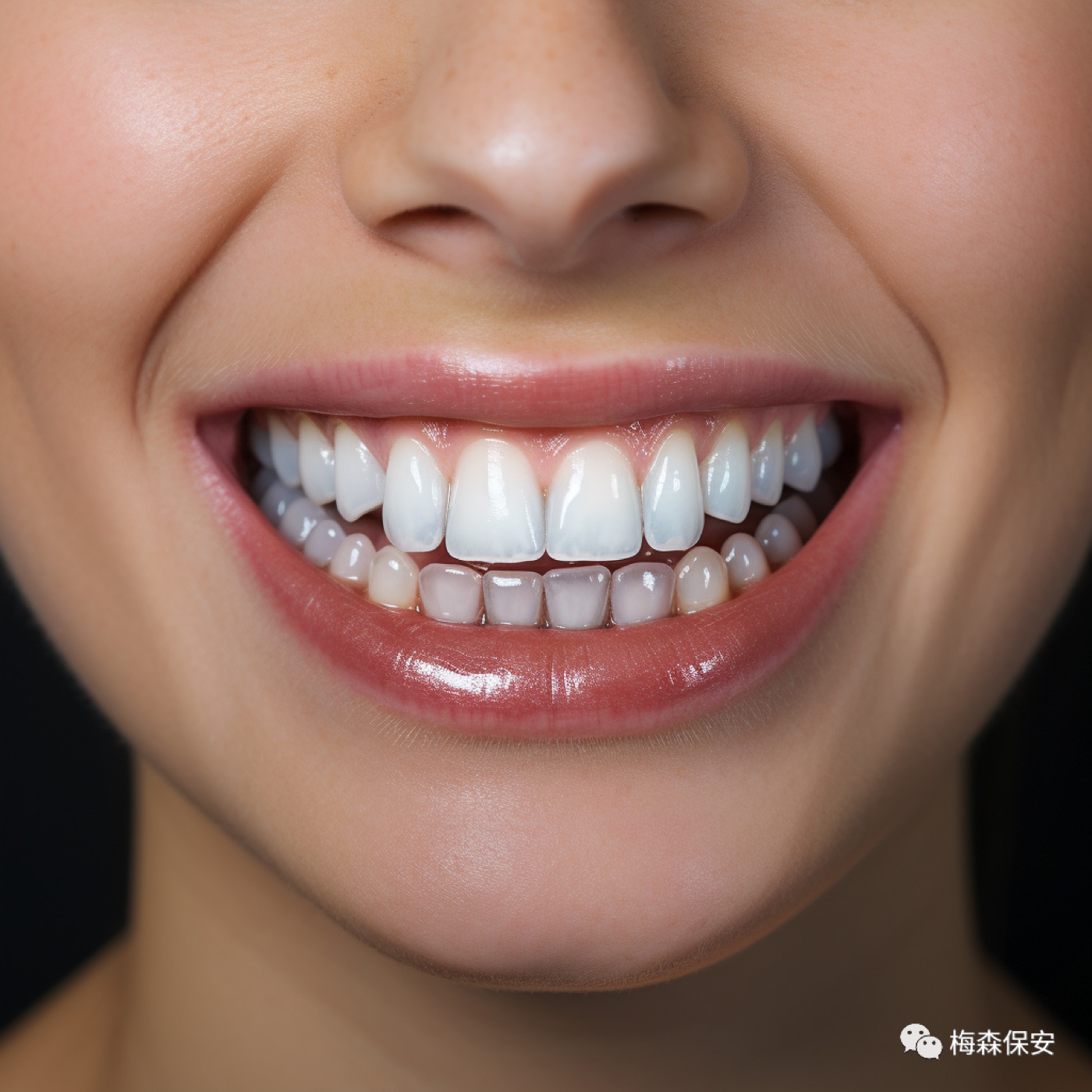
It invented a method. Strictly speaking, it did not invent it. It merely followed the spirit of our age, made several minor modifications, and applied them inside the mouth. It is Invisalign, known in China as yin shi mei—“hidden, fitting, beautiful”—the most fashionable transparent orthodontic appliance of the moment.
In 1997, Zia Chishti, then a student at Stanford Business School, had the idea. Chishti had undergone orthodontic treatment. Metal braces caused him pain and made him ugly enough to lose his self-respect. Why not invent a transparent brace like a plastic retainer? It would not be ugly. Through a succession of minute alterations, it could make teeth move slowly. Move to where they ought to be. To a beautiful position.
Such braces would be custom-made according to the teeth's present condition and replaced at intervals. Each set would complete one tiny mission, shifting them a little closer to the correct position. Why not? We had industrial-design technology, CAD, 3D printing.
More than fourteen million people have now used Invisalign. People tormented by teeth that grew in freedom. Their mouths like shovels lying every which way in a wilderness cemetery. People who lower their caps as they pass the enormous billboard smile of a woman. People afraid of the pain of metal braces. Rich people, because Invisalign costs more than metal brackets. Because the poor have more organs to look after, and the teeth are the easiest to discard. Next come hair, face, sexual ability. Most important are the hands and feet.
Invisalign is first a method and only second a technology. The method serves an ancient conception of beauty. This conception holds that the subject of beauty should be regularity. It is built upon the greatest common denominator of human experience; in truth, it accepts nothing outside the category.
Like Christ, who for the overwhelming majority must exist as a person, not as a beam of light or a pool of water. It tolerates small variations and applauds them, but does not accept complete freedom. It can accept an array of fingernail colours, a small canine protruding from a mouth of straight teeth—so cute, they say; it shows his mischievous personality, they say—but it cannot accept growth in total freedom. It does not accept teeth that point in different directions and refuse to respect a single form. Those are disgusting, ugly, horrifying.
This conception of beauty silences the owners of such teeth, because people always love beauty. To love beauty is to accept treatment, accept correction.
There is, of course, a solution, though it is crude: wear metal braces inside your mouth. This is a contest of strength between teeth and metal. One day the teeth will concede defeat and you will arrive at beauty, neatness, order. But for the years before that, you must allow others to see the horizontal wires across your teeth. You must swallow your anger and display your identity as someone undergoing correction, because one part of your body, visibly, has been disobedient.
You must control yourself and laugh as little as possible, because it is ugly. Move your jaw as little as possible, because the metal wire will cut the inside of your mouth. But one day it will be good. This is the slave's beautiful hope and the condition on which you accept brutality. A promise will be fulfilled several years from now. Every day brings you closer.
Invisalign invented a method that revolutionised the slave's life. First, it is a method of management focused upon self-management. As Foucault observed, whenever the ruling class invents a form of discipline, it first applies that discipline to itself.
What matters in this self-management is beautifying the process of enslavement, making it perceptible to the smallest possible degree. Making the slave impossible to identify in a crowd. Allowing you, for more of the time, to forget that you are a slave. Because it is transparent and feels less foreign than metal; because every two weeks it pushes the teeth only a little. It remakes you carefully, patiently, tolerantly, like fine rain falling without a sound.
From countless experiments it has calculated the temperature at which the water will not feel hot; you think you are taking a bath until you are cooked.
This is an entirely modern method. It resembles the knowledge used to farm poultry efficiently, keenly grasping a fact: a person cannot change their condition as a slave, but can change their state of mind. Freedom and slavery form a long spectrum. People are not simply black or white.
Given that they are not simply black or white, certain illusions created by things allow a person to feel not entirely enslaved. When you can remove your brace to eat; when you ask whether someone can see the brace on your teeth and they answer no, you feel superior. Superior to people with metal braces, superior to people who have never straightened their teeth.
You accept the present condition. Even though this brace, like every brace, drives you, wears you down, consumes you, whips you; makes eating painful; leaves you always feeling that something is wrong. You accept it because you will become a winner. This is the price of beauty. Beauty is the common denominator. Beauty is the form this brace has already designated.
The people at the clinic welcome you. Invisalign technology has grown steadily more sophisticated over these twenty years.
So there is no need to be afraid, the doctor says. Good. Now slowly lie back in this chair. I need to put a pair of dark glasses on you because I am about to switch on the large lamp above your head. There will be a strong light. It will illuminate your mouth, illuminate those dark, damp, disgusting, writhing places. Every secret in your teeth will become visible at a glance: the beef and dumpling filling between them; the cavities left because you do not brush properly and like sweet things.
Teeth also show what sort of person you are, don't they? Every fine detail of your body discloses your character.
Good. I will brush resin onto your teeth. Once it hardens, it will help them fit the brace more closely. And it is colourless, like a transparent stain. I will also put studs onto two teeth. I have used rounded heads so they will wear the inside of your mouth to the smallest possible degree. You will attach two elastic bands to them, hooking the bands onto your lower gum. Slowly, they will correct your bite, because your bite is wrong. Because over a long period you acquired an incorrect biting habit, causing your teeth to close crookedly every time.
Now, are you ready? I will put in your first set of braces. They may feel tight. You may feel discomfort. Tell me when you do. All of this is normal. All of this is part of the necessary road to walking confidently and brightly into a crowd.
Good. Are you ready? You only need to open your mouth like a little baby darling. Ah—ah. Close your eyes. Imagine a beach, as though nothing were happening.
Yes. Just like that.