Portrait 3: The Stepladder
I discovered that I had lost some photographs. The ones from 2019 to 2020. I do not often take pictures, but from time to time I depend upon the few that survive to recover how the past felt. Because I have forgotten all of it, including the important things.
What I wanted to recover was the end of 2019. By then, I had drifted about for a year, telling my family, in dignified terms, that I was applying for a doctorate in law. I had indeed put considerable effort into it, though I knew very well that it was a path I hated. Even when describing the vision, I used an almost sarcastic tone with my family: once I graduate, I shall have a stable income and a respected profession, and from the other side of the ocean I shall point the way forward, keeping watch over China's social problems! At the end of 2019, the lie I had told was about to be forcibly called in, so I took a trip.
I went to the city where H lived. H was a good friend I had met at a factory several years earlier. He was the only person from there with whom I still kept in touch.
At the time, I was in a state of intense self-loathing. A succession of experiential writing projects, followed by a perfunctory piece of fieldwork at university, made me feel that I was merely using words to exploit other people's lives. Performing, to put it kindly. When the time came to choose my path in life, I once again chose the most utilitarian one and decorated it with the language of social justice. This was enough to show what kind of person I was.
The sole purpose of the trip was, for the first time, to enter another kind of life without a utilitarian purpose. No writing. No recording. Only visiting a friend. Several years later, I happened to lose every photograph from this period. A few impressions are all that remain.
Several years before this, I had met my coworker H in a factory. On the first day we met, he took me to buy a straw sleeping mat and daily necessities. I bought him a bottle of Coke. He stepped aside like a little girl faced with a stranger in the family, hiding behind an adult. No, no, I don't need it, he said. I left the factory less than a month later. But one year afterward, we met again in his home village outside a small city in Hunan. I only want to ask you one thing, he said. What do you think I should do next?
In the end, neither of our lives changed very much. By this I mean that different forms of discouragement troubled us. He could not change his life. I lacked the courage to change mine. But when he heard I was coming to his city, H answered generously. He had prepared an air mattress for me, he said, inflating it bit by bit with his own mouth. It was in the living room. His place was not large, but it could hold two people.
By then, he had left the factory and was installing ceilings in a small city on the border between Guangdong and Hunan. People today would surely find it difficult to imagine ceiling installation as a trade of its own. They cannot wait to combine bricklayers and electricians into a single full-service renovation team. In fact, the trade had already begun to die out, but its extinction had not yet reached this city. Do the magicians and circuses roaming industrial society, the aged monkeys and elephants, also get driven step by step into the deep mountains and villages inhabited only by the old? My first impression of the city was the pharmacy that appeared every ten meters, far denser than any other kind of business. Illness must have troubled the place. The illness of the old. The departure of the young.
H lived in an urban village that appeared without warning. It was hidden within a district of ordinary streets. Then a sign abruptly appeared. Beyond it stood a thicket of crowded buildings, extra stories added now and then, like a densely planted forest. In a courtyard on a slope, on the third or perhaps fourth floor, he had a room. Ordinarily, he lived with his older brother and sister-in-law, but they had returned to their village to build a house. The cooking range resembled a black hedgehog and was plainly a safety hazard. Yet everyone across the district lived this way. News of fires appeared often: fire in an urban village, many burned to death, one household igniting after the next like a cluster of grapes.
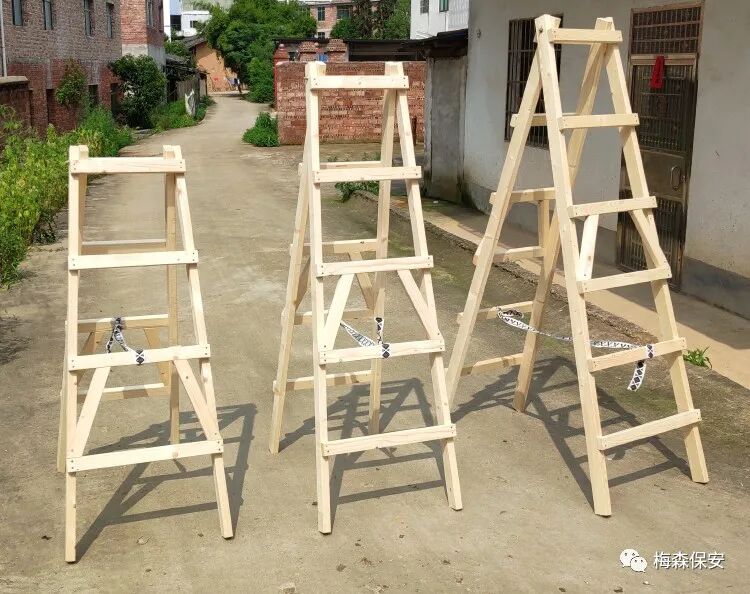
By day, H and I went to the unfinished concrete house they were renovating, a two-story building where city and countryside met. I watched him work. In truth, I could not help with much beyond passing him things. I was astonished to discover that they could stand astride an A-frame ladder and command it like a horse, moving freely around the house. It resembled a kind of acrobatic performance, or an ancient people's method of crossing water. No wonder. They worked on ceilings—worked was less accurate than built.
I could understand why he had devoted himself so fully to learning the skill. First, several of H's paternal cousins had practiced the trade for years. It was a kind of family-secret craft. Second, unlike factory work, it was a real skill. Not everyone could stand astride a ladder and measure and cut in midair. The threat of being replaced therefore felt less immediate. With considerable enthusiasm, H explained why ceilings were important and exacting, why suspended ceilings came in many designs. As a result, for once, I looked upward.
I remember asking H whether he liked what he did. It was a stupid question. He answered by drawing me a blueprint: he had studied for one year; what level might he reach after five, after ten? Then he could work for himself and find his own customers. For now, to learn the craft, he needed to apprentice under his older cousins. They paid him one thousand yuan a month. Enough to stay alive, barely, he said.
H and I visited another older brother's home for dinner. It was also in an old residential compound. Several family members squeezed together. The brother's daughter appeared to have started school and focused the attention of the whole family. The brother's mother, an expressive woman, showed concern for H's progress toward marriage and mocked it verbally, even with me present. H was twenty-nine and unmarried, considered within the family a symbol of weakness and uselessness. His gentleness rarely counted as a virtue in the village. She asked me to keep an eye out for a suitable woman I might introduce to him, then swallowed the second half of what she wanted to say.
At night, I slept on the air mattress H had inflated one breath at a time. It had reportedly cost ninety yuan and still carried a powerful rubber smell. After H turned out the light, I could hear sounds from short videos. Soon they disappeared. H's faint snoring began. He had rented a computer. Every day, I played StarCraft on it.
H told me that his mother had recently been hospitalized. Anger had made her ill: he had not yet found a wife or had a child, the things he should have done long ago at his age. She worked at a factory in the village, earning less than three thousand yuan a month. Later, I visited it. The factory made iPhone charging cables. A little daylight fell from above. The cables covered the floor like white snakes across mountains and plains, the finished products much longer than genuine Apple cables. They would flow to every corner of the world from this village, from the hands of a woman who worried every day about her son's future marriage and family.
His father, meanwhile, had a pair of large hands, impressively rough. A man of few words, he had once been highly capable, but then he became ill. Something in his brain. They went to a hospital in Changsha. None of them understood it very well, only that it would cost a great deal of money. H also mentioned his grandfather, said to be the only man for miles who could build a threshing machine on his own. This meant that a talent for handcraft was inscribed in his genes. He was proud of it.
H and I took a trip to Guangzhou. I invited him to stay at a cheap hotel near Canton Tower. The hotel claimed that the tower was visible from the room. Once inside, we clung to the window ledge like Spider-Man. From a certain angle, it was indeed possible to see the top of Canton Tower, though from that angle it could have been any tower. By then, I had acquired certain intelligence in the form of rumors: a frightening virus was circulating in the country, spreading at a speed that made virologists stare in astonishment. I bought masks at FamilyMart. When H saw me wearing one, he put one on too.
We went to an event inside Canton Tower. People who had made money, and people desperate to make it, gathered there. I got two tickets for us. Economists, celebrities, and businessmen delivered speeches about the future of China's economy, whether real estate would collapse, and the next field in which money would generate more money. H sat beside me listening with absolute concentration. But whenever I interrupted and said, Shall we go see what is happening in another hall? he followed me without a word.
I thought of H and the trip at the end of 2019 because I discovered that I had reached the age H was then. Yesterday was my twenty-ninth birthday. Our lives have changed somewhat. After H and I parted in 2019, I ultimately did not choose that utilitarian road. Fortunately. I would not have traveled it well. H returned to a factory, more or less against his will. One thousand yuan was too little, and the entire ceiling trade had finally been struck even in the small city—first by the pandemic, then by fully finished apartments. People preferred buying finished homes because there was nothing to worry about; full service meant everything had already been installed. Full service naturally had no place for these families who had made ceilings for generations.
But I always remember H's defense of his craft. He said he believed their skills were still needed. The walls in houses today could still be crooked, for example, so cabinets in a finished apartment might fail to fit against them. Those cabinets were not custom-made but supplied as a uniform package. Yet people like him could make a cabinet fit a wall perfectly. Only people who did their kind of work could.
H now works at an e-cigarette factory. For a time, his job was to inhale e-cigarettes all day, testing them upon his own body to determine whether their quality met the standard. He firmly believed the factory's claim that vaping was harmless. Later, through effort, he transferred to a position where he tested with machines and no longer worked the night shift. Some time ago, he told me he might go to America as a representative of the skilled workers. He asked another friend we both knew whether they might meet in America. As if America were an island.
Many friends came to my birthday. I also went to an inventive ball. My friends prepared a surprise, and we danced all night. At that moment, I thought of H. How many times had I answered him with “I can understand”? This was not honest. But the honest answer cannot be spoken.
I remembered Christmas Day in 2019, when we walked along the commercial street in the small city. H told me it was his birthday. I burst into a cake shop that was about to close and said I wanted to buy a cake. Throughout this action, H kept lightly tugging at my clothes, just as he had stopped me from buying him a Coke on the first day we met. No, he said. Really, you don't have to. I don't eat that.
I bought a small cake. The two of us walked beside the river in a city inhabited only by the old. A winter night in Guangdong, not too cold. Shall we eat it on a bench by the river? H asked. As I cut the cake in two, H said it was the first birthday cake he had eaten in his life.