Paper Alley
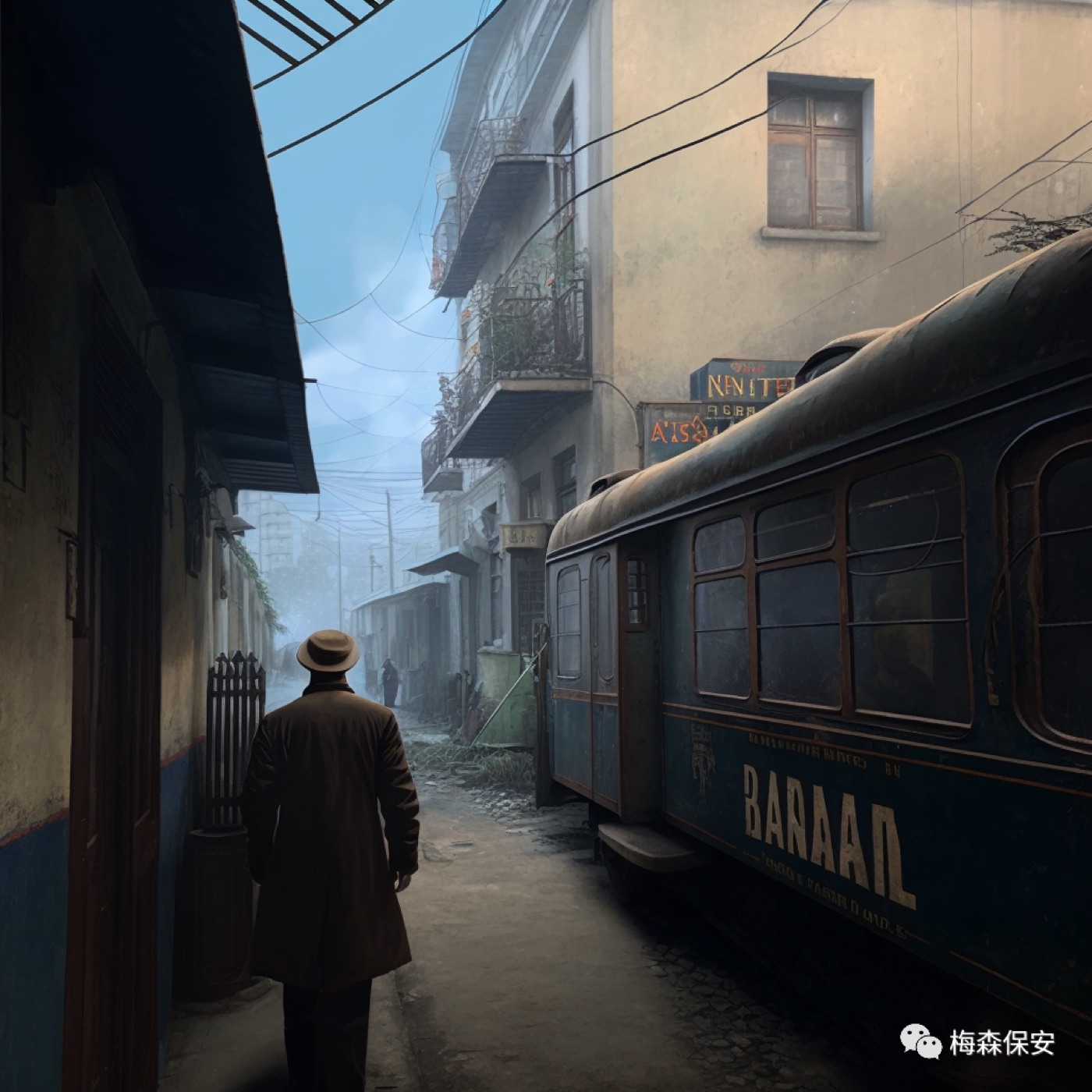
After Grandpa died, I never went back to Paper Alley. For several years before he died, I had not gone there either. He and Grandma had lived there for many years, for as long as I could remember. Until one day, over dinner, Grandpa said they would soon move away. To an apartment with an elevator. He was old and his legs were bad. He said they had sold the place to a couple from out of town, people who had spent many years in this city and would finally have a home of their own. The move that followed was swift and clean, completed without my noticing. I did not return to Paper Alley until the Spring Festival this year.
It remains in that belt where city and countryside meet. The city's sprawl passed over it. In places like this, people are always flowing through and being replaced, while the landscape never changes. The buildings, streets, and stalls became mottled and blackened long ago, yet endure for years, like the long second half of a stooped old person's life: quick to decay, unexpectedly hard. Many years ago, I already heard Grandpa and Grandma complain about the changes in Paper Alley. First, there were more outsiders. Second, the quality of the residents had declined. Childhood friends also told me prostitution had appeared on the street. Grandpa and Grandma could never have mentioned that part. They described their neighborhood only in abstractions, as though the people there had nothing to do with them. Grandpa's street was a mobile Reuters bureau. At four every morning, he ran downstairs and jogged to the junction of Paper Alley and the main road. There he met several other old men from "Reuters," and together they walked to a park several kilometers away. Every bureau member wore a shirt and old suit trousers, with a belt cinched around his waist until his body formed a shallow capital B. They power-walked, swinging both elbows theatrically like a flock of urban roosters, a soundtrack for the morning, discussing affairs of state, Yanhuang Chunqiu, and their children.
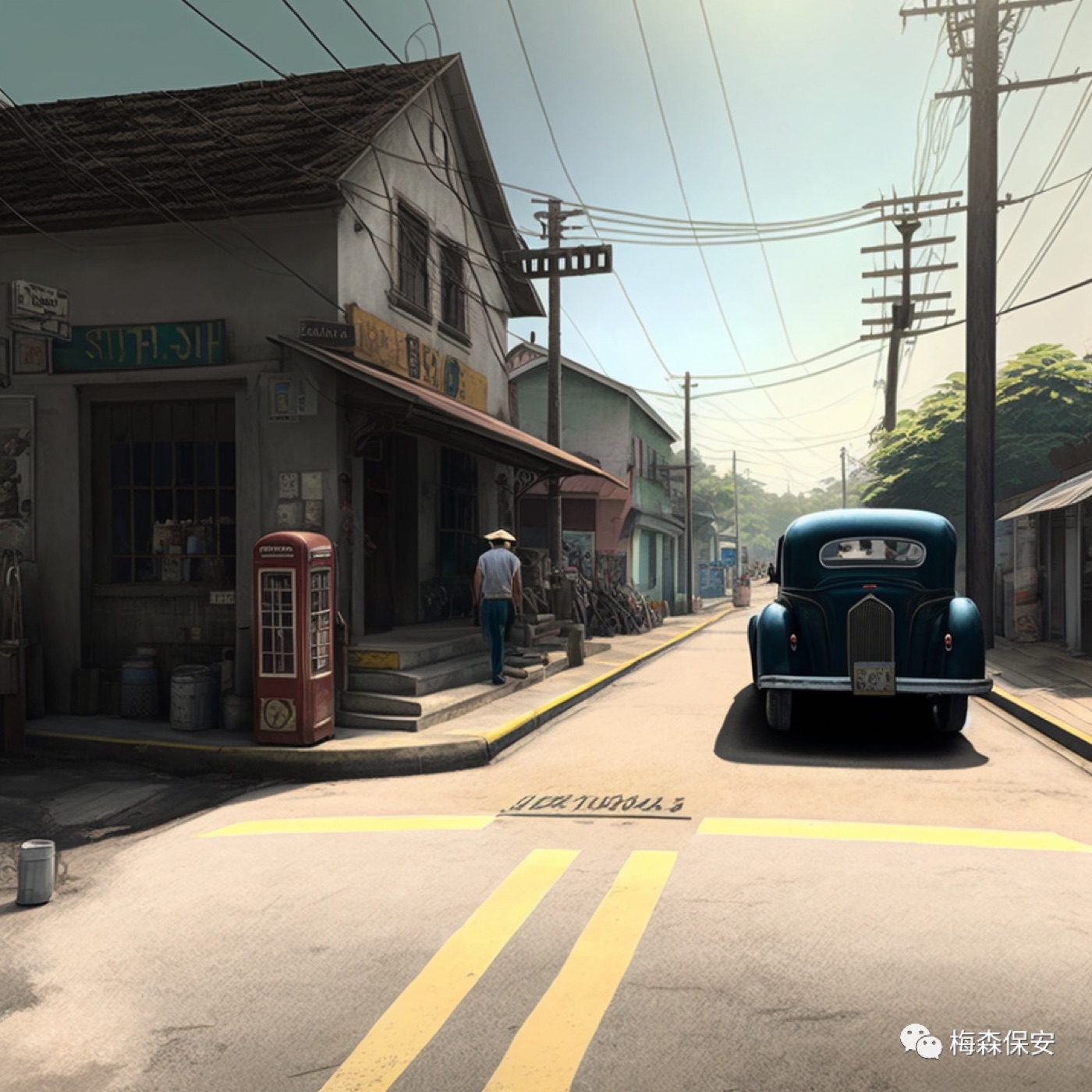
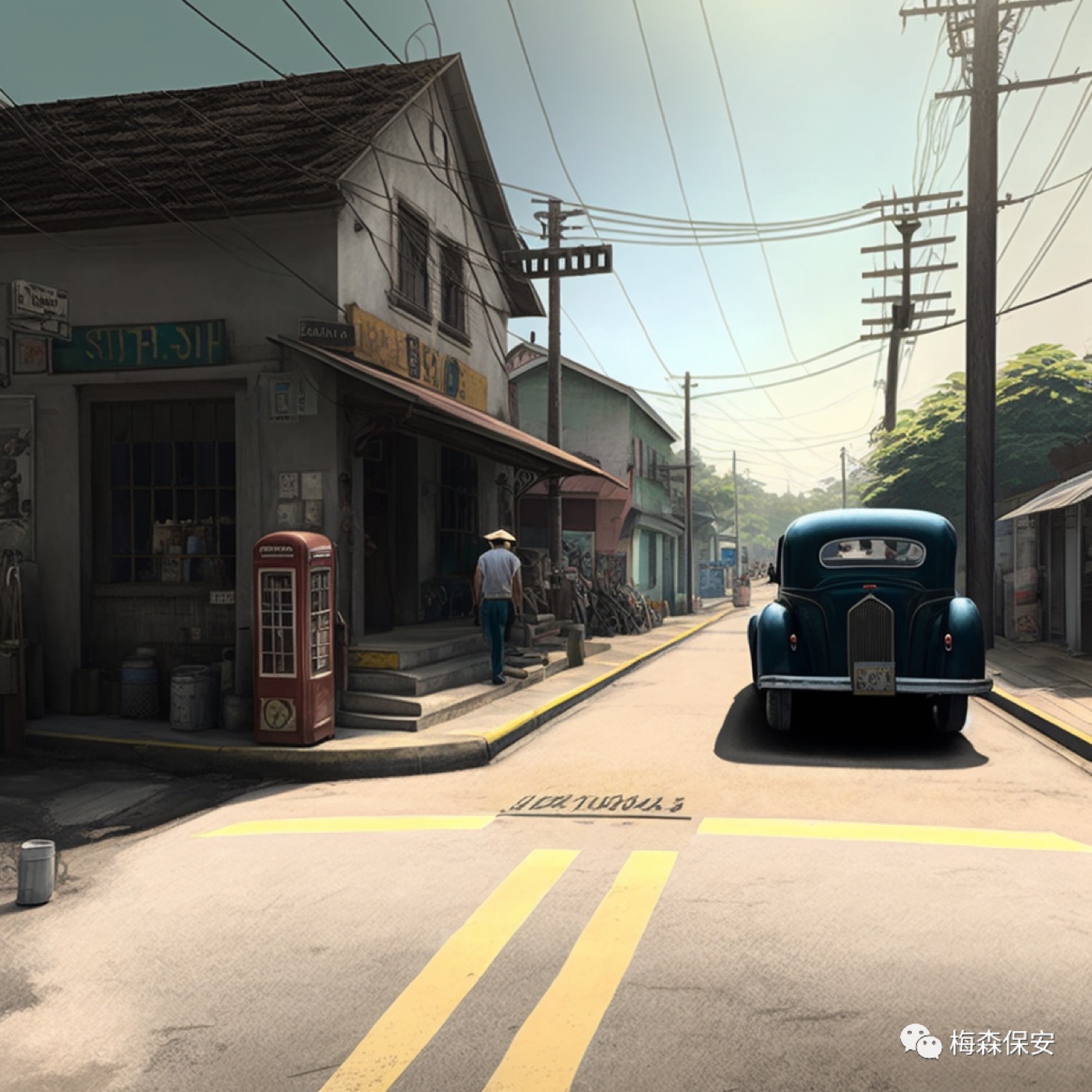
Once people have lost something completely, they begin to dream of recovering it. Perhaps this was why I came to Paper Alley alone on Lunar New Year's Eve, hoping to rediscover something, or confirm a feeling. I recognized almost none of the shops. Their facades were mottled, suggesting they had been there a long time—too long for me to have no idea what they were, to have forgotten so quickly. In the middle of the street stood Slim Feet Foot Massage. Its four glass panels read FOOT THERAPY, FOOT SOAK, MASSAGE, and then a blank one, allowing room for interpretation. Next door was a nameless twenty-four-hour adult shop. A giant SEX was printed on its pink curtain, with UNATTENDED SALES emphasized below. Elsewhere in the alley were Ermei Cold Dishes, Qijing Non-Staple Foods, and Xiao Yu Refrigeration Repair Services. Most were closed, their premises for rent. At the dimly visible end of one side lane stood a bar called Fate of Dreams. Raise a glass; feelings begin to speak. On the wall, black silhouettes of two women danced. It did not look like a place where legal activity occurred.
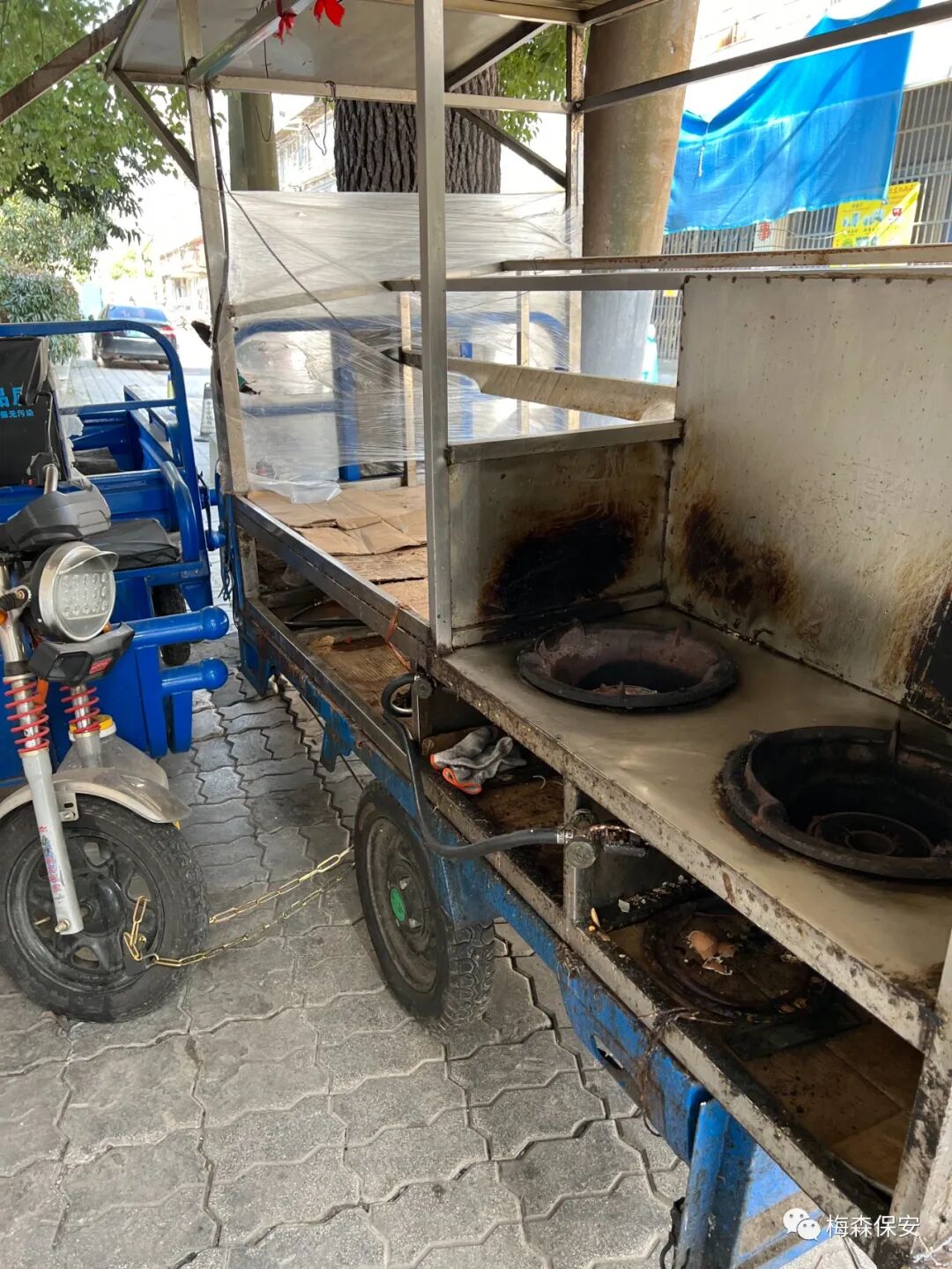
What I remember most clearly is the nameless fried-dough stall below Grandpa's apartment. The vendor's oil had survived an impressive number of years and darkened almost to black, which made the youtiao especially pungent and fluffy. Sometimes gutter oil is indispensable. In my memory, the vendor was always surrounded by one or two very young children. Even after several years, when those children had grown taller, contracted adolescence, sprouted bangs, and disappeared into the room behind the shop, new babies would appear beside the vendor. Most of the breakfasts Grandma bought me came from that stall. Their youtiao were so long that, even folded in half, they would not fit into the little plastic bags. The vendor was always generous with the sugar in the soy milk. On this visit, the stall was still there, a FOR RENT notice pasted on the shop behind it. The wok had been removed. All that remained was the blackened stove.
The stall stood beneath an enormous camphor tree. As a child, I once invented a maudlin story about the two of us, my father's mother and me, sitting back to back beneath it. I must have been under the influence of some film or television drama. I replaced falling cherry blossoms and romantic love with lush camphor leaves and the bond between grandparent and child. Very well: Grandmother and I sat back to back beneath the camphor tree. Some sort of promise was required to justify such an unusual posture. But I knew neither what we were supposed to do nor how to describe her face, so I could only describe how luxuriantly the camphor grew. My father's mother died very early. I do not remember what she looked like. I remember only her very long braid and a set of false teeth soaking in a basin beside the well. When she died, I pestered my weeping aunts into buying me several packets of Mimi shrimp crackers at the crematorium. They cost half a yuan each. I slung them over my shoulders like ammunition clips, displaying the first shoots of unfilial conduct, luckily excused because I was "still little." In any case, I labored mightily over that essay, desperate to move my teacher with genuine feeling. The camphor tree was the only true part. It remains.
On the other side of the camphor stood a villa with a red-tiled roof. My classmate Shengsheng once lived there. Before my sense of class had grown so distinct, I would lie on Grandpa's balcony and look down into the villa's yard, watching the cars come and go through its locked, ornamented iron gate. Once I learned how wealthy Shengsheng's family was, that looking-down acquired the quality of spying. Shengsheng was a boy with a sunny smile. He had asthma and, in kindergarten and primary school, occasionally lost control of his bowels, leaving a faint yellow streak down the back of his trousers. I entered the red-roofed villa once. There, for the first time, I ate pizza: soft-crusted, smeared with the ketchup children like. I still remember it suspended in the air, an irregular triangle, soft and floppy, come from Europe, hooking my eyes. That day, Shengsheng's mother—older, nearly Grandma's age, proud, always boasting to Grandma at public dances about Shengsheng's excellence—welcomed me warmly. In the scenery of my memory there was also a smiling maid standing at attention in a Western-style apron. Later, I heard rumors that workers whose wages had gone unpaid had thrown shit into the villa. The teller did not hesitate to use the word shit, and took a secret pleasure in tearing away the veil of the rich.
I used to look down at the red-roofed villa from Grandpa's balcony. His apartment was on the third floor, where an exceptionally large terrace connected two buildings. You could kick a ball or run across it. Sometimes I crouched at the edge, carefully let my head rise above it, tested the possibility of falling, and looked down at the utility pole, the red-roofed villa, the dough stall, and the vendor's limitless supply of newborns. Grandpa followed rules all his life and practiced many moral codes that had already expired. On that enormous terrace, he enclosed only the portion indisputably belonging to his own apartment. He grew flowers, arranging the pots into a boundary of considerable geometric precision to remind us where we were allowed to move. Grandpa was skilled with flowers. More precisely, however, my only surviving impression is of the night-blooming cereus he grew. On certain nights over several years, when he had been drinking and his face was scarlet, he would suddenly announce that the cereus would bloom that night. Then we waited. We waited until it was very late, until I fell asleep, fell asleep inside the flower's powerful fragrance. The next morning, Grandpa would tell me it had bloomed. He had captured the instant on a first-generation iPhone.
For as long as I could remember, I came often to Paper Alley. Most of the time, I came with my parents for dinner. On the walk, I begged them to take my hands, let me hang between them, and swing me from behind to the front like a pendulum. In the air, I drew up my legs and hung there. This proved that my mother and father still held me, still loved me, even though I was heavy and had already developed a bit of a belly. When I was smaller, I once walked back to Grandpa's apartment alone from a faraway kindergarten. It seems I simply followed other people's leather shoes and padded trousers, crossing one traffic light after another until I reached the foot of his building. When I looked back, my mother and teacher had also reached the entrance to the alley. I ran toward them crying. Why had they taken so long to find me? My crying was full of delayed terror and resentment, with a little pride mixed in. I hoped my mother would tell everyone in the family, repeatedly, about my feat. I still had abundant tears then. In primary school they suddenly disappeared. Later, when relatives died one after another, hardly any tears came. Whenever I mentioned this strange condition, some girl would want to test me, watching the corners of my eyes as she said something heartfelt and moving.
After my imitations of the great battle scenes in Five Thousand Years of Chinese History in Comics won approval, my family sent me to learn drawing from a sketch teacher in the building next to Grandpa's. At the time, I was a child laborer in rapid sketching. While adults drank, I lay beneath the table and drew. The tablecloth and the leather shoes revolving through their rounds of toasts hid me completely. Three seconds for a face, ten for a soldier. The faces lacked variety, but I could produce a bloody battle in no time. I was especially good at wars between Mongols and Han: scimitars against spears, cultural diversity represented through violence. Many elders praised me. Haloed by this reputation, I carried a great deal of equipment to the sketch teacher's home. But he only made us draw his family's vase, and every time he repeated the false story about little Leonardo drawing eggs day after day. Once we began, he went into another room to smoke, calling it a test of our concentration. I finished the vase in one minute. I was impatient and lacked the technique to make it any better. But I remember one fair-skinned boy, taller than all of us, whose pencil moved slowly. He seemed to possess endless patience and kept studying the light and shadow on the vase. He was the teacher's favorite pupil. The teacher called him a genius. After a few classes I returned to Grandpa's and said it was boring and I would never go again.
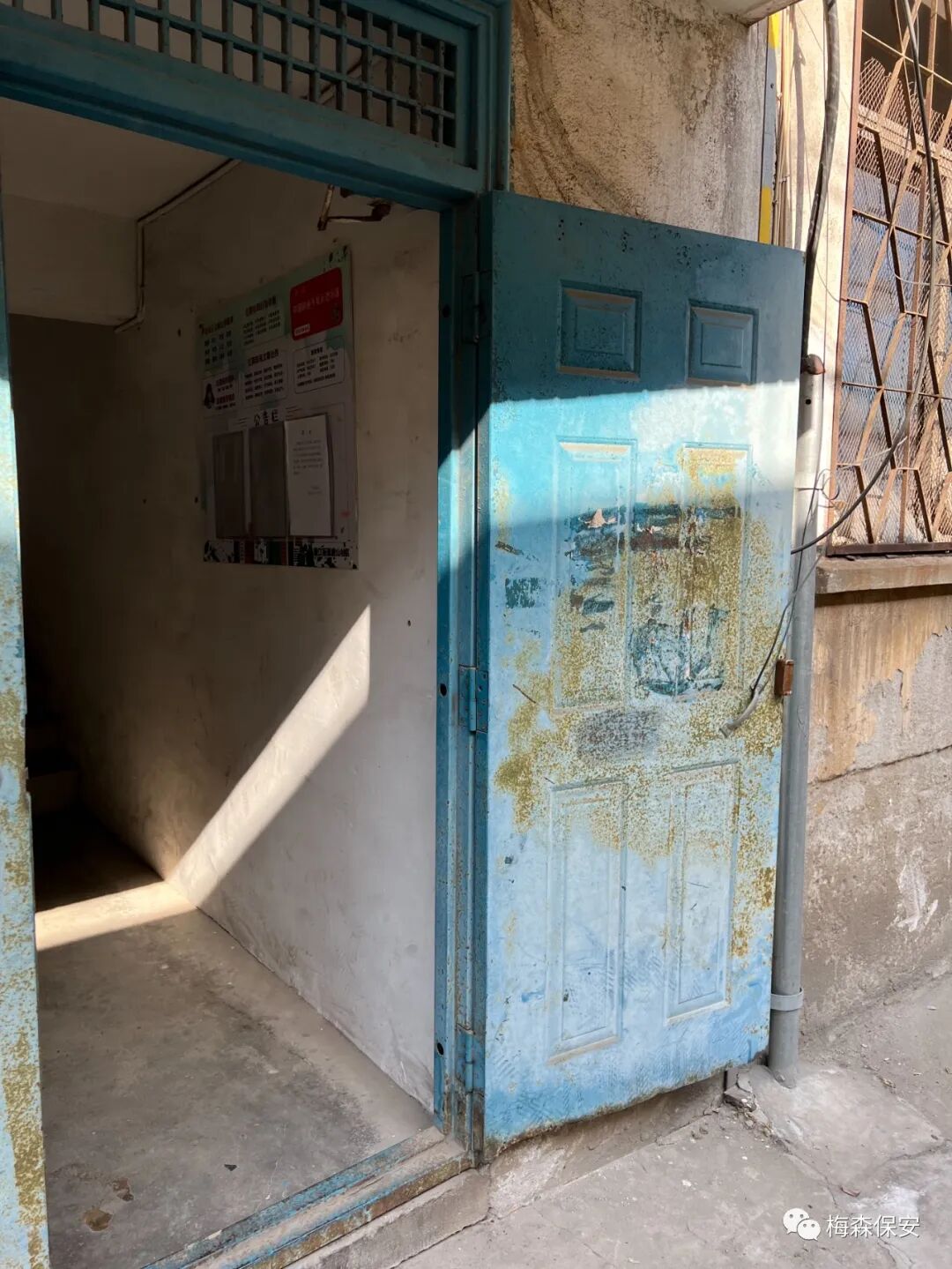
The blue door at the bottom of Grandpa's building has now been eaten by rust. A wire must be looped around its handle and tied at the other end to a pipe beside it, simply to keep the door from falling away. But at first, it was the strongest spring-loaded door in the city. Its spring was more powerful than that of any door I had seen. The instant you opened it, it slammed shut with a tremendous bang, as though it spent every day nursing a bellyful of rage. At the time, I developed several strange compulsions. One was a race against the blue door. I silently told myself I had to run up at least two flights before the door closed, or I—or a member of my beloved family—would die. Burdened with such responsibility, I always charged forward the moment I opened it and waited for the sound of the gatekeeper below delivering judgment. Grandpa and Grandma waited at the end. When they heard the whirlwind of footsteps, they knew I had come.
Before I grew taller than Grandpa, he liked to roll his cheek across mine when I came through the door. Sometimes he lifted me into the air and hurt my armpits. He acted so delighted, as though my arrival every day were the rarest event. Suspended above him, I complained, Grandpa, beard, prickly, prickly. Only then did he put me down. Behind him, Grandma clapped her hands and said, the grandson is here. The whole routine looked like a Jewish family reunion staged in a play. Then Grandpa and Grandma led me into the kitchen. The dishes were already on the table, while braised pork and stuffed gluten balls simmered inside the "cat's head." The cat's head was an electric steamer Grandma had improvised from polystyrene. It remained in use for more than ten years; its safety rating was unknown. Grandpa cooked more than ten dishes for every meal. I later learned that, when none of us children came, he and Grandma simply stewed a pot of noodles until they were soft. As he cooked, he sorted vegetables and aromatics into little bowls, swinging his elbows before the stove just as he did during the Reuters bureau's morning walks, spatula and ladle going clang-scrape, clang-scrape. He was particularly good at red-braising, cold-dressed dishes, and soups. Before anyone picked up their chopsticks, he wiped the hot grease from the wall behind the stove. When guests came, he always began with a modest disclaimer: the food is no good.
Grandpa had been a soldier when he was young and kept a group of comrades whose affection for one another was sincere. Later, he returned home and took charge of a state-owned textile mill. The mill was not privatized until very late—not because it had proved especially resilient in the market economy, but because it had been forgotten. Like Paper Alley, like its workers, like the north: forgotten as a matter of course. One weekend in middle school, Grandpa and his loyal driver, Old Cao, took me to school in a Red Flag sedan long past its prime. A ten-minute journey took thirty or forty minutes. Whenever Old Cao said, "I remember now," or "Oh, it was that road," or "We should go that way," we inevitably turned down the wrong street. The city made them lose their way. They no longer recognized it. Was the textile mill the same?
When I was ten, we moved house, and afterward I went to Grandpa's for dinner only on weekends. When we finished eating, I sat down in his study and began doing homework or writing an essay. The study faced south. From its window, I could look down at a bungalow with a blue-glass balcony, the clothes hung there, the mop and bucket leaning at an angle. A color television ran without rest, leaking strange light through the blue glass. Grandma lived inside a rather deep hallucination. She always imagined me in a state of study that absolutely could not be disturbed, or believed I was composing some extraordinary masterpiece. So she ceaselessly cut me dazzling varieties of fruit, slowly turned the door handle with the posture of a thief, tiptoed in, and set the plate on the desk. To play my part, I would immediately perform total immersion in whatever lay before me, then jerk my head up as though startled and take rapid, high-frequency breaths. Grandma would open her mouth soundlessly, wave to show she had not meant to disturb me, put an index finger to her lips in a shh, and toddle away. Ten minutes later, a new plate of fruit was ready to enter.
I was neither doing homework nor writing. Most of the time, I leafed through Grandpa's books, especially the Ten Great series—The Ten Great Beauties, The Ten Great Prostitutes, The Ten Great Ruthless Heroes, The Ten Great Chancellors—reading the crucial passages that made my blood race. Like a child stealing glances at a classmate's exam paper, I kept both eyes trained in different directions: one intent on reading and taking notes, the other watching the door handle and the examiner. When Grandma gently began to turn it, I entered my performance. I tore at the hair above my forehead, showing that the problem before me had driven me to distraction. By trembling, veering unpredictably between joy and anger, and taking frequent offense at tiny noises, I played a thoroughly stereotyped sensitive personality: an incomplete person who required selfless elders to indulge him, endure him, and sacrifice themselves to prepare his future. It made them happy. Still just a little boy! Grandma always said. She was pleased to see me behave as though I had learned nothing.
I grew taller than Grandpa. He could no longer defeat me easily at arm wrestling. I could do what he had done when I was little: boast and joke first, then, as he exerted himself, press back and force his wrist down. He retired for good, somewhat against his will. He no longer rode in the Red Flag sedan. He had his own electric scooter now and tore through the city, opening the throttle at yellow lights and refusing to surrender even when green began to blink. By then I had left to study in Shanghai, then the United States, and came to Paper Alley still less often. On every visit, Grandpa unloaded two cases of Milk Fruit drinks from his scooter, one for me and one for my cousin. Once he remembered what we had liked as children, the impression never changed.
I considered myself grown. At dinner, I began to probe and provoke him. Grandpa, tell me about your childhood. Why did you spend four years in middle school? Why did you fall a grade behind your classmates? Tell me about your comrade who died in Vietnam. How did you meet Grandma? Most of the time, he kept the past under seal. As when he described his neighborhood, he always summarized instead of describing. Certain questions angered him. Homosexuality, for example. I asked what he would think of me if I were gay. In an exceptionally rare outburst, he shouted, Huh, then I would want no grandson like you! Grandma said from the side, what about that old comrade of yours... Grandpa cut her off. He was sick, he said. Sick for ten years. And signaled that the subject needed no further discussion.
After dinner, if he did not go off to donate money to his card-playing friends—his tireless habit of losing and returning to lose again inspired such affection that they nicknamed him "Secretary Lose"—he lay back in his recliner. Something had gone wrong with his foot. A blood clot made his ankle swell. Perhaps a doctor had given him a theory that raising the foot in the afternoon would ease the clot. He placed it on a higher chair while leaning back in the recliner, and often fell asleep at once. Grandpa's chair stood beside the window, outside which grew his flowers and plants. The noon wind and brilliant sun passed through gaps in the leaves, then through the gauze at the window, and spilled into the room, like light swaying underwater grasses, giving the air inside the texture of water.
Paper Alley ended slowly for me. From the time I left the city at fourteen, I seldom visited. After my mother left us, it became still harder to touch. Every trip to Paper Alley became a burden. I had to perform my former self with care in order to sustain an illusion: that the pain had never occurred, that it could be evaded, or at least left unspoken. I became inexhaustibly talkative at dinner. I praised Grandpa's cooking, as skilled as ever. Scolded him for making more than ten dishes again. This one was too salty, that one too bland; perhaps you are old now and less sensitive to flavor. Are you going to play cards and donate money again today? I gave them no chance to speak and launched into grandiose accounts of my own life. This girl, that girl. My first fortune. The glorious future plainly ahead. Huh, all you do is brag, Grandpa said. Grandma laughed. Grown so tall, but still just a little boy. As she laughed, she wiped away tears. Don't you miss your mother? she said. Grandpa was silent and chewed slowly. Eat, he said.
Then came that day. Over dinner, Grandpa mentioned in passing that they were about to leave Paper Alley. So soon? I asked, as though I had followed Paper Alley and their movements closely over all those years. We should have moved long ago, Grandpa said. We have lived here too long. My legs are bad now, and the stairs are inconvenient. It really had been many years, so many I could not remember. Longer than I have been alive? I asked. About the same, probably. Maybe a little longer. Grandpa lowered his head and concentrated on washing the dishes. Will you miss it here? Huh. What's there to miss?
And on this Lunar New Year's Eve, walking through Paper Alley, I vividly remembered what had disappeared. Grandpa's flowers. His toothbrush bristles curling like a rising tide. The Ten Great Beauties. The dense clusters of nose hair like bunches of grapes. Milk Fruit. His old suit trousers. His notebook from a computer course at the University for the Elderly. The photographs of my cousin and me, one held in either hand. His death was abrupt and unannounced. One morning at home, the clot traveled into his lungs. He suddenly fell to the floor and was gone. He had not suffered, and our relatives called it a fortunate death. In the weeks before he died, viewed afterward as though he had been fulfilling final wishes, he met with each of his old comrades, took boat trips, and dragged me along for a drinking session with them. His face scarlet, he sat in the seat of honor, submerged in an imagining of the old days. On the day he died, after we completed the rites and returned home, we found his notebook spread open on the desk. In deliberate strokes, he had written health-preservation secrets and the steps for turning a computer on and off. The rice was still steaming in the cooker. It had burned. The greens had been cut and laid on the chopping board.
I had not come to Paper Alley for many years. No one in my family had come for many years. Visiting on Lunar New Year's Eve was a decision without a cause. Why today? my cousin asked. By rights, I should have been with my family then, as suggested by the little colonies of old people left sunning themselves in the alley, and by the indistinct sounds of mahjong. My cousin parked outside and waited for me. We were both at the age when we should already have built careers and families, yet we kept dragging our feet, roaming through one day for as long as it would let us. Want to drive in? I asked. Better not, my cousin said. The alley was narrow. Of course, his driving could handle it, but there was no need. He had once had a mishap parking there—later he pointed out the approximate spot. About a year after learning to drive, he scraped another car and paid some money. How much? Who would remember that? my cousin said. He was not a nostalgic person, so he had no wish to drive into the alley again. Then are you a person looking toward the future? Someone who lives in the present? Maybe, he said. You could say that. Afterward we drove along the main road, a road without cars, without jolts, so wide that nothing could possibly be scraped. We passed a public green planted thickly with vegetation and slogans spelled out in plants. My cousin said that as a child he had flown kites on this lawn and planted trees in that open ground. The road was not so wide then. He kept driving. We passed an abandoned mall, unfamiliar storefronts. At a red light, he rolled down the window and said, huh, look. This whole stretch is closed too. Closed, bankrupt, renewed, optimized, disappeared, gone.
Before we drove away from Paper Alley, I begged my cousin for a little more time. Let me walk through the blue door one more time. Let me climb the stairs once more and look down through the stairwell window at the home with the blue glass. Like the games you played as a child—in elevators, on grass, suspended between your parents' bodies—you believed that if you remembered a sight clearly enough, it could become an anchor to which you would return someday, perhaps to change the things you regretted, to meet again the people you had lost. Let me remain inside that illusion for a few moments more.