Micro-Drama: My Husband, the City's Richest Man
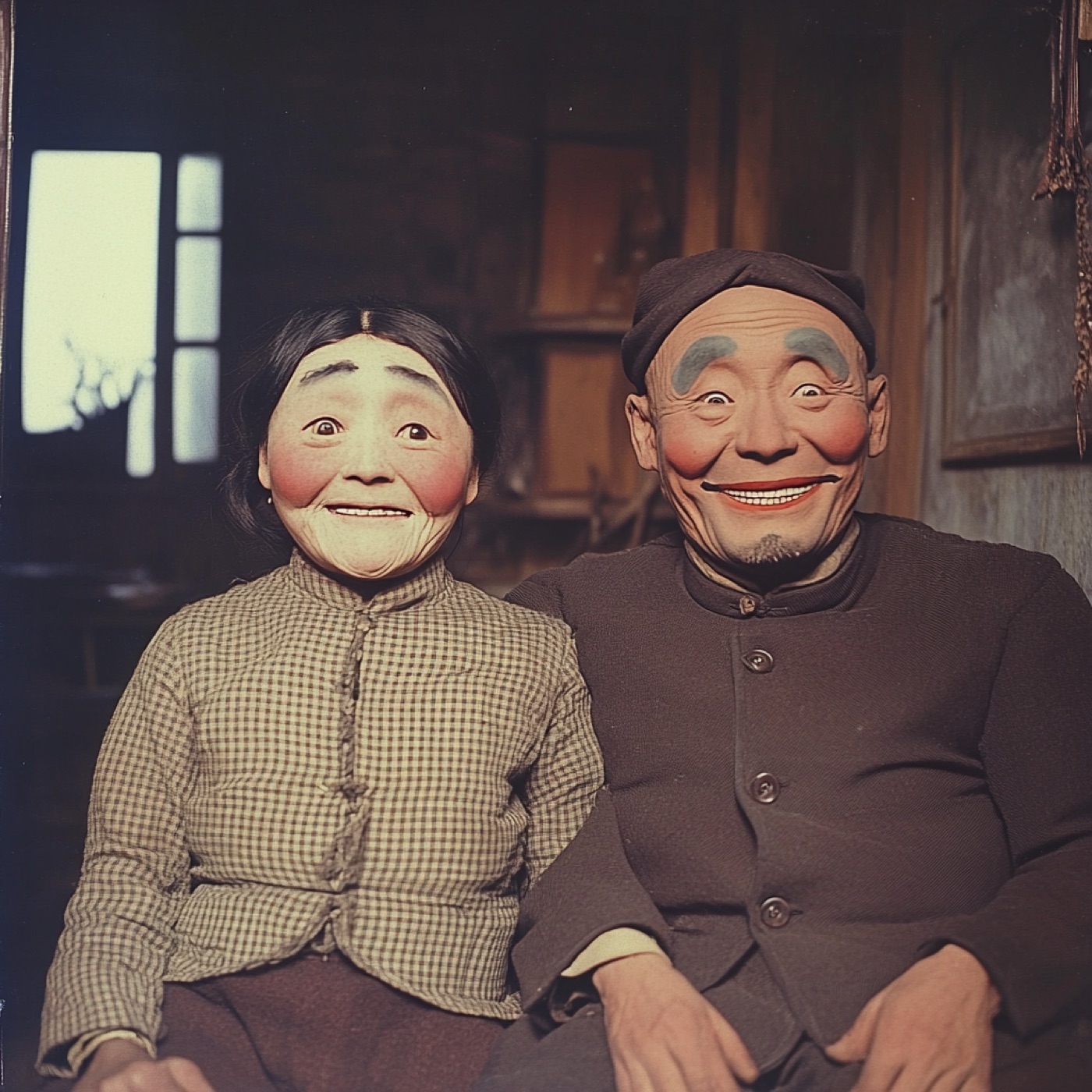
At the center of the frame is a middle-aged woman, bent at the waist and cleaning. Absolutely not a woman with disheveled hair, but one whose hair is tied in a ponytail. In profile, she has some beauty, though she wears no makeup, or only a faint, tired layer. Honest and knows her place is the first impression she gives you, much as most of her audience imagines themselves. But never ugly.
This middle-aged woman does work that her society considers humble: she is a cleaner, or sells heavily seasoned snacks and boxed meals by the roadside. Whatever it is, her work takes place close to a sewer, though her clothes are not dirty. She carries at least two enormous woven-plastic sacks on her back and insists on walking everywhere. Around her neck hangs a jade pendant on a red cord, or there is a bangle around her wrist. It will certainly matter to the plot. It clashes with the life suggested by her clothes and bearing.
In the first minute of the micro-drama, you can learn what has happened in her life and what governs it. She is divorced. Her former husband has either died, or owes a great deal of money, or has made a little money through improper means and now loiters around her stall, holding hundred-yuan notes between his fingers as though gripping a hand of cards, opening his eyes in exaggerated fury, ridiculing her life. She is innocent. She swallows the insult in silence. She meets the humiliation inflicted by those closest to her with kindhearted sighs, forbearance, and surrender.
She also has a son. The son is handsome and delicate. He appears to love her and stand on her side. But he is trapped in trouble: perhaps he owes money, or has fallen in love with a girl who despises his family background. At this moment, the girl enters. She must be a snob, with parents even snobbier than she is. She tells the son, “Would you be where you are today without me?” because her family's connections secured him his job. Or she says, “Isn't your mother just a cleaner/street vendor? And she thinks she deserves to come to my new home.” Even without context, she must use this to choke him. Her father folds his arms across his chest, points at the man's nose, and says, “Do you know what kind of background our family has? I am the vice-chairman of Sheng Group. Sheng Group directly supplies Lei Group, owned by Chairman Lei, the richest man in the whole city!”
All this information can easily be established in the first two minutes. An enormous humiliation, layer upon layer, covers the ordinary heroine's life. These humiliations rest upon fairy-tale relations of power. In this city, every rank of high and low is determined by personal connections. Those connections exist entirely inside private corporations and their supply chains. A mysterious person with an uncommon surname is the city's richest man. From his name onward, he appears extraordinary. He is also the center of power, the top of the food chain, commanding wind and rain even before he appears. Human ranks extend in layers beneath him. She is at the bottom.
She is rarely addressed with ceremony. Her name—Little Cui, Little Fang, Little Feng—becomes ridiculous after she passes a certain age. Whatever respect and expectation people retain for her also stops before the major thresholds of her life. First menstruation. Development. Marriage. Childbirth. After each threshold, they call her name with greater impatience, drawing out the final syllable or flicking it upward. They must hear her answer at once, or she is failing in her duty. She, meanwhile, may be interrupted at will.
Oh, yes. How could we forget the relatives? There is no such thing as a good relative. This is settled. Every elder brother, uncle, aunt, or distant village relation who appears must be someone who mocks her and kicks her when she is down. These relatives usually take the form of a vicious married couple plus a vicious daughter. The daughter or her husband works as a middle manager for Lei Group at the pinnacle of the city's power, drives a BMW or Mercedes, and asks the heroine, “Do you know what kind of car this is?” Or: “Do you know what sort of place you've come to? This is a five-star hotel!” You are the poor relation we can never shake off. Your purpose is to set off my family's status. Not only will I refuse to help you; I will step on you. Stepping on you is my pleasure.
Now the heroine falls into despair, and the audience discovers that only three minutes have passed. Like the Big Bang, these three minutes have spewed a great quantity of matter, all pointing toward a single impression: humiliation. Everyone exploits the heroine's honesty and place-knowing nature, looking down upon her with heads held high, displaying a complacent smile with the corners of the mouth turned downward, slapping her face. The only person on her side, her son, is also a useless coward. He is not entirely beyond saving, however. At least he is obedient and handsome. Perhaps he has potential. Let us keep watching for a while.
The woman goes on a blind date to find herself a companion in later life. Unexpectedly, the first man is the one. To preserve the heroine's purity and loyalty, there cannot be a second. The man is built like a soldier and unfailingly courteous, though he reveals that he is only an air-conditioner repairman earning three thousand yuan a month, and she believes him. She implies: Fortunately, you are an air-conditioner repairman. Otherwise I would feel unworthy of you, because my view of romance and marriage is also founded upon Social Darwinism, and I do not believe duckweed can have any other fate. The implication moves the man opposite her, the air-conditioner repairman whom only the heroine would take for real. He is looking precisely for a woman so honest and free of vanity. He has plainly weathered great storms.
There is no need to keep hiding it. In the next second, the male lead removes the gray repairman's uniform that has somehow never acquired a stain, changes into a loose silk robe or a suit, and walks into a palace too vast to see across. Naturally, there must be a shot of him getting out of the car. His foot strikes the ground with a clang; the camera pulls rapidly back; from the air, we see the black luxury SUV and this golden palace dense with marble columns. This is clearly his home, in the style favored by the richest man in a prefecture-level city. In this sketch of wealth, we see that even the gardeners pruning branches are young women in black-and-white aprons, demonstrating how money manipulates vitality. Every few steps, a servant clears his way, bows, and says, Good morning, President Lei. He sits at his golden-thread nanmu desk and carefully savors the woman from the blind date. The audience exhales. In this city covered by black clouds, the center of power is a kind and innocent man. The earlier difficulties might yet be solved, especially after this incognito inspection.
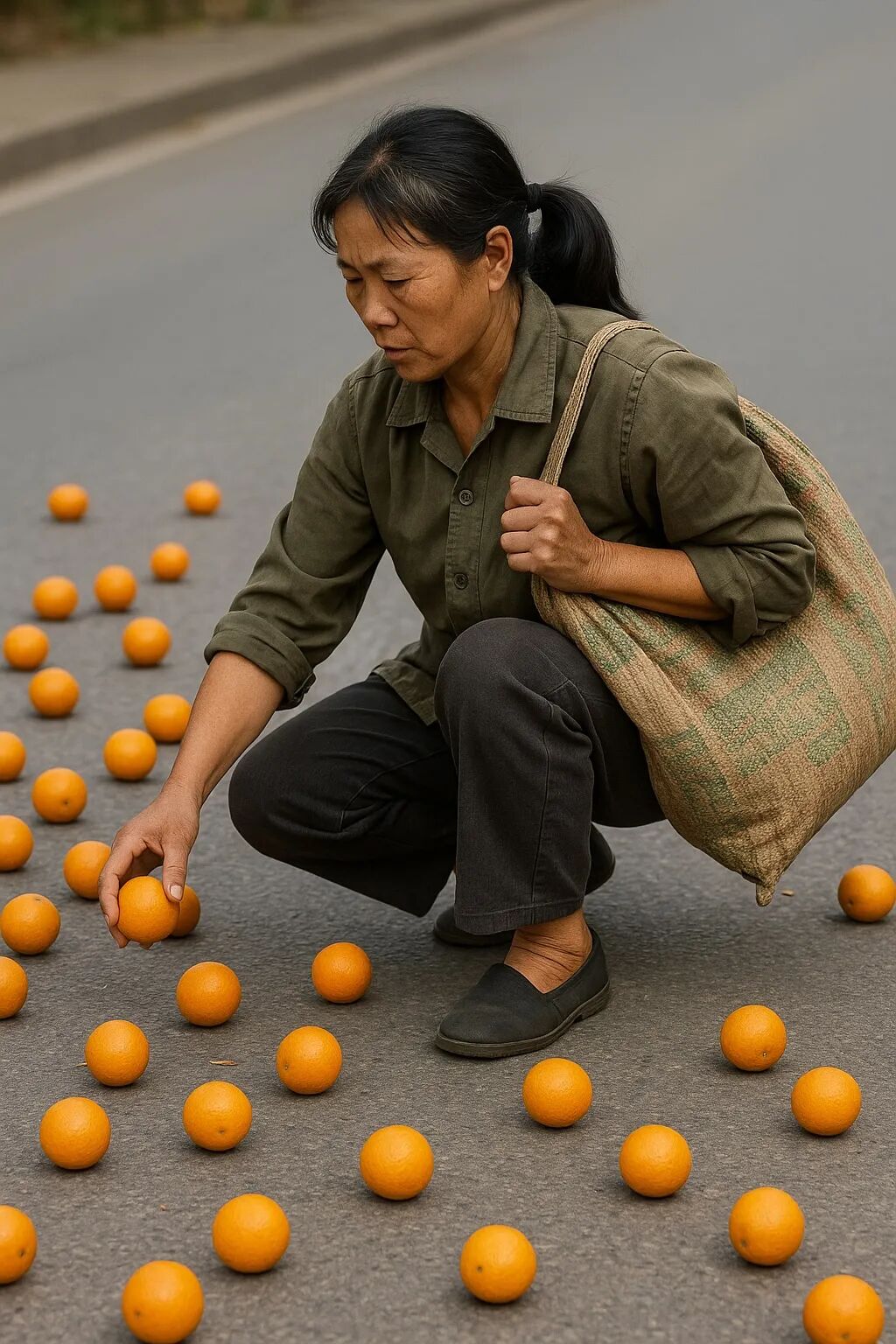
President Lei has a child, and they are close, especially since the death of the child's mother. If the child is a boy, he must be a sunny young man, a beautiful fringe scattered across a fair forehead, his life completely occupied by basketball, golf, and commercial negotiations. If the child is a girl, she is clever and mischievous, efficient but not snobbish: the princess of a fairy tale, the person every little girl wants to become. But she is weary of splendor and wealth. She wants only to be ordinary. She even crosses the street by herself. As she does, a speeding delivery motorcycle or small van bears down upon her. She has no time to evade it. The heroine, carrying her two enormous woven-plastic sacks, leaps into the air and pushes her aside. President Lei's daughter kneels on the road, frightened out of her wits, while the heroine bends to gather oranges scattered everywhere. The daughter asks her: What's your name? Shall we add each other on WeChat? Auntie, are you single? Would you be willing to go on a blind date with my father?
They marry. It does not even take a minute. Together, they visit a gold shop to buy a first-birthday present for her grandson. She wants only a gold longevity lock, but the saleswoman tells them to get out. “Dressed as shabbily as that, you dare enter a gold shop owned by Lei Group?” To emphasize once again: Lei Group is an omnipresent being in this locality. All life depends upon the beast. As the saleswoman speaks, the soundtrack continually produces the whoosh of a great wind, or the drip of falling water, signaling that this conversation exists in a state of suspense and will later be reversed. Naturally, because the person facing the saleswoman is Chairman Lei himself.
Chairman Lei does not rebut her with his power to blot out the sky. He asks only, “How do you conduct business here? Isn't the customer God?” The saleswoman flicks up her eyes. “Only customers with money are God.” The heroine begins rubbing Lei's arm. “Let's go, let's go. This wasn't a place for people like us anyway.” With her, the audience recalls the countless times they have been forced to leave some place. Who knows who stands behind these people? Perhaps they could beat you to death and remain at large. In this social network, you are the one upon whom people spit. You believe in seizure, intrigue, and brute force; only rules are beyond belief.
But now impassioned strings rise, and on the screen a man ordained by fate stands beside you. President Lei refuses to go. He even announces that he will take every gold chain in the display. The idle store manager saunters over, looks up, then snaps into an extravagantly rigid salute and smiles: “Take as many as you like.” At the saleswoman who actually works, he bellows, “Pack them up! What the fuck are you waiting for? You're fired! Get out!”
Then comes the grandson's first-birthday banquet. This moment must be constructed layer by layer. The heroine must be trampled into the mud before she can be reborn. Episode fifteen is the paywall, the moment when the viewer pays 19.9 yuan to unlock the remaining episodes (or 9.9 for the first month, followed by a continuous annual subscription). The free portion must end at the instant of the heroine's greatest humiliation, when viewers know that if only they pay, they can finally hold their heads high. Otherwise, they will be forced back into their own lives. They will have to spend all evening working up the courage to ask a relative whether repayment can wait one more month. They will have to wager everything one last time on a scam website. They will have to accept the careless looks and flippant remarks. Accept the slaps and chokeholds of those they love most, the vicious backward glance of a child.
The daughter-in-law refuses the gold lock. She says it is fake. “The pair costs more than a hundred thousand. You think a penniless ghost like you could afford it? Don't touch my son! Hmph. You sell boxed meals to migrant workers. Don't infect my baby with your germs.” The audience realizes that a person's social position is anchored not only in her own clothing and speech, but in whom she serves and where she stands in the chain of work. The higher a person's social position, the cleaner she is, the fewer bacteria she carries. Conversely, when a person's status is low, her body becomes a colony of microorganisms. Her skin can barely distinguish her from other species. She is not completely human. She is an interspecies communist alliance.
The argument begins at the table. She touched the food with her own chopsticks, not understanding that she should use the communal pair. First the daughter-in-law slaps her. Then the daughter's mother slaps her. A slap is the most economical action sequence. An orderly line of ketchup blood runs from the corner of her mouth. The father-in-law demands that she kneel, kowtow, and apologize. He is always bouncing about, eyes wide, cheering because Lei Group has awarded his company a contract. Just as she again resolves to swallow the humiliation and keep the peace, her savior appears. Who else could it be? Naturally, her wealthy husband, Chairman Lei, whose identity only she on the entire planet has failed to perceive. He waves a hand. His men arrive and slap the father-in-law several times. The contract is canceled, they announce. “You're lucky this time. This isn't over!” the father-in-law says, sweeping away. We have now paid for the series, so we can wait at ease to see how he is liquidated.
One must understand that, for a considerable portion of the audience, 19.9 yuan is not a small sum. The 9.9 first-month offer will make some squeeze their own wrists blue when they discover the logic of the recurring charge. Squinting at a crudely made app, they search for the report button or the refund appeal. Or they call their children and say they have been cheated, that they accidentally pressed something on Douyin. They speak in a panic, as if something has gone terribly wrong with the banking system. Yet ordinarily, they are the ones who clean up after the family. Every man can approach them and say, as lightly as if describing nothing at all, that he has fallen into a scam, or lost money investing in a product, or, to be honest, gambled the money away. He stresses that his original intention was good: he wanted to win some dignity for the family. In any event, he now owes a hundred or several hundred thousand yuan. They stare. Some begin crying where they stand. Some sit down on a wooden-plank bed. Some count on their fingers. They work more than ten hours a day and earn two hundred yuan. Perhaps, without food or drink, they could repay it in ten years. Do they start counting from tomorrow?
Across the next several dozen episodes come more humiliation, reversal, and villains humiliating themselves. Drama repeats itself on the most literal level. New antagonists and snobs continually emerge, dressed in clothes with large logos, calling the heroine a penniless ghost and the male lead a stinking air-conditioner repairman. “Do you know how much this bottle of wine costs? You couldn't afford it if you repaired air conditioners for the rest of your life.” “A penniless ghost like you dares set foot inside Sheng Group? Men! Drag these vermin out!”
At this point, Chairman Lei first sends the heroine away. (Because of some peculiar fetish, he does not disclose his identity to her until the very end.) Then he waves a hand, prompting a handsome subordinate to address the villain: “Impudent! Do you know who stands before you?” The handsome subordinate slaps the villain across the face. “What! Could he actually be—?” The villain cannot believe his own eyes. The handsome subordinate waves again. A ring of men in black clothes and sunglasses closes in, black batons in their hands. This demonstrates that Chairman Lei commands both the lawful and criminal worlds, operating the city's order through extraordinary means. Law is unnecessary. Reward and punishment proceed through a vernacular eye for an eye.
The story must have a happy ending. Every villain is slapped and trampled underfoot, then clings to Chairman Lei's leg and begs forgiveness. The heroine's son reforms as well. No longer a useless coward, he defends his mother. At the end, Chairman Lei offers an enormous diamond ring. “This humble man, fifty-five years of age, founded Lei Group and has accumulated some small savings. His circumstances are passable. For the rest of my life, I ask for your guidance.”
The jade pendant and bangle from the beginning yield their answer too. It turns out the heroine had long shared a bond with Chairman Lei or his child. They possess matching jade pendants and bangles, which join into one. The heroine did not find this wealthy husband merely because a meat pie fell from the sky. Her fate contained a clue planted long ago, a secret relation of blood that left her tenuously connected to the top of the food chain. Here, accepting every adversity without resistance has produced the best possible outcome: A drowning person, flailing in panic, has caught hold of an aircraft carrier's mast.
The audience returns to reality, but the reality they now experience differs from the one they inhabited thirty minutes earlier. If a lottery ticket lies on the wet ground, they will gently pick it up. This micro-drama—perhaps it will be called art several decades from now—has reinforced, like a heavy accent, the reality they would rather believe: the weak still fall prey to the strong; that remains the basis upon which society operates. But some mysterious passage can transform them from weak into strong. A powerful secular man will descend as if floating. They will point out to him that he has been deceived, that the order he labored to create is now being corrupted by the selfish and snobbish middle ranks of society.
At the same time, with a little imagination, they try again to understand the intimate men around them who have failed them. Every secret represents a possibility: any of these men could be Chairman Lei. They themselves may be the ones kept in the dark. They need only do their allotted duty, continue treating the men well, with their whole heart. The rest can be left to waiting.
Meanwhile, the men beside them are watching another script. They, too, paid 19.9 yuan. In the face of a large debt, the number hardly matters. They are watching rebirth. Reborn into another age, starting over. There you discover that you are a prince, and that you possess superpowers: one movement of the finger releases blue and green rays. Shot from below, the martial-arts master opposite you, blood at the corner of his mouth, cannot believe what he has seen. “What… could he actually… uh.” His head falls to one side. Good. Now you know that, for at least the next half hour, in this other age, everything you lost can be seized again. More than that, the lost things surge toward you as though you were a magnet. You need not fight for them. You need not take a risk. You need not organize the language of a defense or pretend not to care as you lie. Good. You have turned off every light. You remember a dream from long ago, when you discovered that you could fly.