Jazz 3: Downhill
A
First, he survived. And so his parents raised him. The prolonged cry of every infant is a miracle. His own might have stopped abruptly one night. Milk dripped from his mouth and crossed his slightly swollen cheek like a white tear. Then foam rose between his lips. His mother covered her mouth to keep herself from screaming. Because his birth was a fact no one could be allowed to know. He did not come from a wealthy family and, in that particular age, he was the second child. A family was allowed only one.
Or perhaps he happened to be healthy. But for that particular reason, he could not see sunlight for a very long time. He was hidden in the back room, the deepest room in the apartment. When he cried, no one rocked him gently. His mother searched frantically for a wet towel and rubbed it across his lips. She hoped his voice would be absorbed into the cloth. Then the people in the building who had survived the previous age and mastered the art of betraying others would not hear him, would not discover him and report him to the person, organization, or committee with power over life and death. No, no. He was very good. He breathed evenly. The door and windows of the back room were sealed with boards and plastic. Air crawled through the room like a thief. The world was one long night.
First, he survived. And so his sister was able to see him. But you must keep it secret, Mama told her. You cannot tell anyone. Only I and Papa know. Only the three of us. His sister nodded. She felt through his swaddling because she could not see him, because the room was an unbroken dark. Then her fingers touched something. Soft hair first, then an eye—she lifted her hand—then her fingers descended toward a nose like a little clot of mud, then a mouth. She turned toward Mama and smiled, the way she had smiled the first time she bent down to watch ants carrying food.
His sister learned very early to write with force. By the time he was born, she was already in primary school, with one class every day devoted to handwriting. The teacher patrolled the room, moving between the rows at the even speed of a program. Her index finger pressed into the pencil. When she put it to paper, she left a mark on the desk as well. The teacher passed. The teacher did not look at any student. She was trembling. She had a secret inside her. The secret was larger than her own life. When the teacher passed again, she pressed her legs together. She did it without meaning to. Then she pressed harder and harder. She felt like some kind of animal, her life revolving between reproduction and escape. Strange? Coerced? It was not pleasure, in any case. But at least in the moment of friction, she did not have to think about the secret. Look. This is how you come to know gender. How shameful. It proves what kind of woman you are. Will Mama still love you, or had she already decided when she chose to have your brother? Perhaps she saw through you long ago and knew you were that kind of person.
First, he survived. And so he could not ask for too much. He pricked up his ears whenever anyone entered the apartment. He could not see them, but could distinguish their identity and position, like a wolf that did not know how to hunt. Ah, he grew a little like this. From the posture in which Mama slipped secretly into the back room each time, he learned to stand. So the moment he stood, he looked like a thief. He opened the back-room door from inside, and all the daylight that had once been withheld suddenly spread in great quantities across his face. He knelt and covered his eyes. Bright. This world was so bright. They could no longer hide him.
Later, he submitted to Papa's shifting strategy. At first, he was called the child of one of Papa's friends, staying temporarily. Later, he became the child of distant relatives, sent here because something had happened. We will raise you like a son, Papa said. Think of this as your own home. Think of us as your mother and father.
A son. The thing Papa had begged for. While Mama gave birth, in a rare gesture, he pressed his palms together, closed his eyes, and asked a supernatural power for protection. Someone to inherit his surname. Someone with the same protruding organ he possessed, who could someday occupy another surname. Sometimes Papa imagined whether his ancestors, too, had endured so much hardship and humiliation to pass their blood down to him and his son. The gravestones lying at every angle in their old hometown showed how easily the line might have broken in any age, disappearing like a quiet fart. But they had survived. The relay of generations formed a trembling vertical line. People at the center of history's whirlpool had no way to understand how great this was.
Papa worked in an electronics factory, packaging components. Pick up, place, seal. His two hands made him think of roadside performers tossing two or three balls into the air. Once the balls began to turn, they could not stop. For a considerable portion of the working day, when the supervisor was not looking, he locked himself in the toilet or stood outside smoking one cigarette after another. He treated lottery numbers and stock codes overheard by chance as the most important news in life. Some of our workers are lazy—the supervisor said this while looking into his eyes—and people like that deserve to remain forever at the lowest level. They are not worthy of a life of striving. Papa lowered his head, hung a flattering smile and silence at the corner of his mouth, and used the nail of his thumb to dig brown dirt from beneath the nail of his middle finger. Fucking idiot, you don't know shit, he thought. I have a son. First, he survived.
Break.
But he could easily have died. Died in his swaddling. Suffocated without a sound in a world without daylight. Or discovered by one of the opportunists in the building, who would whisper to the people in charge. You know how swift and severe the methods were then. One evening, his sister came home and found the door of the back room removed, several white cloths scattered on the floor. Mama and Papa knelt, still as two potted plants. Later, a small box and a candle stand appeared in the narrow living room. Sometimes, when Mama looked across the room, her gaze flickered outward, as though that part of space did not exist, as though a raised black spot had appeared in her vision.
Whenever she remembered that evening, his sister pressed her legs together. Her brother died, perhaps at least in part because he had a wanton sister. He was paying for her future sins. So she would carry that secret forever, and many more. The secrets swallowed her. After masturbating, she sharpened her pencil. She drove the point into her thigh. She turned the pencil with her index finger so it would drill deeper. A person under punishment carries no burden.
When she grew up, she washed customers' feet. Her hands passed over the arches like windshield wipers. With each press, her upper body tipped forward.
"Ow, that hurts. Softer," the customer said.
"You haven't been sleeping well lately, have you?" she said.
"How do you know? Is there a pressure point?"
"Yes. The soles of our feet are full of pressure points corresponding to organs in the body."
"Which organ was that spot just now?"
"The liver and gallbladder."
"As long as it wasn't the kidneys. How long have you been here, young lady?"
"Many years. Let me think. Six or seven."
"Ah, you entered society so young. What about your parents?"
"My father gambles. He owes a lot."
"Any brothers or sisters?"
"I had one. He was gone very early."
"Oh. All right. Softer, softer. I'm ticklish."
A
But he survived. During the day, when Mama cleaned rooms at a hotel, she sometimes brought him with her. He hung himself from her cart and tested how long he could remain perfectly still. Mama knocked three times. Hello, housekeeping. Hello, housekeeping. Hello. The moment she swiped the card, he charged in first. The room lay in murky yellow light, the curtain half drawn. The smell of a green pond flowed through it. Hack! Hack! Ugh! He returned to Mama and amplified his coughing. The blanket lay rolled on the bed. In the floor were holes burned by cigarettes from the past. Wadded napkins were scattered around. If he opened one and found phlegm, he threw it back. Mama cleaned without a word, gathering the towels from the bathroom and wiping the counter. He continued examining cigarette butts, condoms, broken slippers. If he found an unopened disposable toothbrush, he put it in his pocket. Mama went on cleaning without a word. What did she smell of? As though an invisible undergarment bound her too tightly, making her sweat, but she could never take it off. Once, he burst into a room and saw two naked people holding each other, apparently asleep. He stood beside the bed and watched them for a long time. Mama came in, patted his head, and sent him out.
In class, he stood like a crooked plant. You cannot even stand properly—the teacher said this about him. He spent more than half his time standing, whether because he had not done his homework or had not listened. Whatever the teacher said he was, he was. He went to school carrying another name. Papa required it. He suspected that this was the real reason he was being punished. A name that did not belong to him obstructed his potential. A recurring image entered his mind: someone bent over him, pressing down hard with an elbow. He tried to straighten, but the person roared heroically and used all his strength, as if preventing a nuclear submarine from surfacing. Then he himself became a vine or something, and gradually his roots and stem were compressed into the shape of the person's palm.
In class, he spent a great deal of time looking at his fingernails. When the teacher turned to write on the board, he bit away the white parts. No one could know better than he how to trim nails with teeth. Fingernails did not taste bad, really. A little salty, pleasantly resistant. Swallowed, they felt like tiny needles. One classmate told him, I saw on television that maybe you have lead poisoning. None of your fucking business, he said. Good. The sooner I die, the sooner I reincarnate.
But I survived. He sat in the innermost seat of the internet café, typing to the comrades on the other side of the screen. I was the only one who survived the whole raid, he said, presenting it as today's great source of pride. Their characters moved through a dungeon. Warriors dressed in peacock-like armor crowded into a single square, overlapping, holding knives, axes, staffs. Fire burned on the walls. They approached a demon many times their size and provoked it. The demon slapped several dead, then slapped several more. People cursed continuously in the chat box, shifting responsibility for their deaths onto their comrades. Fewer and fewer warriors remained on the screen, until only he was left. Holding an ax at the very front, he hacked and hacked, hacked and hacked, clots of the demon's blood splashing his face. The demon disappeared suddenly when its health bar emptied. One second before, it had still been roaring. He received more treasure than his inventory could hold. Then he rose unsteadily from the innermost seat and spent the last ten yuan he had on Q Coins. First he paid for more game time. With what remained, he bought white wings and a beetle. The beetle would follow him forever. Everyone could see it, if anyone clicked his portrait.
The Chinese had won a championship. Chinese people won at the Olympics, at beauty pageants, and now at esports too. The boy who had also dropped out of school for an internet café stood on the winners' podium with the Chinese flag around his shoulders. He cried. When the boy crawled under the blankets that night, Mama and Papa were already asleep. Papa's alcoholic breath rose and fell through the room. His sister was still awake, her pupils shining in the night. He and his sister shared one blanket, head to feet.
"I don't understand why you keep degrading yourself," his sister said softly.
"You're the one degrading yourself," he said.
His sister was silent.
"Go back and study properly," she said.
"Oh, like you? Spend all the family's money, finish school, come back and do fuck-all?" he replied at once.
"If it weren't for you, I wouldn't be like this. It's all because of you," he said. "There's nothing I can do now. Might as well die. I'll finish tomorrow's dungeon. If I still don't get a drop, I'll kill myself. There isn't much point anyway."
But she survived too. Even though, many times, she decided not to. After a certain point in adolescence, his sister always hid when naked, so no one would see the honeycomb of holes in her thighs, red and black. Over many years, she had stabbed herself with a pencil until she became a device. For every act of indulgence, an act of punishment: this was the balance she established, though it never brought her luck. In every examination, assessment, and certificate, she was ordinary. A little more ordinary than she had imagined and hoped each time. Average. Below average. People classified her among the kind of girls who nailed their bottoms to chairs, had no need to urinate, and willingly gave several times the hours of tedium to a task. She learned the characteristics of such people. To laugh with everyone else at something she did not understand, for instance, and laugh more shyly and inwardly. Or, before forming an opinion, first observe other people's expressions and ensure that her view would provoke no improper reaction; if it accidentally did, change it within three sentences. Or love a remarkable person, depend on him, defend him...
She saw him in her university dormitory, on a roommate's computer screen. He stood with a group of pale, slender, beautiful young men and performed his signature gestures for the audience: a finger heart, pursed lips, a wink. He did not have the most votes. His ranking was dangerous. At his present trajectory, he would not make the final debut lineup. What made her fall in love was one detail. When the camera passed through his dormitory, she saw that he had folded his quilt very neatly. She inferred that he did it regularly. This could not be faked. She spent a great deal of money on him. On the telephone, Mama often asked how the accounting certificate was progressing. The family truly had no money left. His sister answered that the certificate was very important. To put it plainly, it was the hope of their whole family, especially since her brother had left school. She needed only one final payment. She was about to receive the certificate, and then the family would get better.
After hanging up, she returned to the desk and held up his photograph. He stood before his quilt, folded into a block, giving a thumbs-up. Reports said he was rich, the son of a rich family, but still folded his own quilt. She looked at him, turned a pencil in her other hand, sometimes smiled foolishly, then drilled the pencil into her thigh.
She changed buses many times to reach the airport in the neighboring city. She leaned over the rail at arrivals for several hours, waiting for him. She had arrived first—she needed to be first. Afterward, many girls who loved him as she did gathered around the rail. Most had not dressed up. They came in jeans and white shirts. So had she. Perhaps she worried that dressing up would place an unnecessary psychological burden on him. What if he was busy? Or perhaps even if she dressed up, he would not look at her a second time. She was already fortunate to share this crossing of space and time. How many people online envied her?
He arrived. He was almost impossible to recognize. A mask, sunglasses, and hat sealed him completely. He was shorter than she imagined, unless television simply made everyone look long. He seemed to glance toward them, then turned and walked away. A man much taller than he was said behind him, all right, no photos. Then one of the girls cried, "We love you! Take care of yourself!" He suddenly turned back, adjusted the brim of his hat, and muttered, "Mm, busy. Mm, tired, yeah? Be good. Go home." Many people cried. She did not.
Holding his photograph, she changed buses many times again and rested her head against the window, letting her skull strike the glass in frequent, tiny impacts. It was night when she reached home. Beneath the apartment building, she stood for a while, then folded the photograph and threw it into the gray corner beneath the stairs. Papa was already drunk when she opened the door.
"Why haven't they demolished this place?" he asked Mama, his face red.
"Stop drinking," Mama said.
"Did they actually announce demolition already, and you didn't tell me? You all hide things from me. Everyone, everyone, all, all lying. Where's my son? My—where is my son? Is he dead?"
Break.
He could easily have died just like that. His words becoming prophecy. He did not come home the next night, or the nights after. He had dropped out of school, so as far as social news was concerned, he already existed in a half-dead condition and was not worth reporting. His identity was false, so his parents did not want publicity. Society contained many people like him: outside internet cafés, inside alleys, beyond the back door of a kitchen at two in the morning. People accepted that, for one reason or another, they died earlier than the average person—by several years, ten, twenty—as people accepted that insects lived short lives, though they acknowledged that brevity had a value of its own.
As for his parents, they thought perhaps he had gone to another city to make his way. Their own city had begun to wither. Hadn't everyone noticed there were fewer outsiders, fewer people coming for work? People said the cake had stopped growing. All that remained was for each person to make one cut and take whatever came away. More time passed. Then the police said they had found his body beside a river. In his trouser pocket were a rusty nail clipper, a pencil, and several disposable toothbrushes softened by water. Just as we inferred earlier from the surveillance footage, the officer said, he disappeared near the bridge. Very unfortunate. Usually he was a pretty cheerful young fellow, right? Maybe he'd been drinking, staggering by the river, and slipped—ah!—into the water. There are far too many incidents like this now! Take care in your grief. There's still so much life ahead.
Many years later, in a southern city, his sister encountered again the person she once loved, the man who folded his quilt. It was outside the little restaurant where she worked, near closing time. He walked over with his back stooped, wearing a black leather jacket. He had grown fat. His face had gone years without maintenance, his nose and eyelids seeming disconnected from the other organs. He ordered stir-fried rice noodles, then collapsed across the table, pulling away half the plastic covering. He rested his head on one hand and turned the table's lazy Susan with a finger. His sister sat beside him.
"I recognize you," she said, without looking at him.
"Oh," he said, without looking at her.
Her pupils shone again in the night.
"Don't cry," he said.
"It has nothing to do with you," she said.
"Oh," he said.
She removed her plastic gloves and set them on the table, then wiped her eyes with the side of an index finger.
"It's all right now," she said. "Eat the noodles while they're hot. They'll clump when they cool."
B
Mama, hello, Mama. Can you hear me? Happy Spring Festival, Mama. Hello? Mama, I said Happy New Year. Today is New Year's Eve. It's 2025 now. Time goes fast. Ah, yes, I miss you too. You know, little Lele misses you. He can recognize characters now. He's so clever. Is Papa there too? Tell him hello from me. Hey, Papa, Happy New Year. I was just telling Mama, both of you have to look after yourselves this year. Health comes first. The money—we'll pay it back slowly. We'll pay it all someday. Isn't Sister working hard too? Don't worry. Drink less. I heard you're in charge of security at a building now. Pretty easy, right? Anyway, secure yourself first. Can you give the phone back to Mama?
Mama, everything is good with me. I made a hundred thousand yuan delivering orders this year, a little more than anyone else at our station. Of course, of course, health comes first. I know. Mm, I'm good. By the way, Mama, do you remember when I was little? I was riding my bicycle. I let go with my left hand, then with my right. I opened both arms, and the wind rushed between my ribs. You said I was amazing. Do you remember? A few days ago, I tried riding like that on the sidewalk. Children turned to look. They thought I was cool. Suddenly, I felt that everything we learned before would prove useful someday. It wasn't dangerous. It wasn't.
And Mama, do you remember when I was little, when you sent me to the Children's Palace to learn piano? Twenty yuan a lesson. We studied for almost a year? One day last month, I passed through a mall and saw a piano no one was playing. I sat down and played a piece. A lot of people crouched and recorded me on their phones. I suppose they never imagined a delivery rider could play piano, had ever learned piano. Can you imagine? Everything we learned as children proved useful. You remember. Oh, you remember everything.
Mama, do you remember when I was little and went with you to clean at the hotel? I stood on your cart. Vroom—vroom—I made you my driver and told you to race forward. I stole so many free toothbrushes then. I arranged them under the bed into a little pyramid. One day they all disappeared, and I cried. You lied and said they had flown away to the Kingdom of Teeth. They had a more important role to play, you said: brushing the teeth of the Tooth King. You remember. You remember all of it, right? Happy New Year, Mama. I miss you too. Little Lele is good. Don't worry. Yes, take care of yourselves. Can you hear me? Take care of yourselves.
Sister, hello, Sister. It's me. Happy New Year. You too. You too. How long has it been since we saw each other, two years? Three? Yes. Once enough time passes, it becomes a number. What is left now that a string of numbers cannot explain? Oh, you've never met little Lele, have you? He can talk now. On the phone, he calls me Papa. He lives with his mother now. Mm. But I can visit from time to time. Mm. It's all right, Sister. This is part of life. I accept it. I only hope Lele's fate is better than mine.
Last month, I saw a news item saying the earth's temperature will rise by ten degrees before the end of this century. By then, the land will be all hurricanes and floods. Our network servers, cars, electric scooters will be submerged in the sea and won't work. Of course, we'll be dead long before. Little Lele may still be alive. Perhaps he'll have children, grandchildren. Sometimes I see an image of them, dragging long woven-plastic sacks, a whole family walking through the bitter cold of the new century—the news called it the "Pleistocene." They feel resentment. They ask, Papa, why did you give birth to me? Why did humanity have so many children when it knew Mother Earth could not raise them?
Sister, forgive me for rambling. I have been thinking about the same question. I was the extra child too. Many accidents made me, and all of those accidents could have failed to happen. It would have been better for everyone if they hadn't—for people, for nature. But they did. No, Sister. It wasn't a miracle. It was the opposite of a miracle. Papa once dragged a sack like that. So have I.
Do you remember saying my skin looked like an orange when I was little? Sorry, I've been thinking about the past a lot lately. You told me that. You don't remember? You said I was hidden in a small room. Mm. And you said the room was very dark, but my skin gave off orange light. You touched me and thought I had turned into a yellow fish. I'm not lying. You absolutely told me.
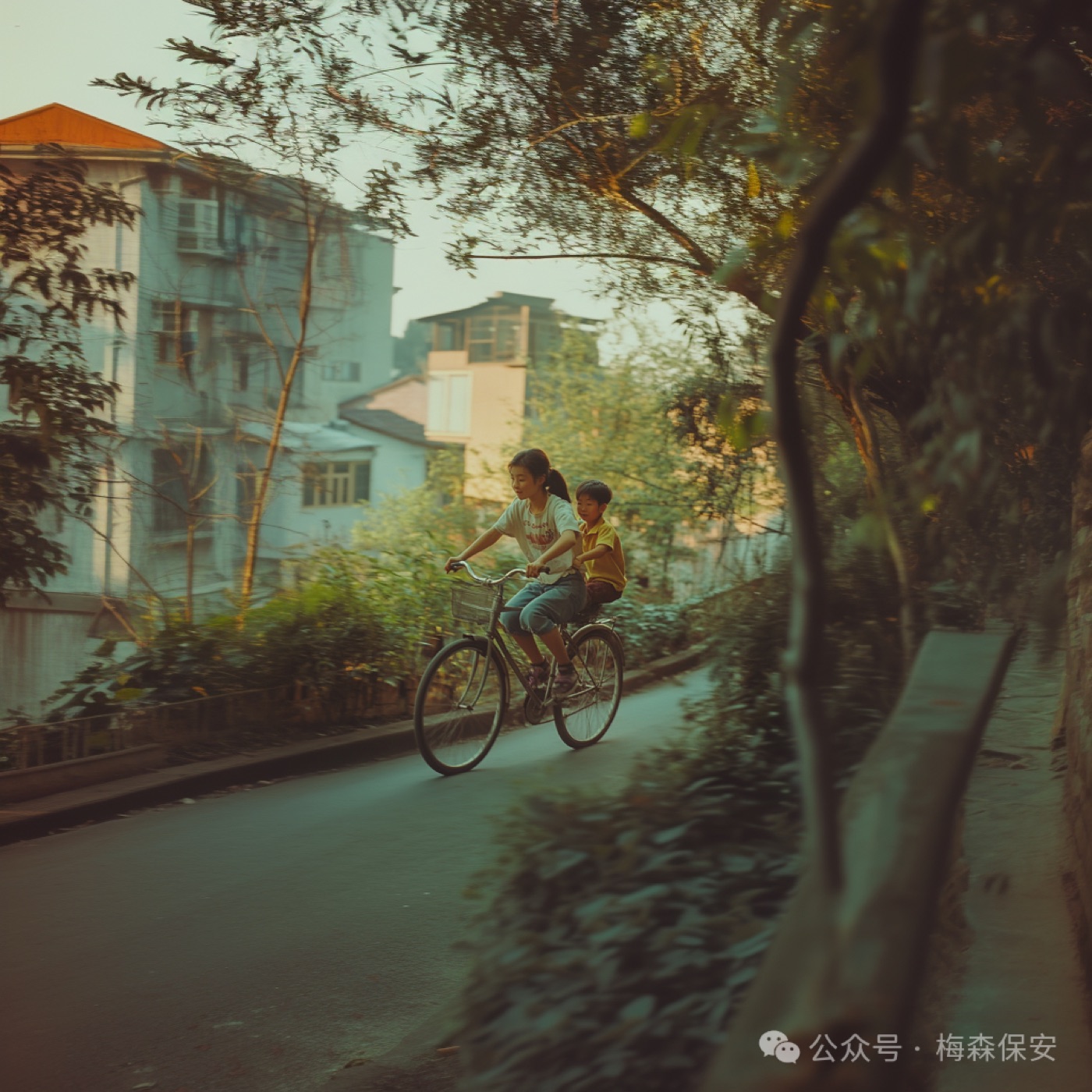
Another time, you carried me on your bicycle. You put me behind you. I was frightened; I had no idea you would ride so fast. Do you remember the long downhill road beside our home? You went whoosh straight down, pitched your head forward, let go first with your left hand and then your right. Sister, have you lost your mind? I shouted. Then all I heard was you laughing in front of me, ha ha ha ha. You remember that one. A strong memory, right? Me too. I can't forget it.
Sister, the thing is, it's hard to say. I've borrowed some money online these past two years. I may be close to missing the payments. No, no, that's not what I mean. I don't need you to do anything. Just take care of yourself. I'm saying, if something happens, help me look after little Lele later. Thank you. No, no, I really don't need anything. Happy New Year, Sister. I'll hang up. Sorry. Sorry. Sorry.
Lele. Hey, Lele. Papa is writing this letter for you to read when you grow up. Keep it as a memento. Remember Papa. Papa has just realized it has been many years since he wrote anything on paper. Actually, Papa used to write often when he was young. You didn't expect that, did you?
Papa remembers clearly that, when he was little, his own papa once came home swaying from side to side, a wave of alcohol traveling in before him. He sat down and rubbed one trouser leg with a hand. Son, come here! he said. When I stood beside him, he pulled a bent notebook and a pencil from the plastic bag behind his back. Son, study hard. Don't be like your papa, he said. Then he fell asleep sitting there. As he slept, his jaw sagged and his mouth hung open, his eyes narrowed as though someone kept swinging a fist in front of his face and he was too frightened to speak.
Later, Papa did not study hard. Papa still became like Grandpa, sneaking glances upward day and night to read other people's expressions, smiling, falling silent, pretending to be stupid, making unsupported boasts only after drinking. For a while, Papa hid in internet cafés and played computer games until his temples trembled. Then at some unknowable hour before dawn, Papa snapped off the screen, took out that wrinkled notebook, and wrote. Poems and things. He can no longer remember what they said, only that there was a great deal of anger, that he was like an expanding star, growing, growing, exploding in a chain. Then he tore up whatever he had written. He never thought of sharing it or publishing it. There was no one with whom he could share it, and publishing was still more impossible.
You know Papa is not a very confident person. In your mama's words, he is even a rather cowardly person. Each time she used that word, Papa became angry and told her, Shut your mouth, you fucking bitch! But you know, only a coward uses words like that against someone close to him. He cannot accept the truth. That is the kind of person Papa is. Papa hopes you do not become like him.
Sometimes Papa asks himself: how does one person become tied to another? Why does one person become another person's son? How does a surname travel down this pitted world? How does one person inherit another person's fate? Papa's life is insignificant. Papa accepts that. But it is hard for Papa to accept that you must live this kind of life too. You know, someone will tell you one day that dragons give birth to dragons and phoenixes to phoenixes, while the son of a rat knows how to dig a hole. They will say you are a rat because I am a rat, and therefore you must do a rat's work or inherit a rat's nature. Do not believe them. Do not become a dragon or phoenix merely to take revenge on them either. Do not believe what they say. Live your own days.
Lele, believe Papa. There are not so many important missions. There are not so many things that absolutely must be done. In the end, what we leave behind will all be unimportant things. We are the lighter ones. One day, we will be the first to float away like balloons, Lele.
Break.
Now, when you fall, there are still strands of White Elephant instant noodles between your teeth from lunch. Your head bounces once against the solid line on the road. You wear no helmet because it is too hot. The delivery box behind your electric scooter rolls onto the ground and skips far away like a stone across water. The driver who hit you immediately begins calculating whose responsibility it was. He had indeed been careless, had driven too fast. But he has an impression that, as you rode across the road, you opened both arms. He hopes the camera caught this.
You quickly lose consciousness. Suddenly, you return to that afternoon riding downhill with your sister. Sister, have you lost your mind? you say, while hoping the slope is long and has no end. A passerby sees you smiling, even as you lie on the solid line with your hands crossed in a gymnastic pose. It is the smile you wear every day, an expression of acquiescence, granting people and life permission to do anything to you.
At the same time, your papa is guarding a building. He tells a car it cannot park there. The car parks there, and your papa takes one step backward.
At the same time, your mama nearly pricks her finger while sewing. My eyes don't see clearly anymore, she says to herself. Good thing it missed.
At the same time, your sister is in a southern city, her hands moving without stop over a conveyor belt in a noisy workshop. At the same time, she is thinking of you.
At the same time, your son is looking down at a pond below the building. The flesh of his cheek moves.
Or you cross the road. But that evening, another debt collector calls. You have stopped thinking about it, but it penetrates everywhere and plants terror throughout your life. This is all your problem, the cause you planted. Everything began with one word: greed. The voices tell you this.
You put on clean clothes and brush your teeth meticulously before the mirror. You dream that you have gone to the Kingdom of Teeth. The Tooth King shines like the figure on a Colgate box. In the Kingdom of Teeth, there are no teeth left to brush, the King says, because the final cavities have been washed away. From now on, only cleanliness exists. Have you come to be a toothbrush, or to become one of us?
Many days pass before someone finds you in the rented room below ground. They describe your final appearance as respectable.
At the same time, your papa is guarding the building. He works the night shift and has locked himself inside the little booth, snoring. His hands are crossed over his chest. Until he wakes, he possesses a kind of solemnity. Perhaps, had he been given another fate, he could have mastered it.
At the same time, your mama cannot sleep. She seldom speaks. She has many regrets. So she turns on the light again and begins sewing clothes for your son. She deliberately makes them a larger size. Perhaps, in two years, her son and his ex-wife will reconcile, and she can give the clothes to her grandson with a proper claim?
At the same time, your sister is in a southern city, in a noisy workshop. Her hearing has already begun to fail. She remembers the downhill road you mentioned when you called several days before. She remembers it more clearly than you. She remembers your arms around her waist. She carried you into a downhill without end. She let go of the handlebars and let the wind gather us up. Let us fly, fly.
At the same time, your son is asleep. He breathes.
A
And yet he survived. He survived and lived into the future. In this future, the world entered a war long absent. Many had awaited it as they awaited a rainstorm. Then it came, carrying drums. It arrived between one heavy beat and the next and swept people away. Those who had longed for it and those who tried to avoid it were caught inside alike. Machines grew more efficient, so soldiers often could not see where the enemy was or know where they themselves were going. Human reaction no longer mattered. By the time you heard the sound of dragonflies, the tiny winged things above had already dropped shells upon you. Boom. The sound of a stone entering water. Some people he had known disappeared in this way. They had once rested with him in alleys, carried goods with him, or watched short videos at his side, funny edits and enlarged breasts lifting the corners of their mouths. Other people's lives went on. His, for example.
His parents died one after another. In this future, such deaths were regarded as normal. His father went to a hospital, where he learned that he had an incurable disease. Or rather, it could be treated, but the cost was extremely high. His father told him and his sister not to struggle over something so risky. Everyone has a fate, he said. This is mine. Naturally, the hospital could not keep him forever. Medical resources were strained, and the world always contained more sick and wounded people than its doctors could bear. The companionship afterward stretched on, like a slow drowning in which no one could lift his head. Sometimes the son felt he was waiting for his father to close his eyes. But when his father truly did, he looked at the fallen jaw and humiliated face, wept violently, and struck parts of his own body where the blows would not kill him.
When it was his mother's turn, she did not go to the hospital. No need to waste the money. Maybe it will get better in a few days. I know a Chinese medicine practitioner. He gave me prescriptions. Things are hard for everyone now. Whose life is easy? Haven't we all made it through? Then, on the day the son wore mourning, he dressed in white and walked past the entrance to the alley with his sister and several unfamiliar relatives, carrying the ashes. A child suddenly set off firecrackers, playing or celebrating something. He threw himself into a corner. He thought the dragonflies had come.
And yet he survived. Even he could not believe that he was the one who remained. The protracted war ended, the map of the world was divided anew, and the earth traveled one step farther toward the Pleistocene. Like many survivors, he wandered without purpose past shops reopening for business and bought a handful of lottery tickets on the way. Not one won. He smiled. Soon, people stopped discussing the war and treated it as a subject under seal. Celebration of peace became most fashionable. Celebration of national victories. Celebration of the latest technology—which, just as promised before the war, would help humanity become a new humanity, replacing our hands and feet, replacing our brains and hearts.
He was past fifty and understood little of these discussions. He sat in a crowded cemetery, placed fruit and rice before his son's headstone, and wiped away dust with a rag.
Lele used to send him photographs. He did not like speaking much, and perhaps did not like writing either, so he sent only pictures. It was on the battlefield that the father learned Lele had also become a soldier. He had grown rather tall, proving that the cases of milk his father brought him as a child had not been wasted. In another photograph, Lele kissed a drone—his side's or the enemy's, there was no way to know. In any case, he made an exaggerated kissing face, thrusting his lips forward, like the series of images throughout history in which men kissed flames and gun barrels. His father threw the picture away. He possessed an insistence that, by discarding it, Lele would become some other way, as if the photograph were what wrote him.
Later came a picture of a girl. She looked especially young, as though brute force had never touched her. Perhaps Lele met her before entering the army and had finally decided to share her with Papa. Or perhaps they had only recently begun seeing each other. There was no explanation. After receiving the photograph, his father stopped himself from making sweet hallucinations, from imagining a future, because life had already taken so much from him. His comrades described a tired joy in him during those days, or a joyful tiredness. Later still, after he had returned home, a package arrived containing what his son had left: clothes, a pencil, a journal, razor, toothbrush, money, wallet, glasses case, and the letter he had once written to him. All the accidentally remaining things one person can leave.
And yet he survived. Before he turned eighty, he made a long journey. He was going to the southern city to visit his sister in a nursing home. While packing, he found that he had adopted some of Mama's old habits. He arranged his necessities on a square cloth, then folded the four corners inward until it resembled a little steamed bun. First he recognized the movements. Only afterward did he remember Mama. But too much time had passed. The people once important to him, like the unimportant events he had just heard about, remained only as outlines and scattered moments. Even his own feelings when he was with Mama seemed foreign, as though he had heard them from a child and envied that child so much he imagined himself in his place.
Once his bag was packed, he chose the train from among the many new forms of transportation. Many years before, his sister had leaned against a train window in this way on her journey to the southern city. She was young then but held no particular hope for the future. She accepted. She endured. When Homo sapiens crossed the ice ridges of the Bering land bridge into another continent more than ten thousand years ago, was it possible they, too, expected nothing? Perhaps people do not migrate for a purpose, but are simply carried somewhere new by one foot crossing over the other, like an object without resistance moving in one direction through a vacuum at constant velocity. She migrated. Her younger brother remained. When he was nearly eighty, he came stooping to find her.
The train had once been a thrilling invention. From trains to high-speed rail, speed increased and erased the footprints in the dirt along the way, the lifting knees, the rain, the moments when leaves landed on human faces. Today, even the speed of high-speed rail provoked disgust. People wanted to close their eyes in one shot and open them in another. Perhaps what people pursue is not speed, but rupture.
He rested his head against the train window. Decades before, when crowded and silent buses still moved quickly through the city, he had sat beside his sister and watched her place her head against the glass. After each jolt knocked it away, she gently placed it back. He was old now and could not withstand the shaking, so he changed position. Then he noticed the scenery retreating outside. Many things had simply disappeared: houses covered in black tiles, pedestrians beneath the tracks, animals in fields, music played on familiar instruments. Other things had become ruins: stations that once bustled, roads, residential compounds and their streetfront shops, the spherical science museum in the city, billboards, kindergartens, rubber playgrounds, the transparent wrapper half torn from a fast-food box.
He arrived. He pushed open the door of the nursing home. It was a market for old people. They pushed little carts and crossed one another slowly, speaking loudly, as though furious bargaining had been slowed many times over. His sister sat in a wheelchair at the far window with her back to him. He remembered an afternoon many years before. He sat on her bicycle with his small arms around her waist, looking at the back of her head. She opened her hands and released the handlebars. They were about to go downhill.
Break.
But he died long ago, his sister said. She sank her head into the wheelchair. She was very frightened, as though trying to force herself to slide out of it. So you're not my brother. You're lying, she said.
Sister, it's me, he said.
Ah! his sister cried, but her voice was no louder than the conversation of the other residents, so no one but him heard.
Are you the police, or the boss? Did I do something wrong? I'm sorry, she said.
I'm your brother. You recognize me, he said.
My brother was born in 1990. He's seven this year. But you're an old man, she said.
He laughed. We're both old now.
No. My brother died long ago, she said.
He had a strong life, he said.
A little moisture seeped from the dense wrinkles around her eyes. Do you know, maybe I killed him. It was all because of me...
He came close. He survived, Sister. He lived until now, all because his sister looked after him.
She furrowed her brow again. It's strange when you say that. You're an old man. I can see that, can't I?
This time, he said nothing. He patted her shoulder. Her eyes moved in every direction.
Where are we? she asked. I can't bear this place. Can we go ride the bicycle?
By the time he pushed his sister's wheelchair onto the balcony, she was asleep. He drew the blanket over her and stood at the railing. The daylight was bright. He had to shade his eyes loosely with one hand.
Where are we. Did we ever arrive anywhere. What is hallucination and what is real. What is love? Everything born before our eyes—is it made by human beings, or a free combination of shape, color, and smell? We do not have much time left. Then let us open our eyes wide, turn back one more time, and look once more at what we clung to, what we avoided, what happened.