Notes of a Follower: Act III, Part I
Act III
The two-hundred-year-old man had begun to sense something. We are approaching the end, he said. I mean, if this is a three-act play, we have entered the third act. My life ought to reach its climax here, and yet. The old man fell into a trance. And yet now I have fallen into still greater confusion, he said. His white hair fell with a rustle. His wrinkles coiled around his tiny eyes. His face blurred in the mirror. Readers, he said, before I lose the final trace of control, listen to me. I can no longer distinguish fantasy from reality, memory from this moment... The instant he finished, his expression became as blank as that of a newborn not yet able to cry. Who am I? Am I a two-hundred-year-old man, a murmuring ghost, or an unnamed figure in the manuscript of an unnamed nineteenth-century man? The old man breathed deeply and tried to concentrate his will. And I face a larger problem, one that a three-act play must resolve, he said. I need to know: if the ending is death, what magic gives it the power to reveal an answer? If death was written first, should it not be the beginning?
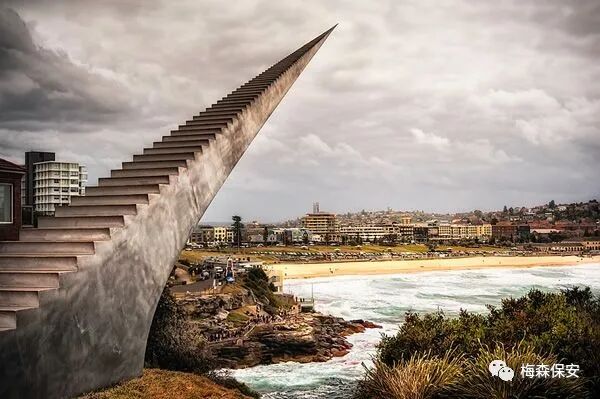
Look—the old man is now seated aboard a flying steam train. At first, the train rose into the sky by swaying from side to side like a long serpent. Now, before his eyes, it grows white wings. The wings do not beat. They glide like an eagle's. Steam disappears. In its place, between the two wings, are two clocks turning at tremendous speed. The clocks draw in air and spit it out. They are like two countdowns racing each other. Outside the window are clouds. When the clouds part, there are no music towers rising through the heavens, no human colonies in the sky. Only white. Like St. Petersburg at the beginning of memory, before the snow fell—or after it had been buried beneath snow.
A voice sounded. Not a beautiful woman's voice, but a Russian man murmuring without end. Urra-urra-urra. The old man shouted, I cannot hear you! The voice slowly grew louder. Along the way, the old man discovered that his fellow passengers were all puppets. Straps bound them to their seats. Safe, comfortable, smiling. He tried to catch up with the murmuring voice. He recognized in it a Russian intonation already extinguished in the new age, a melancholy cadence eradicated like the plaster of Pompeii, carrying a little hesitation and a little madness. At last he caught up. The Russian was saying: there is no Carefree Land. There is no Tower of Babel. Revolution is being performed across the world. The guns are advancing. Ideals are sinking.
The old man asked: What are you talking about?
The Russian said: Everything before this was wrong. No one will believe such wild imaginings.
The old man asked: You mean everything I saw when I opened my eyes was only a dream?
The Russian continued murmuring, uninterrupted: The problem now is that you are not credible. Readers will think you are too mixed.
The old man asked: What?
The Russian said: People long for sharply defined characters. Characters as thin as shadow puppets, their movements clean. They either embrace one faith with their whole hearts or withdraw carefully from another. Yet most people bear no relation to such creatures. Every human action is ambiguous. People are loyal only to their own imaginings.
The old man asked: Where am I?
The Russian said: This book will be concerned only with following.
The Russian drew dense black lines across the page, deleting passage after passage. Carefree Land sank beneath the ink. The music towers collapsed among scraps of paper. Now, beyond the silent explosions on the page, the Russian rose and prepared to leave a vast and unfamiliar imperial city. He closed the manuscript. At last, on its blank cover, already yellowing, he wrote Notes of a Follower.
In the palace of the Heavenly King, I saw him for the first time.
Following a female official, I climbed a long staircase and entered a golden palace so silent, so immense, that it seemed lonely. All the noise and damp cold of Tianjing halted there. From far away, music like a nursery rhyme drifted gently toward me. I continued, passing incense burners, pillars coiled with dragons, tall stools, curtains of gold. There was not a grain of dust anywhere I walked, not a single object set crooked. Its cleanliness frightened me. The music gradually thickened. At last, I reached a room where people were present. The official withdrew. A row of musicians, all the same height, played with solemnity. Performers held implements like bamboo poles and manipulated leather figures against a curtain. I was standing behind a shadow play. The Heavenly King sat on the other side of the screen. I could not see him.
The play depicted the Heavenly King's wondrous dream.
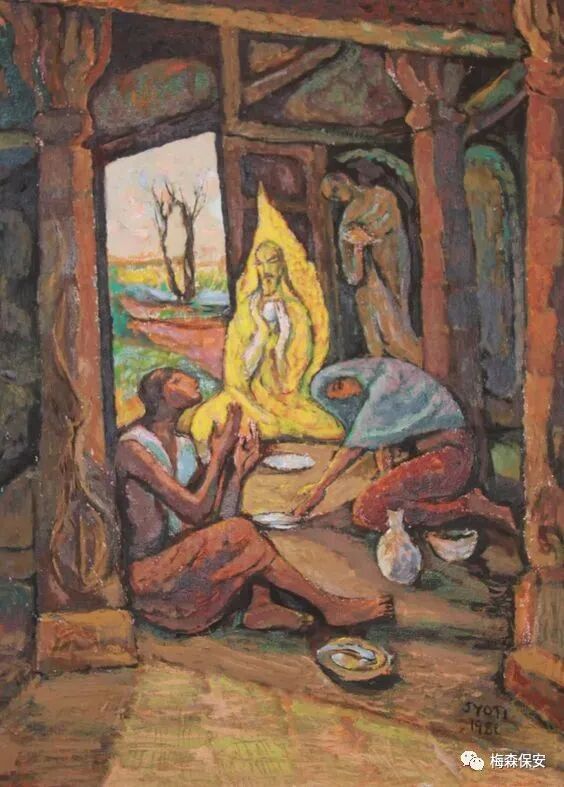
He had dreamed it in 1837. The entire Taiping Heavenly Kingdom began with this dream. At the time, the Heavenly King was not yet called Hong Xiuquan. He was Hong Huoxiu, thirty-three years old, and had once again failed the prefectural examination in Canton. After returning home, he fell into a long fever. His family believed he was dying. Ah, the Heavenly King's shadow puppet loosened its weightless joints and walked slowly into the dream. The scenery shifted gently. In an instant, we arrived at a resplendent palace in the clouds. Another puppet, very tall, sat upon a throne. He was God. The Heavenly King prostrated himself at God's knees. Father, he said.
The Father was solemn but sorrowful. Who among mortal people is not fed by Me? Who is not clothed in what I provide? Yet now they worship demons. The demons kill them, and still they turn and hate Me, He said.
Every joint of his son Hong Xiuquan shook violently to signify grief and indignation. Let me slay the demons and destroy the evil, the son said.
The son entered fierce battle with Yama, the leader of the demons, known among men as the Dragon King of the Eastern Sea. In his hand, he held the precious sword "Snow in the Clouds," a gift from his Father. His elder brother Jesus stood behind him holding a golden seal and commanded the demons to retreat. Yama was cunning. It became a serpent, then a flock of birds. The performers spun their arms at great speed, and the flickering shadows revealed the enemy's power. The son slowly weakened. But gentle fairy maidens gathered around and fed him yellow fruit. His radiance returned. He strode swiftly into the demons, dense as a swarm of bees, seized Yama by the throat amid the disorder, and nearly ended him with a single stroke. Spare him, the Father said.
The shadow play skipped the disappointments after the Heavenly King awoke. No one believed his wondrous dream. The villagers thought him mad. Only years later, when he came upon Liang Fa's Good Words to Admonish the Age and attended Luo Xiaoquan's sermons, did he learn that everything he had dreamed had a source. He was the son of God.
More than thirty years of his life had been squandered, but now one dream had given him faith. Across the land of China, all living people suffered. The Qing court was rotten; the people had no means of life. The Heavenly King's shadow slowly descended into the mortal world. Alone, he entered mountains and forests, followed by several faithful men from his home village. But his believers multiplied. Next came another exciting battle. Yama's little demons became queue-wearing Manchus. Leading believers with long hair, the Heavenly King showed no mercy this time. The performers silently assembled before the screen and took their stations, portraying the grand massacre. Red blood drowned the lower half of the curtain. A period of silence. Then the Heavenly King was first to rise. After him came his diminutive followers. The play was over.
The shadow-puppet troupe gathered its props with the faintest sound. Everyone lowered their head. I knelt and waited for the curtain to be removed, until all noise had ceased. When I finally looked up, the Heavenly King was reclining far away on the dragon throne. Two palace women fanned him to drive away insects that did not exist, one assigned to his head and the other to his feet. Four more massaged his head and neck, his shoulders and back, his genitals, and his knees. Another laid a hot towel across his forehead. Wearing an open golden dragon robe, the Heavenly King was helped upright by his attendants. He seemed entirely indifferent to my presence. He stood, stretched, and let his tiny, barely visible genitals swing. His long hair was neatly arranged, his mustache small. He was not tall and carried none of a monarch's fat. Then he approached me in quick little steps, passed me, hid behind my body, rested both hands on my shoulders, and spoke close to my ear.
"I know, man of the West, that you have come to take something from Me."
Had I arrived in Tianjing a year earlier or a year later, I could never have approached the Heavenly King. In near-total ignorance, I had achieved what Luo Xiaoquan and the missionaries of the Shanghai concessions had dreamed of doing for years. I reached Tianjing at the beginning of 1857. At the time, in the aftermath of an atrocity beyond description, Tianjing had become emptier and more silent than ever. Six months before, the East King Yang Xiuqing, at the most unrestrained height of his power, had been executed by the North King Wei Changhui under secret orders from the Heavenly King. In a single night, twenty thousand people connected to the East King lost their heads. The Wing King Shi Dakai accused the North King of indiscriminate slaughter, and his entire family was massacred in turn. Shi Dakai escaped the city alone and raised an army against the North King. People answered his call from every direction. In desperation, the North King Wei Changhui attacked the Heavenly King's palace, only to be killed by the King's own guards. Thus the Kings of East, West, South, and North were all dead. Of the men who founded the kingdom, only the Heavenly King and the Wing King Shi Dakai remained. I arrived at winter's end. The blood that had frozen in the streets was melting. Shi Dakai returned to Tianjing alone by boat to take charge of state affairs, while in the palace, day after day, the Heavenly King relived his old dream.
I was first carried to the gate of the Heavenly King's palace, but two years passed before he summoned me. At the beginning, I was assigned to make gunpowder and prove that my claim was true. I not only put my knowledge to use, sparing the garrison from digging across the country for stores of powder left by the Ming centuries before, but improved the defenses along Tianjing's walls. Gradually, certain generals began calling me "the man of the West" and gave me considerable influence within the army. After some time, a general said that Shi Dakai had summoned me to his residence.
I had heard of Shi Dakai's reputation in the army. I had also heard how, after losing his family, he had returned to Tianjing in endurance and solitude, withdrawn into his home, seeing no one, issuing even the affairs of state in written dispatches. But only when I saw him there did I understand what, specifically, those stories were trying to describe. "Shi Dakai has the eyes of a hero, only now they have been defeated," I later wrote in my manuscript. "I had seen that light only in Garibaldi's eyes."
He was very young. In his twenties, thirty at the most. When I saw him in his residence, he was not dressed like the other kings, in garments as flamboyant and ridiculous as actors' costumes. He wore only a white headcloth and white jacket, and was visibly stronger than most men. Tragedy had given his face a melancholy calm. But tragedy could not conceal the light in his gaze, still fresh and young, like desire perpetually aroused and unable to subside. There, you could see clearly how high his spirits once had risen. Seeing him, I realized that I myself was almost fifty. I wondered what he saw in my eyes.
"Some say you are a priest. Some say you are a soldier." Shi Dakai handed me a cup of tea. "Every man of the West who comes here seeks either money or private advantage. Honored guest, why have you come?"
I said that I had no reason for coming. Fate had brought me to this place. I told him of my meeting with Luo Xiaoquan.
"Do you believe in Him?" he asked directly.
I said that throughout the journey, I had been considering the doctrine Luo Xiaoquan taught—
"I mean Him." He pointed an index finger toward the sky.
I could not tell whether this was a test or a threat. But I told him honestly that I did not know.
He smiled, then asked, "In the West, has anyone ever seen Him?"
I explained that many believers held that He did not walk the earth in physical form, but revealed Himself through revelation.
"I asked whether anyone in the entire West has seen Him." He stared at me.
I said I did not know.
He fell into a long silence. At last, he told me he would soon leave Tianjing. There was no room for him here. He asked whether I wished to leave with him. I said I had only just arrived, and had not found the thing I was seeking. What are you seeking? he asked. I can give it to you. I laughed and said, you cannot. The question you just asked is also the question I am asking. He smiled. Honored guest, take care, he replied. When we meet next, who knows whether it will be in heaven or on earth.
It was the last time I saw Shi Dakai in Tianjing. In the summer of 1857, he took his trusted guards and traveled far away to Anqing.
Conditions in Tianjing grew worse. Rumors by the wall said Qing forces had rebuilt their northern and southern camps at Xiaolingwei and Yangzhou. Hundreds of thousands of Green Standard soldiers intended to join Zeng Guofan's Hunan Army in the south, seal Tianjing in a jar, and destroy it step by step. Yet within the city there was chaos and no government. No one knew what the Heavenly King was doing. One general swore as he repeated to me that the Heavenly King had issued several secret commands ordering Shi Dakai to return and defend him, but Shi Dakai kept his army where it was... Veterans from Guangdong and Guangxi, men who had joined the Taiping army at its beginning, brought another piece of news, though no one knew whether it was happy or grim: the British and French had shelled Canton into ruins. Their gigantic iron ships were sailing toward Beijing.
Lord Elgin, commander of the iron fleet, was a fat, middle-aged Englishman of noble blood. Later, his journals showed that his heart was not wholly made of stone. Were the things we did in India and China the acts of civilized men? he asked himself aboard ship. But. A moment later, his certainty returned. But this was a people like vermin—treacherous! Barbarous! Could barbarians be treated by civilized means they only despised? In the summer of 1858, his fleet invaded Tianjin. The Qing emperor capitulated quickly and signed a new treaty. Elgin was extremely pleased. History will remember this glorious moment, he informed the people of Britain. Not long afterward, however, he and his distant countrymen regretted it. If that witless emperor had yielded so easily to our conditions, did that not prove that we ought to have demanded far more in the first place? A failure of logic! The spirit of contract had made us too gentle!
Two years later, in 1860, he returned to the Bai River with a larger fleet. It had assembled the finest races of Europe, every man waiting to take his share of that weakling emperor's real gold and silver. But then they heard that the Qing had tortured their prisoners to death, and that the weakling emperor had fled to the countryside. How could civilization endure such humiliation! The allied army charged into the emperor's ancestral home, a garden so exquisite as to seem false: the Old Summer Palace. Rare marbles intoxicated their eyes. Rank upon rank of white statues bewildered them. Labyrinthine patterns of impossible complexity nearly made some weep. The soldiers drew one deep breath and plunged like divers into the unattended grounds. Loot, steal, chop down with axes, throw things like shot puts, then burn the city in one great fire! When the flames rose, an Italian photographer with exacting aesthetic standards could not help exclaiming: "How beautiful! How many people are fortunate enough to witness the destruction of something eternal?" Another man, a zoologist and new disciple of the recently celebrated On the Origin of Species, ran everywhere in search of the capital's rare birds and beasts amid the fire. Elgin stood before the conflagration, trembling either from excitement or the discovery of a conscience. "Burn, burn," he urged the leaping flames. "Vermin do not deserve such creations!" he shouted. "History will remember this moment," he told himself.
Very well. Let us return to the autumn of 1858. Elgin was leaving Tianjin with the good news of his new treaty. Before returning to England crowned with success, his fleet traveled up the Yangtze to inspect the new treaty port of Hankou. As it passed Tianjing, a shell from the city wall grazed his deck. He looked up. More shells flew toward him. He loudly ordered the fleet to retreat. During the withdrawal, however, he commanded his soldiers to bombard Tianjing's batteries. Reduce them to ash, he said.
The Taiping commanders knew they had caused trouble. Before then, I had warned them repeatedly that we had no chance if we made an enemy of the British. One emergency meeting followed another. Generals and ministers of every kind appeared, possessing every variety of title and accent. At last, the great responsibility fell to me. The Taiping army sent me to negotiate with Elgin and make a friendly overture. A letter written by the Heavenly King to Elgin was placed in my hands. It was an exquisite roll of yellow silk three cun long, covered with 172 lines of verse. At the opening, the Heavenly King wrote:
Father and Elder Brother bring Us to sit in Heaven,
Sweeping away false gods, granting glory.
Western barbarian younger brothers, hear Our decree:
Together uphold Father and Brother and destroy the vermin.
At the end of the year, I carried this personal letter to meet Elgin at the port of Anqing. His interpreter, Thomas Wade, burst into laughter when he received it and began improvising a translation. Then Elgin, too, doubled over laughing. "This is the strongest opponent of that fool emperor—a madman," Elgin said.
"My lord, we need your help. If the British Empire also wishes to weaken the Manchus—" I said.
"You know that I could imprison you at any time." Elgin cut me off. "You have already violated our principle of neutrality. You are helping rebels."
"My lord, you overestimate me. First, I am not a British subject. I no longer belong to any country," I said. "Second, I am astonished to hear you speak of principles."
My words did not anger Elgin. Instead, they made him more serious, allowing us to discuss what both parties wanted in ordinary tones. I explained that, like Britain, we were a Christian country, and that our discussion ought to begin from this point. He told me that he had never intended to exchange fire with the Taiping Heavenly Kingdom. They had already taught the Qing emperor a lesson. The Taiping rebels should learn from the Manchus and harbor no crooked designs against British trade. At the end, he smiled. "We can burn Beijing, and we can burn any city on this land." I could not tell whether it was a joke or a threat.
After the negotiation, Elgin approached me. "I would like a private word," he said.
He led me onto the deck of his gunboat. "Our fleet could take or leave this vessel. Yet the people here could not produce a single one of its parts in a hundred years," he said. "You are a respectable man. Why sell your life to these inferior people? If they are coercing you, you may leave aboard my ship now. You have learning and command of languages. I will have someone find you a post. We may have use for you later."
"Thank you for your kindness, but I have no need of it," I said.
"How much have they paid you?"
"I am not a mercenary."
"Surely that little fraud has not bewitched you into believing he is Jesus's younger brother?" he said. "A pack of cult swindlers calling themselves Christians?"
"Orthodox Christians are firing cannons and killing people in East Asia," I said.
Elgin laughed contemptuously. "Sir, it is out of respect for the color of your skin that I speak to you civilly. Yet you play games with words and test the limit of my courtesy. Do you know how many bones we saw on our way here? All of Zhenjiang has become a dead city. Not one animal remains! You imagine they kill fewer people? I tell you, when these vermin kill one another, they are far more cruel than we are."
He narrowed his eyes and studied me. "You know this perfectly well. That is why I wonder what you intend."
I was silent.
"Sir, people often imagine they can distinguish a noble impulse from the devil's desire. They cannot," he said. "That is why it is so much easier to fight for orders and honor."
He waved a hand to signal the conversation was over and swept away.
Several days later, I rode hard back to Tianjing. Along the road, the Heavenly Kingdom was shaking in wind and rain. City after city fell to the Green Standard Army. News said the Zeng brothers would capture Jiujiang in the west within days. We carefully avoided the road by which we had come and returned to Tianjing in fear. As soon as the gate opened, two edicts arrived. First, Elgin's fleet had returned to Shanghai as promised. Second, the Heavenly King was overjoyed and had personally issued an imperial decree summoning me at once to his palace. "Why have you not thanked Heaven's grace?" the messenger barked. I dropped to my knees. Elgin's question echoed inside my mind. Why was I kneeling?
My doubts went no farther. I followed a taciturn female official up the long and solemn staircase at the center of Tianjing.
The palace women had disappeared. The Heavenly King hid behind me. I knelt, looking toward the empty throne where God's second son took his pleasure.
"I know, man of the West, that you have come to take something from Me." The Heavenly King rested his hands on my shoulders and spoke into my ear. "You searched the entire West and did not find it. In all the world, only I possess it."
I knelt without speaking.
The Heavenly King's hands released my shoulders and stopped abruptly in midair. "You are testing Me," he said. "You think I am not the Son of Heaven. You think I am a false prophet."
I said no.
The Heavenly King began to laugh. "Even men of the West fear death. All people beneath Heaven are the same!" But his laughter stopped on a high note. "I know what you have come to take. But I may not give it to you. It is My treasure. Through it, I won the Heavenly Kingdom. Why should I bestow it upon you?"
I knelt without speaking.
"Do you know why the East King died?" he asked softly beside my ear.
"He wanted too much." He nearly bit my ear. "He obtained earthly glory, then began to covet heavenly glory. He wanted to be a prophet. But he was false."
The Heavenly King straightened, walked in front of me, and turned his back. I could only look upward at his yellow robe. "Man of the West, I have several questions with which to test you," he said.
"I ask you. In former days, God had a son, Jesus. Did He also have a second son?"
"You are the second son, Heavenly King." I pressed my forehead to the floor as I answered.
"Correct," he said. "I ask you again. How many sons did Jesus have?"
I said nothing.
"Speak!" The Heavenly King flew suddenly into a rage. "Do not play tricks before Me. I see everything clearly."
"Jesus, to the best of this servant's knowledge, had no children," I said.
"Correct." He calmed. "Just as I dreamed."
"I ask you. How tall is God?"
"God is a little taller than the Heavenly King," I said.
"How much is a little?"
"The same as... the same as in the play just now."
"Correct. Just as I dreamed," he said. "I ask you. How large is God's belly?"
"God has a belly blessed with prosperity. The same as in the play."
"Correct. Just as I dreamed. I ask you. How long is God's beard, and what color?"
"God's beard reaches His chest and is black. The same as in the play."
"Correct. Just as I dreamed."
"I ask you. What hat does God wear, and what robe?"
"A hat in the style of the Heavenly King and a robe in the style of the Heavenly King. The same as in the play."
"Correct. Just as I dreamed. I ask you. What hat does Jesus wear, and what robe?"
"The same as in the play."
"Correct. Just as I dreamed."
"I ask you. Does God compose verses?"
I said nothing.
"Does He or does He not?" he asked. "Speak! Do not play tricks before Me."
"He does."
"Correct. Just as I dreamed."
"I ask you. How many levels are there in Heaven?"
"There are nine levels in Heaven."
"Correct. Just as I dreamed. I ask you. What is the ninth level, the highest, like?"
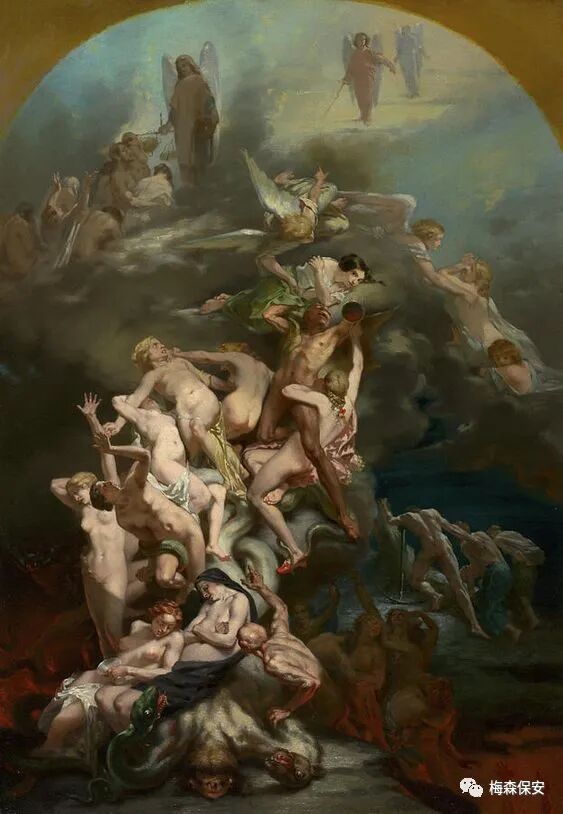
"On the ninth level, God, Jesus, and the Heavenly King walk easily upon the clouds," I told him, raising my head. "And within the clouds stand several immense turning towers, playing music for the court of Heaven. An iron serpent sways from side to side and travels among the clouds."
The Heavenly King fell into a long silence. Then he said softly, "Correct. Just as I dreamed. Very good, man of the West. You answered everything correctly."
After passing the Heavenly King's test, I enjoyed several rare days of leisure. In the new family courtyard built in Tianjing's former Manchu quarter, I continued adding to my manuscript. I had not yet decided what to call it, though I vaguely sensed that at some moment soon I would suddenly catch the title. It would be the name most perfectly suited to the novel. I might even feel not that I had created it, but only forgotten it, that the name itself was the book's beginning. This thought made me worry about my memory. I had just turned forty-nine and was already showing serious signs of decline. In this respect, I nearly matched the two-hundred-year-old man in my book. I must admit that I had forgotten the opening of my manuscript.
By then the pages formed a single thick volume. Far fewer remained blank than had been filled. Long before, I had developed a habit: whenever I began writing, I tried to read only the previous chapter and never touch what came before it. I wanted the two-hundred-year-old man to retain only the briefest memory each time he spoke. He did not seek a coherent historical narrative, much less the difficult maintenance of a unified self. One second into the telling, he might forget completely what he had said on the previous page, then begin, with the same ardor, to repeat what he had just said—or its absolute opposite. With this principle, I continued the old man's memories of entering the Taiping Heavenly Kingdom.
When he first arrived in Tianjing in his forties, the old man carried contradictory emotions. On the one hand, he felt that faith had summoned him. This faith did not necessarily require doctrine or a name. It needed only to answer the most urgent cry within him. In a new country, his fixation upon eternity would no longer be mocked. On the other hand, he knew that the new country had accepted him because it wanted him to kill.
Do not forget why he came, I wrote in the manuscript. Do not forget how weary he had grown of the castles in the air built by the human world and its revolutions, and how he had leapt in a single step into the cave of faith. Do not forget how he persuaded himself that, inside the cave of faith, nothing was temporary. Individual life was no longer groundwork laid for the collective or for descendants, but the expression of an immortal soul extending toward eternity. Yet the absurd years he spent in the new country seemed to alter his original purpose completely. The cause he believed in revealed itself in the form of the shallowest trick. And what he had once tired of became, unexpectedly, his reason for remaining. A feeling began to grow in him: Every human effort in the universe will ultimately lead to chaos and disorder. Yet that humans could build castles in the void filled him with wonder. Now he was one of the builders. He, too, was testing how long the structure could stand in sand.
During those days, I wrote at great length. But I deliberately avoided one central question. I did not answer whether the Heavenly King, the center of faith in this new country, was merely a fraud. I could not escape an imagining: two hundred years later, the new country had fallen, and a corpulent judge appeared before the old man and demanded to know why he had served a false prophet. The old man knelt, as I had knelt before the Heavenly King, and answered indistinctly, "In truth, I did not know..." The judge suddenly shook his head, revealing Elgin's self-satisfied face. "You knew perfectly well," he said. "I had no choice," the old man said. Again: "You knew perfectly well."
Before spring arrived, another sacred edict came. The Heavenly King summoned me to the palace again.
That day, the court was still performing the Heavenly King's old dream. After the musicians and puppeteers left, the Heavenly King did not rise. He had fallen asleep. The attendants waved their fans or massaged him gently. No one dared wake him. No one raised their eyes. At this moment, a recording official appeared silently at the side of the court and prepared brush, ink, paper, and inkstone.
After a while, one of the Heavenly King's toes twitched. Then a knee. He woke. He sat up on the dragon throne, and the attendants withdrew behind him. His eyes half closed, his voice tired and hoarse, he proclaimed, "I have received another beautiful dream!" Delight appeared on the recording official's face. He raised his brush and began writing rapidly upon yellow silk. "I walked with Father and Elder Brother upon auspicious clouds. One great family, joined in perfect joy!" The King flung his arms. "In the clouds stood immense towers, and all the people played music together! The heavenly soldiers and generals stretched beyond sight! At the other end, an iron serpent appeared, moving from side to side. At once I recognized the deceitful scheme of that brat Yama. I held Snow in the Clouds and struck the brat with My sword. The brat said, I am afraid. I said, I will put you to death! Then countless heavenly soldiers and generals bowed at My feet and cried together: Ten thousand years! Ten thousand years!" The official's brush flew.
The Heavenly King's mouth grew dry from speaking, and he collapsed again onto the throne. The attendants caught him, fanning him to lower his heat. Then he saw me kneeling at the entrance to the hall.
"Man of the West, you have come," he said. After a pause, he continued lightly, "Man of the West, beginning tomorrow, I want you to enter the palace and assist Me with the most important task now before the Heavenly Kingdom."
For a moment, I panicked. I tried to decline, saying I did not believe myself equal to it. My Chinese remained poor; still less did I understand the condition of the people or the course of the war throughout the kingdom.
"It is the Mandate of Heaven," he said. "I have considered it for many days. You are the military adviser from the West whom My Heavenly Elder Brother spoke of more than ten years ago. Not the insolent Elgin, not those mercenary swindlers, not Luo Xiaoquan of Canton. You."
He explained. More than ten years before, when they were still at Thistle Mountain, his Heavenly Elder Brother had descended to earth and given him a second revelation. Jesus? Jesus descended at Thistle Mountain? Yes, He descended, though He possessed the body of the West King Xiao Chaogui. The West King had since died in battle and returned to Heaven. Possessed him? Yes. Brother Xiao convulsed, and then Jesus spoke through his mouth. I asked Him: "Heavenly Elder Brother, who shall be military advisers in the age of Great Peace?" The Elder Brother said: "Feng Yunshan, Yang Xiuqing, and Xiao Chaogui are all military advisers. In the barbarian countries of the West, there is another." I asked: "Has he come to China?" The Elder Brother said: "At present he remains in the West." That was the prophecy more than ten years ago. Now you have come. Man of the West, this is the Mandate of Heaven.
I said I had no talent for governing. I understood neither laws and institutions, nor shipbuilding, railways, and military training. I possessed no real skill.
"None of those are needed," he said. "They are paltry tricks. I have summoned you to undertake a great task with Me."
He continued. "People today look at the surface of a problem and not its essence. Strong ships and powerful guns are external things. What people today need is the reform of the heart."
"The heart?"
"Within and beyond the Heavenly Kingdom, the hearts of all beneath Heaven are divided, allowing the Manchu vermin to prolong their last breath, precisely because their hearts are corrupt!" he said. "And the root of their corruption is that the sacred books of our Heavenly Kingdom contain errors."
"The Heavenly King means?"
"Six years ago, I printed The Sacred Book of the Old Testament and The Sacred Book of the New Testament. Yet in neither of these sacred books from the West is there a single mention of Me or the glory of My Heavenly Kingdom."
"The Heavenly King means..." I said. "You wish to rewrite the Bible?"
"Correct. Only the Chinese translation."
"How can the Bible be altered?" I said.
"Why can it not?" Displeasure entered his face. "I insist upon altering it."
"I am unable to help."
The Heavenly King erupted in fury, strode up to me, and pointed. "Man of the West, not only will I alter it, but you will make the alterations. The omissions committed by men of the West will be repaid by men of the West!"
The next morning, a civil official led me into the Heavenly King's study. It was resplendent with gold. The King, fully dressed, was already waiting. He wore a golden jacket and a cap of gold thread embroidered with a sky full of stars. At the center, two characters had been engraved in gold: HEAVENLY KING. It was the first time I had seen him with his lower body covered. He stood serious and devout, and for a moment I barely recognized him. Without a word, he spread foreign Bibles from unknown sources across the table: Dutch, English, and French editions, even an old Russian Testament, to my surprise. "Man of the West, I want you to discover the evidence inside them," he said.
"What evidence?"
"Mark the passages concerning Me and the Heavenly Kingdom."
On the other side of the table, I saw Gützlaff's Chinese translation of the Old and New Testaments and asked whether I could consult them. The Heavenly King hesitated, then agreed. I opened the books. They were filled with the King's dense underlining and annotations. He seemed embarrassed by this and turned his back to me.
I asked, "Does this edition contain passages concerning the Heavenly King and the Heavenly Kingdom?"
The King appeared not to hear me and remained with his back turned. I asked again. Haltingly, he said, "No."
"Then I suspect these editions will contain none either," I said. "A translation is called a translation because it retells the same thing in another language. It does not invent something new."
"I do not require your suspicion," the Heavenly King said. "You need only do as I say and search, sentence by sentence." He gave many more reasons. Perhaps the Chinese translator had overlooked the passages. Many people now had poor eyesight. Had not the Loyal King Li Xiucheng begun wearing spectacles? Missionaries suffered rough seas and could easily lose those two pieces of glass. Or perhaps the translator had deliberately omitted important sections in order to drug the Chinese people and preserve the profits of the opium trade. He supplied conjecture after conjecture without pause. I discovered that he understood the outside world very well.
Day after day, I began the futile work in the Heavenly King's study. The Chinese translation lay open on the left and the foreign editions on the right. I collated them line by line. At first, I did not understand why the King kept me in his study and personally spent so much time supervising my work each day. He seemed to have acquired new energy. Every morning, dressed impeccably, he waited for me there. Whenever I tried to skip a passage, he caught it and demanded shrilly to know exactly what it said. He threatened that, if I dared deceive him, not only would my body be hung from the city gate, but my soul would descend into hell and be punished by fire. Most of the time, however, he merely sat across from me in silence and studied my face. I began to understand that he kept me there in order to observe me.
"What is a railway?" he asked without warning one day.
I jolted out of my collation. "What?"
"The railway you mentioned to Me. You said you knew nothing of shipbuilding, railways, or military training. What is a railway?"
I was astonished he remembered so clearly. I said a railway was a road paved with iron and had become popular in Europe twenty years before. Steam trains traveled upon it. A steam train burned coal for power and could cover a thousand li in a day. If the Heavenly Kingdom had a railway, it could run from Tianjing to Canton without stopping.
"A curious trick and nothing more," the Heavenly King answered coldly. "My heavenly soldiers and generals travel ten thousand li in a day without fatigue. The moment Father and Elder Brother summon Me, I rise into Heaven. Is that not far more powerful than a railway?"
On another day, he asked, "Do men of the West also slaughter one another?"
"Yes," I answered.
He became suddenly excited. He leaned toward me and asked for details. I said the French and Russians loved war most of all, but today neither could likely defeat the British. Britain was a powerful country and unrivaled, above all, in naval warfare.
"Nonsense!" The Heavenly King frowned. "The Heavenly Kingdom is first."
Yes, the Heavenly Kingdom first, Britain second. But Britain was only a small island. There was a secret to its rise.
"The barbarian younger brothers of Britain also believe in God." He interrupted me.
Yes, the British also believed in Christ, but that was only one cause. Another was that, over the previous several decades, Britain had developed industry vigorously and encouraged trade—
"Do you know the secret of the Heavenly Kingdom's rise?" He interrupted again.
I wanted to finish my explanation, but he had no wish to listen. He leaned closer, almost touching my ear canal. "The secret is My dream," he whispered.
I nodded and told him I knew. I had already watched the magnificent dream twice.
"No. You do not know," he said. "This dream is My treasure. Through it, I won the Heavenly Kingdom."
Seeing my puzzled face, he smiled with still greater satisfaction. "Everyone believes I dreamed My dream twenty years ago. Wrong! I have told no one this secret. Twenty years ago, I dreamed only that I ascended to Heaven. I saw nothing clearly before the fever woke Me."
I held my breath.
"You think I am a fraud, a false prophet. Wait." The corner of the Heavenly King's mouth curved upward. "My dream extends without end. Whatever I want, I can dream. The Heavenly Father, the Heavenly Elder Brother, the court of Heaven, Yama, Snow in the Clouds, Manchu demons, fairy maidens, iron serpents. I complete it as I complete the sacred books."
"I am the first person in all of history. My dream is reality, and reality is a dream. I make everyone beneath Heaven dream with Me. By these means, Great Peace will endure for ten thousand generations."