Notes of a Follower: Act II, Part II
Not long after the battle, we returned to Montevideo.
Garibaldi entrusted me with negotiating for the support of the British and French navies, while he tried to persuade the republican government to give him more ships. One day, I brought a message from the British to his quarters. I called his name loudly. No answer. I went to the beach nearby. Still no trace of him. I followed the shore, passed a bank of rocks, and heard the rising and falling breath of a woman. I crouched and looked through a gap between the stones. Several meters away stood a great rock shaped like a shell. Anita, naked, sat astride Garibaldi's belly, rocking her waist in rhythm. Waves struck the reef, and spray landed on their bodies with each of her breaths. Droplets hung in Anita's long hair, along her collarbones and breasts, glittering like ornaments. I watched from behind the rocks with the same care I had once taken while listening secretly to the Decembrists. Then Anita lifted her head and said, "Mitya, I can see you. Would you like to come over?"
I lay down between them. The rock was perfectly smooth, as though the sea had made it for someone. My shoes nearly sent me slipping, and they both laughed. Whether from the seawater or my nerves, I began shaking again. Garibaldi propped up his head and gently played with my hair. The water had smoothed down his body hair, and he looked like a dark red seal at rest. Anita's wet fingers traveled over my chest, opening my buttons one by one as they moved downward. "Dear Mitya, a trembling monk," she said, "have you never tasted love?" Her fingers traveled back to my neck and stopped at my earlobe.
I breathed violently. "He is a blank sheet," Garibaldi said. "Be careful the seawater does not stain him."
Anita stroked my cheek. Her fingers passed like silk over the wing of my nose, over my eye. The flickering light on her body was divided by the shadows of those slender fingers, like the ending of an ardent letter soaked in ink. "Mitya, how I envy you," she said. "I wish the beginning of my love had been sharing, not possession."
Garibaldi frowned. Nervously, I turned toward him and no longer dared look at Anita.
"Relax. Relax, both of you." Anita circled my head with her arm and sank her fingers into my hair.
"Men. Like children. Sulking because they failed to occupy a patch of grass." She went on as though reciting a slow incantation. "Occupy a patch of grass. Occupy a forest. Occupy the ocean. Occupy a woman and her womb. Occupy numbers. Occupy a nation." She looked at Garibaldi. "If they could know that love can be like this—the three of us entwined, sharing warmth—I wonder whether anyone would still be willing to bleed for anything."
Garibaldi joked, "Women may be unable to imagine that some men fight not from greed, but for noble ideas."
Anita did not have time to teach us more. At her freest moment in the sea wind, she did not know how little time she would be given. She was twenty-five that year. Three years later, she would die in Garibaldi's arms. Anita was right. The longer you drift through this world, the more you discover that much of what can be known about love is knowable only by children and the young. She caught hold of a truth as if it were lying ready to hand—a truth the rest of us feel only at some instant in our plunge toward old age. A person follows an idea not because the idea is legitimate, coherent, or sublime, but because of the emotion the idea nourishes. Sometimes that emotion becomes powerful enough to make a person want to die for it.
Garibaldi could hardly have imagined that, two hundred years later, few people would remain who truly followed ideas. By the twenty-first century, all the chaotic and profuse ideas born in the nineteenth had been sorted and written into their respective genera and species. Marxism, republicanism, nationalism, Nazism, liberalism—the concepts multiplied without end. To make them easier to distinguish, the compilers qualified them with regions or other large words: Soviet socialism, state capitalism, neo-Nazism. People no longer chose through an unexamined ardor, as they once had. They selected the ideas suited to the position and class assigned to them and by which society called them. Dictionaries, encyclopedias, learned legislators, and leaders told them that a person who supported pluralism of belief must also support gun control, that a person who supported free speech ought also to oppose homosexuality. The leaders of ideas announced through loudspeakers that the theorists had perfected the definitions. Individual disagreements must be set aside for the moment. What was needed now was greater volume, so that the truth of our camp could be displayed.
All this makes what happened in 1848 seem like a fairy tale: so chaotic, so noisy, yet pointing toward the same longing. That year the fire of revolution swept through Europe. Beginning with cries against despotism on the divided Italian peninsula, it spread to France, to Prussia, then across the continent. Workers and the middle class, liberals and nationalists, stood shoulder to shoulder in the streets or took up arms, demanding constitutions, liberty, and unified nation-states. Then every flame went out at once, like an accidental palpitation of history. But at the beginning, no one knew how brief it would be. Everyone believed it was the prelude to a new movement. No one imagined the prelude would last so long.
Garibaldi had scented revolution as early as 1847. Frequent uprisings among the kingdoms of the Apennine Peninsula renewed his hope for his homeland. The land where people spoke the same language had not been united since the sixth century. "I am already forty. I have waited too long," he said. "If there is any possibility of a united Italy, I am willing to die tomorrow." Not long afterward, he led us from South America back to Europe.
At first, we offered our service to the king of Sardinia. He had declared war on Austria and promised to drive the Austrians from the Italian peninsula. Relying on Garibaldi's reputation, we recruited as we marched. By the time we approached Milan, our force had grown to nearly four thousand. We did not know that the king had secretly surrendered to the Austrian marshal Radetzky. We did not disband. Instead, we fought a guerrilla war against the Austrian army until Radetzky concentrated his forces to crush us. We fought as we retreated and dispersed as we went. By the time we reached Switzerland, only several dozen remained, but their spirits were still high.
My manuscript also made great progress during the march. Sometimes I wrote beside the campfire, sometimes in the woods. In this period, for the first time, I showed my future readers the age in which the two-hundred-year-old man now lived: the world of the twenty-first century. As far as I knew, no one had yet attempted such a form. The earlier account of the old man's memories paused in 1848. He said, "Dear spectators, forgive an old man. I am two hundred years old. At this moment, my eyes have grown dazzled. I must rest and open them to look at my surroundings." He opened his eyes and discovered that he was aboard a flying steam train. Like an immense serpent itching all over, it produced thrust by swaying from side to side. Then a beautiful woman's voice said, "Dear passengers, through the glass you may look down upon the magnificent scenery of Carefree Land." Every old person in the carriage placed a hand against the glass and stared blankly downward. The two-hundred-year-old man discovered that all the old people aboard carried painful memories. Their pain was rooted in the nineteenth century and halted before 1848, whether because of war or enslavement. This journey was meant to return them to a reality without worry, healing their wounds by freeing them from the burden of memory. He also discovered that, in the twenty-first century, every corner of the world had become Carefree Land. Russia, France, Brazil, Uruguay, Italy, even China in the east—all were now members. The beautiful voice explained that, after the frequent struggles of the mid-nineteenth century, people had discovered that they were all following the same thing. They lowered their weapons and greeted one another in different languages. Hello, hola, bonjour, guten Tag! At that moment, the clouds and mist around the flying train parted. The old man saw enormous towers rising one after another into the sky. Like rotating clay statues, they broadcast concertos to the people on the ground in tones as high as great bells. Tears filled the old man's eyes. "So my ideal really can be realized!"
The remaining problem in the manuscript was this: what was the thing that everyone would be following two hundred years later? I decided to leave the question aside for the time being.
In 1848, we fought several more battles for the Kingdom of Sardinia, all destined for defeat. But the fissure had opened. Revolution could not be stopped. In November, citizens of Rome in the Papal States entered the streets, each person's arm around another. The pope fled to Gaeta. In February 1849, the citizens' constituent assembly proclaimed: the Roman Republic was founded! Mazzini, who had spent the first half of his life in exile and turmoil, finally stood on the platform. Speaking for the triumvirate, he issued his declaration with something close to fury: lower taxes, abolish the death penalty, public education, freedom of religion, freedom of speech! At the same time, Austrian and Spanish troops were quietly massing, and the French army of Napoleon III had already reached the city.
At the end of April, our long and punishing march finally ended. The citizens of Rome welcomed their own national hero, Garibaldi, with the cheers reserved for a savior. They expected him to repeat his South American miracle: one man against the multitude, driving the French army waiting beyond the gates back like a long dragon. Besides, there was no one else left in whom to place their hope. Inside the city, Anita and I rode behind Garibaldi, receiving the people's adoration. Garibaldi looked grave. Anita, pregnant, was already showing mild symptoms of malaria. Her lips were pale, and she often trembled without noticing.
"We cannot win," I told Garibaldi.
"What do you mean, we cannot win, Mitya?" he answered calmly. "We have no other choice."
On the final day of April, the French general Oudinot led a great assault on the northwestern gate of Rome. Holding an old map, Oudinot mistook a long-fortified wall for an opening. We and the Lombard infantry shattered his force, driving it back to the sea. Garibaldi then drew again upon his incomparable tenacity, marched south, and inflicted a great defeat on twelve thousand soldiers of the Kingdom of the Two Sicilies. But at the other end of the battlefield, Mazzini was hurrying to make peace with France. With his customary overconfidence in moral force, he released the captured French soldiers, hoping this humane act would move Oudinot and Napoleon III. As a result, the nine thousand French troops received reinforcements and swelled to thirty thousand. On June 1, the siege began.
The city shook in wind and rain. Everyone understood that its fall was only a matter of time, whether minutes or hours. The assembly met for the last time. Representatives offered three options: surrender, fight to the death, or withdraw into the Apennines and wage guerrilla war. At that moment, a shell struck the outer wall of the city hall, and plaster rained from the dome. The representatives covered their ears or the tops of their heads. Garibaldi walked calmly to the platform, brushed dust from his brilliant shirt, and delivered a speech no one could hear beneath the artillery. "I choose the mountains," he said at the end.
At a strongpoint near the edge of the city, he leaned against a wall holding his rifle and waited for his moment. Anita pressed against him. By then she could no longer speak. Her entire body was pale. Every breath cost effort, and she often coughed blood. "Not yet," Garibaldi said. I did not know whether he meant the retreat or Anita. A little more than a month later, Anita would enter her long sleep in his arms. We were hiding on a farm in the province of Ravenna. Never had he asked her anything so gently: say one more thing to me, will you? Anita no longer answered.
But now, with Rome about to fall, the three of us waited in silence as we had on that night outside Salto. Garibaldi watched beyond the wall and muttered repeatedly, "Not yet." He turned toward me.
"What are you doing with your eyes closed, Mitya?" he asked. "Are you praying?"
I opened my eyes. "I am praying for us and for Anita."
He gave a cold laugh. "Have you forgotten that one of our dearest hopes in coming here was never again to bow before that cowardly pope hiding in his country villa?"
"I am not praying to him."
"But that Him is the greater lie." He leaned closer. I felt he was about to seize my collar. "Mitya, what have all these years of sailing and fighting been for? Are you going to surrender now?"
"I want Anita to live." I looked into the eyes that had never lost their light. "I do not want it to end like this."
Anita looked weakly at me, breathing in shallow measures. Garibaldi paused and rubbed his forehead. "I know. I know."
"But Mitya, a person cannot be saved by lies," he continued. "What matters is not what we have yet to possess. It is what we have already created."
"And what have you created, my brother? Fame? Liberty?" I answered wearily. "Tell me: even if we create liberty and die one second later, what does that liberty mean? It is the same with this revolution. The French are about to enter the city and kill people. Someone will resist. They will kill more. Back and forth. For whom are we creating liberty?"
Garibaldi stared at me.
"Mitya, we are all bricks and tiles for our descendants," he said at last. "And you are mistaken. Liberty is not a creation. It is a quality. Liberty is fearlessness."
He looked beyond the wall. Still waiting. At last, he heard the French artillery begin to weaken. Suddenly, he was full of energy again. "Compatriots, the time has come. We go!" he shouted. The soldiers awoke from exhaustion and despair. Amid the ashes, the citizens looked toward their hero. His ringing cry echoed inside and outside the walls: "Where we stand, Rome stands!"
After the republic fell, we returned once more to the sea. The armies of several nations pursued us without mercy, ensuring we could not form a guerrilla force in the mountains. In San Marino, Garibaldi disbanded the Italian Legion, though he still held a thin hope of reaching Venice. We did not succeed. Along the way, we lost Anita. Before we had time to bury her properly, we were forced to cross the Atlantic again.
Most of our former companions were dead. Two ships remained to us, along with a few green recruits carrying rifles. On both sides of the Atlantic, we returned to our old professions: unsuccessful international trading schemes, or the transport of coal for ready money. We went back to South America. In Uruguay and Brazil, Garibaldi was surrounded by old friends who complained about the collapse of republicanism and the unfathomable hearts of men. We traveled north to New York City as well. Rumor said unimaginable wealth had gathered there, enough to astonish Marco Polo. Refugees poured into New York, bringing Europe's elegant manners and resolving to spend the second halves of their lives speaking only of money and never of politics. Wealthy New Yorkers heard of Garibaldi's exploits and boasted that they would give him another three ships. Garibaldi could not listen to them. Later still, he said he wanted to go east.
In 1852, we reached Canton. It was our first step into the ancient countries of the East, and everything there was new to me. Garibaldi carried another bewildering business plan. He predicted that the Cantonese would welcome seabird guano from across the Atlantic as fertilizer. Setting out from Peru, he made us endure the smell of dung for months and carried the treasure thousands of miles to Guangdong. After a long negotiation mixed from several languages, the Cantonese said, "No."
At dusk on the docks, I went walking in the city. Garibaldi remained ashore, engaged in the futile work of persuasion. From a distance I saw him gesticulating to demonstrate the special effects of seabird droppings, accompanied by high-pitched Italian: "You need it. You certainly need it!" Without noticing, I was drawn toward the lanterns of thousands of households. They hid behind the foreign legations and the mansions of European merchants who forced opium upon the country. People gathered beneath earthen-gray awnings, buying and selling snacks, fighting cocks, or watching a performance in which figures were manipulated behind a white screen. Beneath the lamps, the figures' shadows tested one another, entwined, fought, then suddenly scattered, leaving the ground blank. I walked on. The noise gradually receded. I came to a church.
The church was entirely empty except for a white priest dressed like a Chinese man, sitting at its center. He sat in silence, looking up at the cross at the far end. I sat beside him.
"My friend, the church is closed now," the priest said in English. He did not turn his gaze from the cross. "If you have not heard, I will be moving away in a few days. The Baptists no longer support me."
"Father, I am not a believer," I told him. "This is the first time I have entered a church."
He turned his head and suddenly looked at me with fervor. "Then, my friend, God must have a purpose in arranging for us to meet at this moment."
"I do not even live here. I am a sailor," I said.
"No matter where you come from, there is a reason we have gathered here," he said. "Why did you come here?"
"I happened to pass."
"But why did you come inside?"
"I wanted to see whether anyone was here."
"My friend, you are not telling the truth," the priest said. "You came inside because you are looking for something."
I did not answer.
The priest continued. "There is no shame in looking for something. I am looking too. I am asking Him. My home is in Tennessee, in the United States. I crossed ten thousand miles to reach this strange continent. I staked everything I owned, all so that He might test my sincerity."
I remained silent.
"My friend, I too have wondered whether everything I have done is merely a farce. Let me tell you a story. Many years ago, I held sermons every night. An eccentric Hakka man studied with me. Again and again he told me of his dreams: scenes of heaven, demons slain and evil destroyed. But before I could arrange his baptism, he left on his own," he said. "But do you know? Now I hear he has spread the gospel throughout the south. Even the Qing court has begun to fear his influence. You see, we have not been abandoned. He saw everything we entrusted to Him. God has been rewarding us all along."
"I am leaving," I said.
"One day we will meet again." He placed a hand on my shoulder. "Please remember my Chinese name: Luo Xiaoquan. One day you will find me here."
I returned to the Atlantic with Garibaldi. A year later, we went to London, another stronghold of refugees. Envoys and movement leaders from many countries welcomed Garibaldi warmly, eager to add to their own local reputations. Buchanan, who several years later would finally achieve his wish of becoming president of the United States, invited him to a dinner of celebrities and raised a glass in his honor. "You are as famous in America as you are in Europe. Only, in America, you have acquired a new title. People there say you... they say you are an outstanding sailor..."
The following evening, Garibaldi returned to London's West India Docks. He thrust his head into the ship's cabin, his energy undiminished by two days of social engagements. "We sail for Newcastle tomorrow morning!" he shouted.
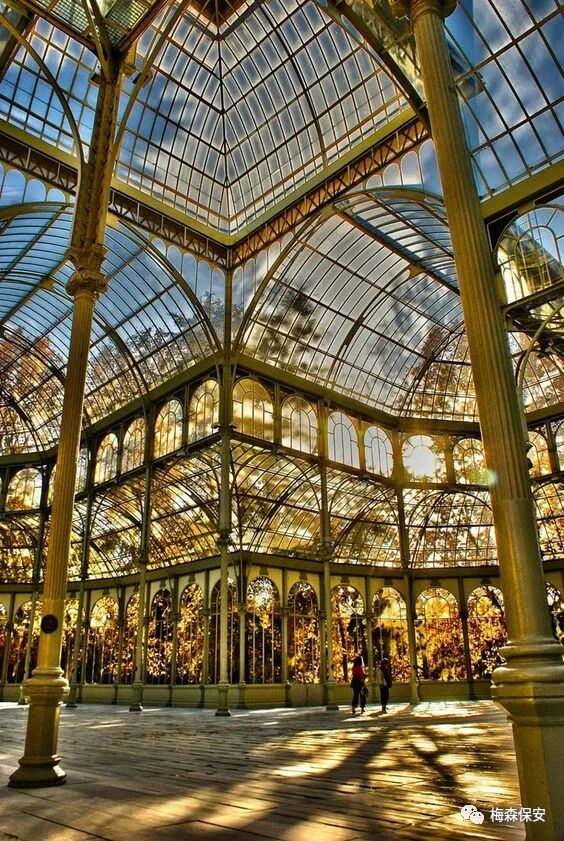
That night, I sat on the deck and watched the Thames in darkness. A city rose abruptly from the riverbank, its proud buildings seemingly designed according to how spectacular they would look when someday destroyed. During the day, I had visited the Great Exhibition of the Works of Industry of All Nations, housed in a Crystal Palace. Never had I seen a glass building so immense. I imagined an iron-headed bird, or a meteor, flying toward this most brilliant of human-made lights. A breach appeared in the glass. Then every pane shattered at once and poured down like rain. Onto tropical trees. Onto sculptures in fountains. Onto suspended Persian carpets. Onto Victorian corsets. Onto the new trains. I remembered an old legend of St. Petersburg. In 1703, Peter the Great passed through the marshes of the Neva and said, "A city should be built here." And St. Petersburg was built. No one could explain how it had been completed so quickly. And so some said Peter built the city in the air, then, like a prince on the beach, lowered it patiently and gently to the ground. But what do human beings build that is not a castle in the air?
Garibaldi came up behind me carrying his inexhaustible wine from Nice and sat down at my side. "How long has it been since we sat together like this? Ah. The days in South America seem like a dream. Not many of our friends from then remain," he said.
"Sometimes I wonder whether I did not take the road of exile at all, but merely stumbled from place to place into my ideal life. You know, I sailed with my father from the time I was a child. I would gladly spend my whole life at sea," he said.
"What can we do in Europe now? Become slaves to kings? Beg in Britain? Go to America and pretend none of these years of life and death ever happened? But I have an ideal." His eyes shone again. "We will bring every exile aboard our ships. What we failed to realize on land, we will realize at sea!"
He stared at me in excitement. I avoided his eyes.
After a long silence, he said, "But you are still going to leave, aren't you, Mitya?"
I nodded. I opened my mouth to say something, but he placed his hand over mine. "It is all right. I understand."
He turned away. "Then, with the time we have left, tell me about the book you are writing. You have spent so long on it. What sort of book takes so long? I hope that one day I will read it in full. By then, it will have been translated into Italian."
So I told him what I had completed. A two-hundred-year-old man is looking for an answer. Garibaldi said, "Two hundred. So old." Yes, not only old but confused. That is normal, isn't it? As a person ages, he easily becomes submerged in the past. But his past is full of riddles and traps, so the undertaking is immense. Before he leaves the world, he must tease out a thread. He believes that, once he finds it, he will be close to the answer. "So he needs a convincing reason to tell himself his life was worthwhile, except he also happens to doubt himself very deeply." Do not interrupt me. This time, let me finish. The old man was born in St. Petersburg at the beginning of the nineteenth century. He witnessed the Decembrist uprising, riots in Paris, steam trains racing forward. He also followed a brave captain and fought in South America. "Brave, and handsome, and much loved by women." Enough, do not interrupt me. During this period, everyone was enveloped in ambition and claimed to represent the future. They explored every possible way of life except those of the past, which they trampled underfoot. Yet when they thought of death, each was more afraid than before. They asked themselves: will the soul truly disappear? Is there really nothing else for us to hope for? Like most people of this time, the old man faced this fear at every moment. Again and again he gave himself a chance to test whether this life might have some possibility of transcendence. It never did. Never did. There was only fear. But he had indeed once witnessed freedom: a singular woman, a woman who belonged to horses, the sea, and the sky, who was fearless in every moment she lived—"Anita." And so, on his way toward an answer, he was at least certain that he, too, had once been visited by the happiness of freedom.
"Mitya, part of my heart will always belong to you," Garibaldi said.
"And you, my captain, to me." At dawn, I said goodbye.
I began another journey to China. This time, I boarded a missionaries' ship. As we pitched across the sea, they played games of memory. They seemed to know a secret by which the brain could be decorated as a palace, each memory placed in a certain corner or upon a shelf. Whenever they needed one, they simply took it down and could describe every part of the episode without omission, even recite long passages from books. After competing among themselves, they asked about my past. Mine? I said. I remember very little. My mind is a field of confusion. Surely you remember something, they said. I said, I remember fighting for the republic in Rome. Oh no, they said. May God forgive your sins. I said, I also fought in South America. I shot many Argentines. Dear God, they said. Please forgive him.
I disembarked in Canton but did not find Luo Xiaoquan. Some said he had gone to Hong Kong. Some said he had returned to America. I studied Chinese and doctrine while watching for news of him. Canton was panicked. Its citizens understood that it was only a matter of time before the British found another excuse to enter the city, burn it, kill, and plunder. In October 1856, the excuse arrived. The British and Qing soldiers quarreled over a smuggling vessel. Rumors immediately spread that British warships had sailed from London. Rich and poor alike began to flee. Amid the crowds coming and going, I discovered Luo Xiaoquan in a church. He still wore his Chinese clothes and was packing his luggage.
"Father," I called. He did not hear me.
"Father," I called again.
He spun around. Sweat was still falling from his cheeks, the veins in his forehead faintly visible. His expression mingled excitement and terror. "Just as I thought... we meet again! I knew we would."
"I have been looking for you," I said. "Are you leaving this place too?"
"Not leaving... going somewhere."
"Where?"
"Do you remember the story I once told you?" he said. Like many missionaries, he remembered everything he had ever said. "The story I told you—you have no memory of it? A Hakka man studied with me, then traveled from place to place spreading the gospel... Now his name is known north and south of the great river! His name is Hong Xiuquan... In Jiangning, south of the river, he has founded a new country. Oh, it is called Tianjing now... A country that believes in the Lord! The Taiping Heavenly Kingdom! This soil has finally sprouted... He sent a letter personally inviting me there... I must go, now. I must tell him what to do. He needs a wise man to guide him! Those damned government soldiers have stopped me several times... But this is God's will! He requires me to keep trying until I reach Tianjing..."
Sweat covered his head as he spoke. At the end, he said, "That we met again here is also His will. It means He wants us to go together. What you are looking for may be there too."
"What am I looking for?"
"That is something you must ask yourself," he said.
That same day, I boarded a ship to Tianjing with him. We drifted at sea for another full month. Once ashore, we encountered a group of government troops in a dense forest. They were cutting the heads from another group of people and seemed nearly finished. Luo Xiaoquan told me we must be extremely careful and could not reveal our destination. Across Guangdong, government soldiers were searching for anyone connected to the Taiping army. Even distant relations were killed without exception.
When the Qing soldiers finished taking heads, they cut off the right ears and placed them into wooden boxes for later counting. There were so many right ears that they rolled from cartloads of crates.
We passed one abandoned town after another, avoiding both patrolling government soldiers and the Taiping army as much as possible. By then, whenever the two sides met at close quarters, rivers of blood followed. The nearer we came to Tianjing, the more savage the fighting became. Despite all our caution, Luo Xiaoquan and I were separated near Zhenjiang. I did not know then that, when he failed to find me that day, Luo simply turned around and went home to await his next opportunity for trial. At night, I lit the last lantern I had, boarded a small boat, and resolved to reach Tianjing alone.

On the mist-wrapped river, guided by dark red firelight, I rowed east. Thousands upon thousands of floating corpses traveled with the current, silent blind whales striking my bow again and again. What am I looking for? My heart pounded with fear. I rowed faster. Near dawn, I went ashore. People on the bank told me Tianjing lay another twenty li to the northeast.
Beneath the walls of Tianjing, guards stopped me. One shouted, "Foreigners may not enter!"
Slowly, struggling to make every word unmistakable, I told them that I was an honored guest of the Heavenly King. I had come with Luo Xiaoquan, the Heavenly King's teacher, but we had been separated.
"Insolence!" one man answered furiously.
But another, who appeared to hold higher rank, studied me carefully. He ordered a sedan chair brought, had me placed inside, and covered my eyes with black cloth. He ordered the bearers to carry me to the palace of the Heavenly King.
After a period of jolting, the chair stopped. I heard the guards and bearers fall to their knees. I stumbled out and knelt on the ground as well.
"Who comes?" a ringing voice called down from the wall.
"A foreigner. He claims to be an honored guest of the Heavenly King."
"The Heavenly King has no honored guests!" the voice came down again.
I stood, raised both hands, and shouted toward the voice above: "Listen to me—I studied under Luo Xiaoquan, as the Heavenly King did."
Blackness everywhere. The cloth covered my eyes. After a long wait, no one answered.
"I also know how to make gunpowder," I shouted.
A moment later, the gate slowly opened.
—Intermission—