Notes of a Follower: Act II, Part I
Act II
Waiting is the privilege of ghosts. When people confront an urgent question beyond their own dimensions, they tend to lose patience. A ghost can do nothing but wait.
Waiting alone has allowed many ideals, beliefs, and declarations to extinguish themselves. Take a popular doctrine that spread from Prussia in the century when I was alive. It held that history possessed a will of its own; propelled by its internal contradictions, it would spiral forward toward a perfect end. A dangerous doctrine. In the twentieth century, it provoked wars and massacres, because anyone could claim it. Whenever conscience wavered, there was now an extra principle to consult, allowing a person to enforce the law on history's behalf. Later, people were forced to reject the doctrine and fell back into anxiety and nothingness. At the moment of my confession, a terrible plague has broken out in the new century. People are forced apart. Not one optimistic sailor dares race between oceans and continents, though they had believed only one great invention remained before human minds would finally be joined. A bitter lesson. People have begun to suspect that history does not spiral forward, but the opposite.
Why do human beliefs always swing so violently from one side to the other? People seem to overlook what ghosts see most clearly: even the worst doctrine often has a tender beginning. Take historical teleology. Who can say that the Prussian who first proclaimed it was not acting from fear? Like a child singing loudly in a dark room, or an early human drawing bulls and women in a cave fifteen thousand years ago, he held only one simple wish—to leave the cave of ignorance and let light illuminate the road ahead. He did not know this wish would bring disaster.
In the present century, stories of heroes have become immensely popular. Children in every century have, of course, grown up on heroic legends. But no century has produced them in such quantity as this one, as if the stories of Odysseus and Hou Yi had become clichés and must be mass-produced at speed behind new masks. The masks take many forms. One of the more popular belongs to a man in tights and a bat-shaped cape. His suit renders each sharply defined muscle in exact detail, then covers his lower body with underwear worn on the outside. This has become the customary dress of his generation of heroes. By day, the bat-man drinks champagne with women. By night, his blood racing, he breaks into the city to eliminate hoodlums and every wealthy oligarch except himself. With their vast audience of children in mind, his creators design his fists and weapons with exquisite care. He can beat every enemy half to death without anyone actually dying. Every enemy, in turn, is just foolish enough to be beyond persuasion and must be awakened by violence.
The proliferation of heroic stories owes something to another remarkable invention: television. In the age of my birth, only two kinds of time existed, one in reality and one in texts. Television greatly extended time's frontier. At the press of a button, a person could leap from one kind of time into another. Television's advantage over text was that it removed the labor of imagination. Its images were easier and more thrilling than reality. Heroes arose from every direction. Inside an edited reality, they did not need to sleep deeply, metabolize, stare into space, or argue with institutional clerks about receipts. Their time consisted only of fragments that triggered intense reflexes: failure and success, conspiracy and glory. Like patrons in a café overlooking a rice field at harvest, viewers underwent danger and labor alongside the heroes.
But people love stories of heroes for another reason: fear. If you ask me, the instinct of fear runs through all human civilization, but it began to intensify in the nineteenth century, when I was born. The principles people understood and the phenomena they observed gave them enough knowledge to mock the absurd beliefs that came before, but not enough to deduce a new protector. Suddenly, they found themselves naked in the universe. The destructive power at their disposal might detonate them at any moment. They discovered that they stood unsteadily at the midpoint of an infinitely long steel cable. Behind them was the promise of God. Ahead, all the mysteries of the universe unfolded. But the calls from either end were too distant. All your attention could only gather around the whistling beneath the wire, around your own precarious balance.
Heroes offered consolation. Not only did they possess disciplined divine powers; more importantly, in a crisis they displayed an almost blind courage. This courage performed no calculations and carried no stain of conspiracy. Almost like divine protection, it guided them through every encirclement. The consolation worked because it allowed people vaguely to believe that great courage was a human quality, and that through following, a person might acquire it—as in Christianity, where touching the bones of a saint brought healing. After all, we had once found traces of great courage among our own kind...
My captain, Giuseppe Garibaldi, was such a hero. I followed him for more than ten years. Today his statues stand throughout the streets and alleys of Italy. His warhorse raises a hoof, his pistol is held high. People pass down his name and carry his likeness from one generation to the next, onto stage and screen. Nationalists weave his red shirt anew. Young men imitate his hair. But I must tell you what they all overlook: Garibaldi's eyes. No photograph or portrait ever captured the light in them. The moment you saw those eyes, you wanted to bend down and entrust yourself to him.
I still remember writing in my manuscript: "In 1843, in Montevideo, Uruguay, I looked into Garibaldi's eyes for the first time. I said to him, allow me to follow you, wherever you go."
Unfortunately, history is like television. It usually preserves only the hero's name. Followers roam for him and die for him, then disappear into time without a channel.
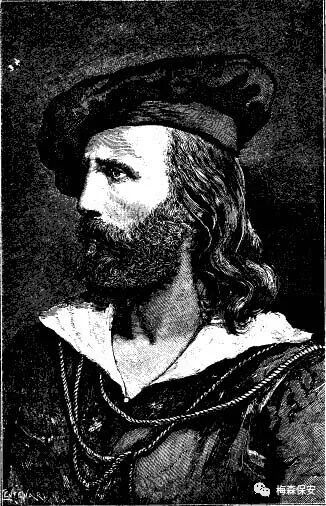
(Garibaldi as a young man)
In 1843, after the long crossing of the Atlantic, I found Garibaldi not in Brazil but in Montevideo, Uruguay. Italian soldiers at his camp demanded to know who had come. I said that I had long admired Garibaldi's name and had traveled from Europe to follow him. They led me deep into the camp, and at last I saw those luminous eyes. I said, "I have been waiting a very long time for this moment." Garibaldi had a face dense with beard and solemn in bearing, yet there was nothing intimidating about him. He gave me a blood-red shirt like his own, as if it had been dyed beneath a butcher's knife, and said, "From now on, we are brothers." I bent down. "Allow me to follow you, wherever you go." He pulled me upright. "I am your brother, not your master."
Anita stood beside him.
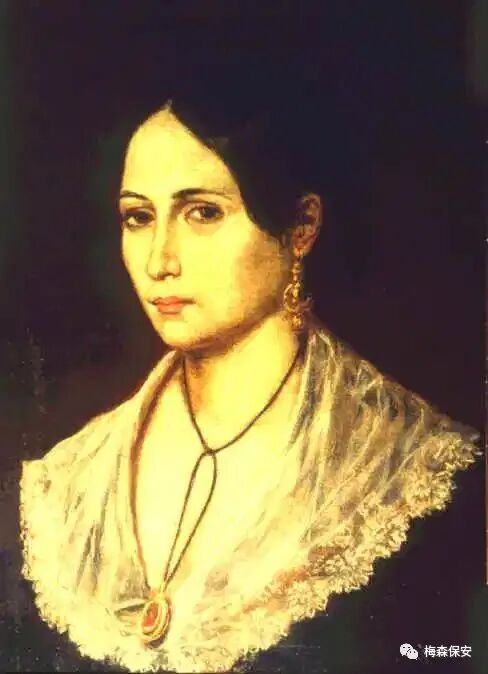
The young Anita had a face no one could forget. On my way there, I had already heard that Garibaldi had married a Brazilian wife whose radiance eclipsed even that of her heroic husband. Legend said that, the first time Garibaldi happened upon her by the sea, he was overwhelmed. She was eighteen, newly married to a man in town whom she did not love. Garibaldi found her and whispered, "You are destined to be mine." She merely smiled at the stranger. "I have a ship," he said. She went on smiling. "Someday I will have many ships." Still, she smiled politely and gave no answer. "Leave with me tonight." He held out his hand. This time, she took it.
Her weightless face still floats before my eyes. The smooth line of her jaw, the curve of her eyes—as if God had created her not through deep deliberation but in a sudden burst of inspiration. Some lives are like that. They flower mysteriously and early. When everyone else awakens from intoxication and hurries to uncover the secret of their blooming, they find that those lives have already withered at their fullest. Anita was such a life. Her mind and body knew only youth. When she died, she was younger even than I had been on arriving in South America. Later generations heard her legend and tried, through imagination, to assemble a figure of wild and ultimate beauty. Born in the Brazilian jungle, they guessed, she must have been like fire; desire like fire must have made her an eternal agate set inside a hero's legend. One cannot blame them. In the imagination, a mysterious woman is always colored with desire. But Anita was far more than a lover. And they were wrong from the beginning: Anita's beauty had nothing to do with South America. Her face was like frost. It was a day of snow, a church in St. Petersburg. She was a snowflake rising instead of falling.
"Dear Mitya," she said, noticing that my spirit had lingered too long upon her, "you have traveled too far. You need a full day of rest."
"I do not know how to fight, but I speak many languages. I can interpret," I replied, answering a question she had not asked.
"Go and rest. We may need you more for making gunpowder." She and Garibaldi exchanged a smile.
The great concern hanging over Garibaldi and Anita was that Argentine forces had surrounded Montevideo, the Uruguayan capital, and might sack it at any moment. Garibaldi had therefore formed a seven-hundred-man Italian Legion for its defense, while promising the Uruguayans that the Legion would protect them. But fortune had not favored him in recent years. Though he sailed the seas as a captain, he was a terrible merchant. First he tried selling Italian pasta in South America, but not even the Italian émigrés there liked his product, and sales were dismal. Then he accepted a large commission to transport nine hundred cattle to Uruguay. On the way, while crossing the Rio Negro, four hundred of them unfortunately drowned. By the time he returned to Uruguay, only he himself, by sheer force of will, remained alive. Even so, the incomparable force of his personality had won the trust of the local émigrés.
On the night I arrived, Garibaldi brought white wine from his native Nice out of the ship's hold, and everyone drank wildly until morning. Several days later, he led a flotilla into battle. He intended first to break the trade route between the Argentines and Paraguay, but the war did not go well. The Argentines sent a former Uruguayan commander who knew the terrain intimately. The Uruguayans, meanwhile, had begun to mistrust Garibaldi. They discovered that the Italian never obeyed the republic's command. His flotilla lay hidden in the river channels like crocodiles. Neither enemy nor ally knew where it was.
Meanwhile, in camp, Anita taught me how to make gunpowder.
She wore a man's linen shirt and tucked her hair behind her ears. She moved nimbly between the saltpeter and the workshop, grinding and refining with the care of a chemist. Astonished by her command of the process, I said, "Madam, before this I had heard only of your extraordinary horsemanship. I did not know you could make gunpowder."
"Call me Anita, Mitya," she corrected me. "There is nothing difficult about this. With gunpowder, if the ingredients are pure and the proportions right, nothing will go wrong. Riding is a much deeper art. The horse and the world around it are both changing. Everything depends on balance in motion."
"Forgive me if this offends you, but I think horsemanship may soon be made obsolete. Europeans have invented the steam train. It is like a long serpent made of iron; as long as it has coal, it never tires."
Anita stopped working, fascinated by the new invention I described. "It never tires? Then can it cross steep slopes, rivers, and jungle like a horse?"
I did not know the answer and could only speculate. "At present, it makes great demands of the terrain. But at the present speed of scientific development, people will soon overcome these problems. Some say it will fly into the sky within fifty years."
"Into the sky, like a bird?" she said. "Then I would gladly be among the first passengers. I want to see what it looks like above the clouds."
"Perhaps above the clouds is somewhere humans should not go."
"People may go anywhere, if they can. They do not need anyone's permission." She answered me excitedly, then quickly fell into thought. "Though if these flying iron trains truly appear, I worry that our descendants will become a pack of cowards."
"Why?"
"Because a person on horseback is brave. Courage means facing danger, not hiding. How can you be brave inside a ball of steel?" she said. "Very well, I have changed my mind. I will keep riding."
Over the next two years, the shape of the war shifted subtly. Garibaldi's hidden flotilla struck by surprise several times, disrupting the Argentine deployment through the river channels. Then Garibaldi seized his chance, moved onto land, joined the Legion's garrison, and launched a counteroffensive toward the northern city of Salto. Anita and I joined the expedition. In September, we took the city. Furious, the Argentines sent three thousand soldiers to recover Salto. We held it.
In February 1846, we went to San Antonio, three and a half kilometers outside the city, to meet five hundred cavalrymen sent by the republic. But word had leaked, and the Argentines surrounded us beyond the city. We withdrew into the ruins of a village in a hollow. A scout told us that two thousand men stood across from us. We had 286 left.
"What do we do?" the scout asked.
Garibaldi looked out through a crack in the fortifications. "Our luck is not especially good."
"Then what do we do?" The scout was growing frantic. He was the younger son of a salt merchant in the city.
"Quiet, lad," Garibaldi said, looking back. "We wait. If they attack, we shoot. The ground outside is too open. They cannot get close."
He was right. We fought in the ruins for two full days and repelled several Argentine attacks. But they seemed to have been ordered to destroy Garibaldi and the heart of his army at any cost. By the afternoon of the second day, wave after wave of Argentines was still rushing toward us. We were nearly out of food and ammunition. Stray bullets entered the bodies of more and more of our comrades. The little scout was carried over too. Blood welled from his neck. His mouth opened like a fish breathing on land. "He has something to tell you," a soldier said to Garibaldi.
The young scout could not wait. "Please tell my father... I have an important request. Very important... I have always..." Before he reached the thing itself, he could speak no more.
Garibaldi cradled his head. "You are very brave. Your father will be proud of you," he said, and remained until the boy's breath slowly weakened.
Our line grew thinner and thinner. By nightfall, scarcely one or two people remained at each post. Garibaldi was still waiting for his moment. "Do not hurry. It is almost here," he said. And sure enough, the Argentine attack stopped.
I had been carrying messages between positions and could finally catch my breath. By then, only Garibaldi, Anita, and I remained inside the room.
"You are shaking," Garibaldi said.
"Mitya, you need to wipe your sweat," Anita said.
"It is nothing." I wiped my forehead with a dirty handkerchief. It grew wet. I saw blood. I tried to wipe the blood away, but the cloth only grew redder.
"There are always moments when you feel death knocking at the door," Garibaldi said with a slight smile. "Then I tell myself: not yet."
"What if it is today?" I asked.
"What about today?"
"What if death truly comes knocking today? What do we do?"
"So much the better," he said. "We die for one another."
"Have you never thought about what is behind the door?"
"Behind the door? What are you talking about? There is nothing behind it."
"You mean"—I began to tremble again and questioned him urgently—"that when we close our eyes and stop breathing, it all ends? Our souls rot with our bodies, and nothing remains?"
"Anita, did we recruit a priest or a philosopher?" Garibaldi laughed. Then he turned to face me. "Dear Mitya, this one life is all we have."
Now Anita, who had been silent, rose. She sat beside me and folded my handkerchief. "You are too tense," she said. She motioned for Garibaldi to sit with us. The three of us leaned against the broken wall. Around us there was only the sound of wind passing. The sound of fire burning through grass. The sound of crows waking again and again. Above us, the starry night descended into the center of the ruins.
"It is beautiful too, isn't it?" Anita said. She came closer and wiped the dirt from the corner of my eye. My trembling slowly eased. "You need a kiss, Mitya." She pressed her lips to mine.
Like a forgotten poem inside a dream. Like the snow of home landing on my tongue.
She kissed me for a long time before opening her eyes. "This moment is what we have," she said. Her smiling gaze turned to Garibaldi.
Garibaldi understood. He turned my face toward his and began to kiss my lips as well. I sank into his blood-soaked beard. His kiss was longer, more ardent. Only when every sound around us had fallen silent and even the wind had slowed did he gradually release my face.
"Shh. It is time." He raised an index finger to the center of his lips.
Several minutes later, he would command an assault like a storm. We would tear through the Argentine ranks like a light boat. Confused or screaming, they would scatter in every direction. His name would travel like the opening of a legend, rippling through South America and across the European continent. But before that miraculous escape, as though divulging the solution to a riddle, he told us softly: "Shh. It is time—we make no sound. Quietly. Quietly. Then, like children, we forget everything and simply charge."