A False Confession by Dong M.
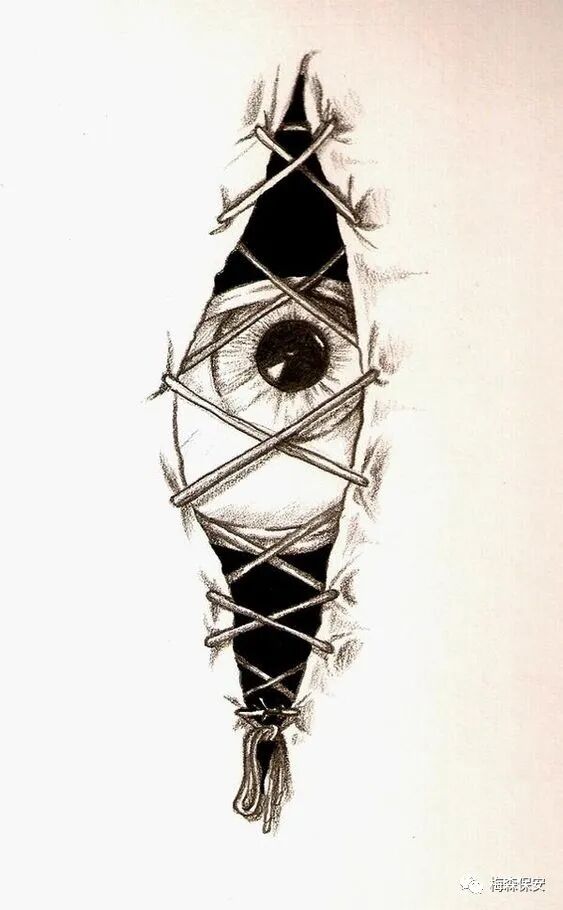
Before the coming prosecution—long, resolute, complete, every detail interlocking—and the defense—miserly, perfunctory, ambiguous in position, and containing no substantial disagreement with the prosecution—I went to considerable trouble to find him and bring you first-hand information. The trial had not yet begun. As you know, he was guarded behind layer upon layer. I had to use an ancient magic and steal into the night with the wind.
In any event, when I arrived, Dong M., the shadowed portion of the entire story, sat in darkness. Since his head was shaved in prison, his forehead had become especially bright and prominent. From certain angles, he resembled the Old Man of the South Pole holding the Peach of Immortality; from others, Obama. Of course, there is no need to invoke famous figures to describe his appearance. Before the impression of his simple-minded grin is forgotten, it is currently entering deep into the public mind.
Cartoons and reports surround him, sustaining a warming hallucination: if he continues imitating the village cadres' smile, someone will secretly protect him. To this day, he believes he received special protection because he did something right. So even now, imprisoned, he maintains the same simple grin he wore during interviews and keeps both hands between his legs. Only now, his hands are chained too. We begin to talk.
Our protagonist, the story's true center, the initiator of its action, inheritor of the principle that of the three forms of unfilial conduct the worst is to leave no heir, principal spokesman for the Xuzhou Virile Han Man Matchmaking Agency, star of the first installment in an N-part short-video epic, insists that he is innocent. Not guilty and, in his words, possibly “the most most wronged victim.”
He does admit that prison has finally given him an uninterrupted period of peace in which to recall the details concerning the chain of which he stands accused. This requires a process. It is like using a certain smell or gesture as a clue to remember a meal you ate, or a toilet you used, long ago. More than that, you must describe the pressure that meal exerted on the bowl, or the effect of that defecation upon the septic tank, regions into which neither your eyes nor your mind entered at the time. This was precisely how Dong M. felt.
But he succeeded. Through superhuman perseverance and the guidance of technical personnel, he remembered the day he put the chain on Children's Mother.
Children's Mother. A form of address Dong M. invented for enthusiastic interviewers. An imitation, but slightly modified. The children's mum is, after all, a generic expression. It indicates a sexual relationship in an indirect, Chinese fashion (I entered you and caused you to produce our crystallization), while commending the named person's duty and contribution to that crystallization. On this foundation, Dong M. altered the children's mum to Children's Mother, making the expression compatible with both singular and plural, and all genders. In the interview, Dong further explained that Children's Mother was “the number-one meritorious contributor in our family,” and that he would care for their eight children and her as though “caring for nine children.” What, he wondered, was wrong with this formulation? Why had it brought him trouble?
In his recollection, he and she had never possessed the concept of addressing each other. She did not call his name. He did not know hers. For more than twenty years, they kept each other company through expressions, gestures, and limited verbal instructions without any problem. This was because, Dong later reflected, almost no outsider had ever been present while they communicated. Since there was no possibility of confusion, there was no need for names.
Naturally, with guidance from technical personnel, Dong also mentioned that in the early years, before Children's Mother was of an age to be a mother, she had indeed screamed certain names. They were all different. Because none had the surname Dong, they left no trace in his memory. On rare occasions, she seized his hand and flung the names like curses. He slapped her (“lightly compared with other people”) to calm her down. Not only did she fail to appreciate his restraint, she seized his wrist with her other hand and repeated the names. Like livestock that did not know what was good for it. He could foresee that if her madness continued, her nails would break the skin of his wrist and the neighbors would laugh at him the following day. So he kicked her (“holding back more than anyone else would”). He kicked her once, twice, three times. Then threw her a steamed bun.
He could remember the day he chained her because he remembered Father. Father and his younger brother had helped him fasten the chain around her. Father and sons, three men rarely assembled, gathered in the hut. Father's hands and feet no longer worked well. The younger brother was disabled from birth. Still, they did their utmost to pin her down and give him time to attach the chain. When he looked back, he remembered seeing Father bounce up and down under the heavy thing beneath him while gazing at his son with earnest and profound significance.
Father and son had never exchanged unnecessary words. On the day Father dropped dead, he too had lain spread-eagled on the ground, cursing the neighbor who had stolen several inches of their land, cursing him to have a son born without an asshole, cursing him never to produce a son, hahahahah, and then his head fell sideways. He had no time to say how the house should be divided. No directions or instructions for Dong M.
Now, faced with prison bars, Dong recalled Father's eyes as they chained her and suddenly understood their intention. Father was cheering that moment. Cheering the passage of one bloodline through a woman's body, connecting, winding, flourishing, replicating. Cheering his son's instinctive inheritance of his will. In the darkness, for the first time, Dong M.'s simple grin contained genuine feeling.
As stated above, Dong M. insists that he is innocent, the most most wronged victim. He never studied law, but he has a simple theory: if he only did something everyone else was doing, he should not be the only person arrested. Everything he did, after all, arose from imitation. He was not the first to produce many children. He did not invent chaining women. Others had already practiced pulling the teeth of disobedient people. A man despised because he was unmarried at thirty-four, a man who would himself have long since been chained had he not possessed reproductive capacity—would he dare invent a method of his own? If he possessed that kind of creativity, he confessed, would he have spent his entire life without leaving Dongji Village?
Naturally, with some pride, he added that fathering eight children at his age was indeed a rare achievement. Human-wave tactics. Strength in numbers. Where there are people, there is hope. For him and Children's Mother, the family's number-one meritorious contributor, this was their sole opportunity to hold their heads high before outsiders and try their strength against them. The countryside is withering. They are growing.
Dong M. proceeded to elaborate the defense he had carefully refined in prison but ultimately could not present in court. If he were declared guilty, it would mean that most people in this country were guilty. Most of a country cannot possibly be committing crimes, or else prisons would be everywhere. Therefore, he was innocent.
He counted the charges for me. Abuse: which act precisely constituted abuse? Chaining her, or pulling her teeth? If the chain—he admitted that its visual effect was indeed rather shocking—then, given the premise of a woman going mad, should he have behaved like “the more vicious people” and broken her legs one blow at a time, rendering her completely immobile? Or should he have learned from “the kinder people” and merely locked her up for a while? You saw in the videos that she was sometimes allowed outside without the chain to get air. Better than anyone, including the woman herself, he understood that she needed fresh air every week.
As for pulling the teeth—he had now heard that she suffered from severe periodontal disease anyway—he was treating her illness while preventing her from injuring herself, outsiders, or the children. She was not the first toothless woman in the village. Many women lived far more miserably. Within his limited capabilities, he gave her food and clothing, helped her, and honored her as the family's number-one contributor. Why should his good intentions be treated as a crime?
When the subject turned to trafficking women, his simple grin became openly contemptuous. How many women were not purchased? he asked. The models were more or less the same. The only difference was whether the money went to a trafficker or the woman's parents. Sometimes traffickers claimed to be the parents. Sometimes the parents were crueler than traffickers. As buyers, how could they distinguish one from the other? But the money had already been paid—money saved over a lifetime or borrowed from relatives everywhere. If the woman changed her mind, could she simply spit it back out?
Of the internet users who mocked and insulted him, he continued, how many could swear that their conquest of women contained no deception or transaction, no intermediary earning a profit, no exchange of family resources? How many could claim that a woman attached herself to them of her own accord, as though following a pleasant perfume? “Nothing that good happens in Feng County,” he said.
He warmly invited anyone, man or woman, to experience even one day of his life, to eat their pig feed for one day. Your only possession, the wager saved across thirty or forty years, unfortunately fills her mind every day with escape. At that moment, you possess a chain, the kind used to tie a guard dog. Would you put it around her? You would. Because the whole village, the whole city, chains women's necks. If you did not, people would look down upon you. Men would look down upon you. Women would too. Would you become a useless coward?
Finally, arriving at the emotional part, he opened his heart. He had never expected his life to be overturned because of this woman. He thought of the faces of his seven sons: Hong Kong, Aerospace, Gold Mountain, Silver Mountain, Bank, State Treasury, International. He could enumerate every one like a family treasure, and now realized he might never see them again. When they grew up, they would not recognize their father. Thinking repeatedly of this scene, grief rose inside him.
As for that special woman (more special than the previous one, he said with some irony, more special than the whole village), he also tried to remember her face. He discovered that he could not accurately describe her appearance. Before her, he realized, he had always been shy, afraid to look directly. Thus her face became a luminous mystery. He began reexamining his complicated feelings toward her. Only one day, while routinely watching the television news in prison, did he understand what the feeling was.
The Winter Olympics were on television. Women's figure skating. A foreign girl in a purple dress turned across the ice. The surface made a sound like a fingernail traveling over white paper. After landing, she gently pressed both hands downward as though calming the air, then continued gliding. The hem followed her speed. White everywhere, without inhibition. The scene entranced him. He took small steps closer to the television.
Then he remembered another scene buried by memory, one involving the woman. He could not recall when it happened, but the scene gradually became clear. It was one of the days when he routinely removed her chain for the week. She stood beneath the sunlight taking in fresh air. He watched her through a crack in the door. Then some neighbor began playing music through a loudspeaker.
At first, only her head twitched as if in a patellar reflex. Then her fingers began to move. Then she spread her hands, and her hips began moving to the beat. She closed her eyes. Behind the crack in the door, he watched with his entire concentration. He was spellbound.
Now he understood that he actually longed for beauty, longed for beautiful things. He did not want only food, clothing, and sons. So he flung the door backward, rushed out, wrapped his arms around her from behind, and practically dragged her into the hut. Rage and jealousy filled him. He wanted to join the ranks of beauty. He removed his padded trousers and tore away what remained of her clothes.
Strangely, the final scene of the memory unfolded from her perspective. She opened her eyes. A filthy, ugly shadow expanded and approached, while the light from the doorway underwent a violent eclipse and swiftly disappeared.
(The above is entirely fictional. Every fact is based on invention and embellishment.)