Addiction
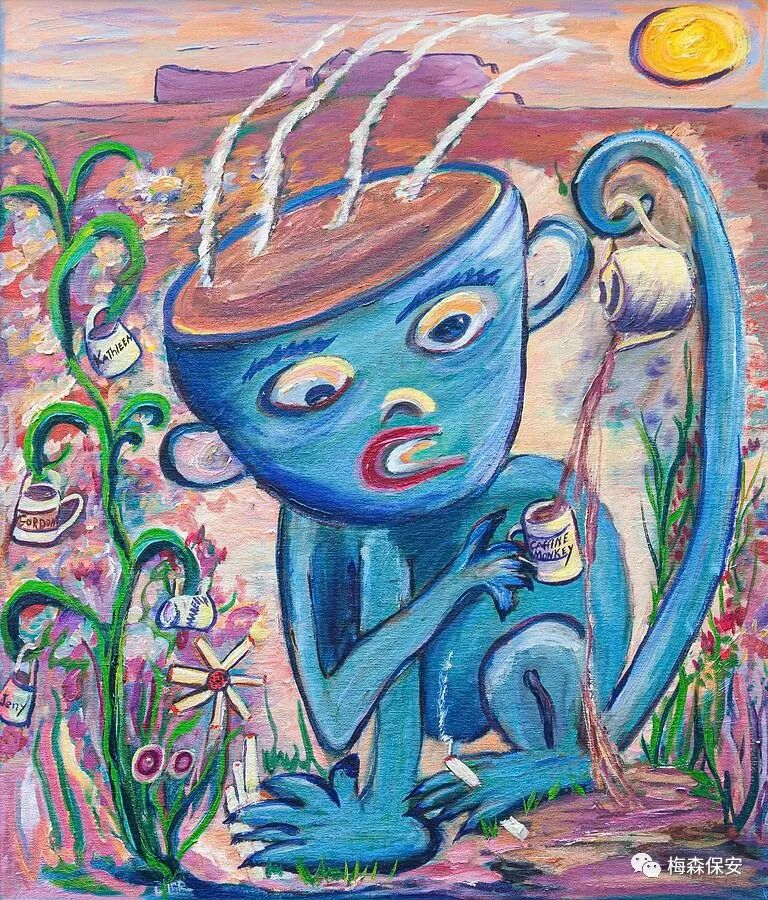
All right. He has broken his abstinence again. One might also say he has regained the right to a normal life. When he leaves the little booth, there is an unmistakable lightness in his step. He skips home. The attitude towards life he displays along the way inspires envy in many young people. Once home, his vitality makes his adolescent daughter tremble with the suspicion that he has fallen in love.
Before this, the desire enticed him. Made it impossible to sit still. Whatever he did, whatever he thought about, it returned him to the same choice. Each time he refused it, it swept back with greater force. He went to the sink and splashed water on his face. He thought about women who filled him with fantasies. He tried to use a stronger, filthier desire to destroy the one tormenting him like a prolonged toothache. Or he could breathe deeply. Simply submit as dully as before, undergo each event and float hollowly through it. Go to work. Leave work. Go downstairs. Turn the corner. Go home.
But as he turned the corner, he saw the booth, and every accumulated effort collapsed.
Many people had already gathered in front of it. As he hesitantly closed in, he thought that perhaps someone in this long queue was like him: here yesterday, here the day before, perhaps already here once this morning. Perhaps his behaviour did not count as abnormal at all. They were merely too cautious, all pretending indifference, pretending this was an interlude that occurred once every three days rather than at every moment. That was why they had failed to realise they were the majority.
As the queue edged slowly forward, he repeatedly rubbed the top of his mask, hoping his large hand might cover the upper half of his face as well. Then the people sealed even more tightly inside the booth would not recognise him when they looked up, would have no way of knowing he had already come for two PCR tests today. But if people like him made up the overwhelming majority, why should he feel ashamed?
This was not an addiction. As the queue crept towards the testing booth at a tortoise's pace, he reached this firm conclusion. Drugs, gambling, sex—those were addictions. PCR testing, beneficial to physical and mental health and to the disease-control authorities' big-data tracing, was not. Did anyone call studying or exercise an addiction?
Of course, it was not as though he had never tried to make the frequency of his tests conform to what people generally considered a normal rhythm. His record was thirty-seven hours. For thirty-seven whole hours he did not take a PCR test. During this protracted torment he never once closed his eyes. In the small hours, he even slipped into the bathroom and pushed a toothbrush down his throat in place of a swab.
Seeing himself in the mirror, he remembered a middle-school classmate who had vanished, a man in foreign trade. One day the classmate invited him to his factory, showed him mountains of leftover teddy-bear stock, discoursed on his commercial empire, and said nothing but victory could attract him anymore. Then the classmate abruptly asked if he had ever smoked that.
Smoked what? he asked.
The one a level above marijuana, the classmate said.
The classmate said he had tried it only once. He would never do it again. His self-control, he said, was powerful beyond imagination; his entire clan seemed to lack the gene that made people susceptible to addiction. In their long chains of DNA, the addictive part alone had mutated. He had therefore tried it once, on the basis of solid scientific inference and an exceedingly careful experimental procedure.
He never heard news of the classmate again. But in the mirror, throughout the night as he waited for the testing booth to open at half past eight, he remembered that indistinct face.
His PCR “habit”—he now used this word instead—had not formed overnight. When he began acquiring the habit, the booth had not yet been invented. They queued in a car park, winding through several serpentine turns. At the end, one person scanned identity cards while another thrust swabs down throats. In the beginning, he too was merely an enthusiast, pleased to see himself consistently classified among the healthy, deriving no pleasure from the act itself.
His defences fell little by little. Next, he began to feel thirsty in the queue, to feel an itch at the mouth of his throat. Later still, he felt there had always been an opening in his throat, waiting to be slighted, to be invaded. (Had it evolved into a passage precisely for this moment?) He could not bear the sight of a booth with no hand reaching out through its hole.
The moment he breaks his abstinence is supreme. It is as though all the preceding shame and resistance existed to consummate this moment. He closes his eyes and opens his mouth. An instant before the swab enters, he leans forward, making it penetrate more deeply into his mouth than it does into anyone else's. Even the masked person inside the booth is astonished.
Once he leaves, everything resets to zero. His Health Kit already contains the result of the test he took that morning: negative, zero days. The thought that when he wakes tomorrow it will still say negative, zero days, sends him into irrepressible delight.