Historiography in the 22nd Century
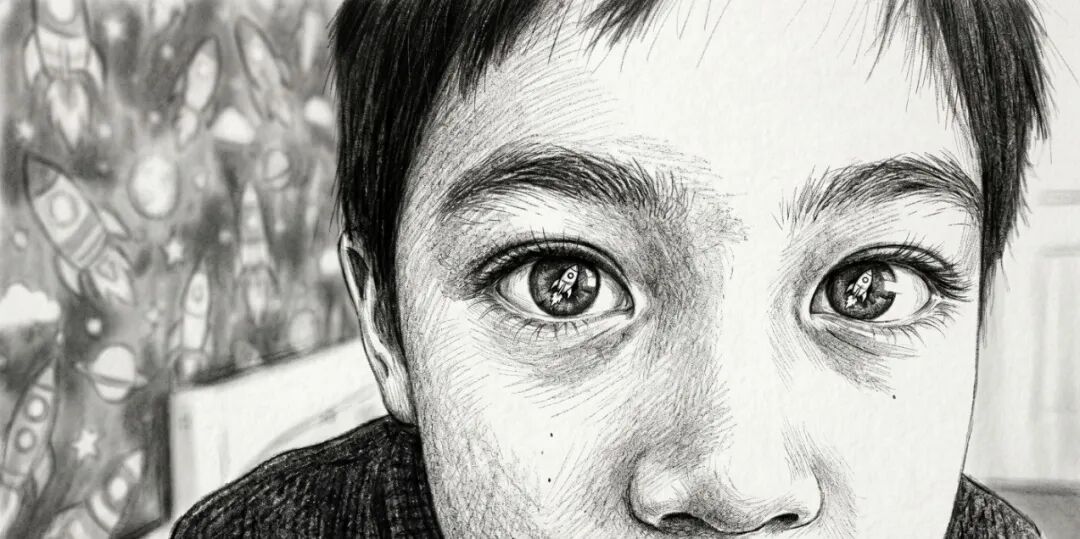
By the early 22nd century, history had become a luxury form of knowledge. That is to say, people still grudgingly acknowledged its aesthetic value, but no longer believed it had any importance—rather like classics in the 21st century. A great deal of knowledge had already died out. Like the animals that vanished across those centuries. Survival was truth. Who still compared history to an undying animal?
In its place stood archival science. Humanity's great inventions in data over the previous century—including surveillance, sensors, and storage—had made archival science the preeminent discipline of the age. By the 22nd century, cameras, satellite remote sensing, and brain-computer interfaces saturated the spaces of human life. The data showed that, for every person born in this century, every physical and mental activity from birth to death would be recorded. How to classify those data, how to establish correlations within a sea of data points: these had become matters of the utmost importance. This was the work of archival science.
If history tried to answer why, archival science answered how. By the 22nd century, people had decided that asking why was a false proposition. No one could know why, because no absolute thing led to another. But people could answer how—how did we come to be this way? That could be explained. One heap of data correlated with another.
Our historian was born into an unfortunate age for his profession. He was past fifty, graying at the temples, with a pronounced bend in his back and scarcely any color in his lips: the physique of a man who had spent years collapsed in a soft office chair and treated masturbation as his only exercise. His office had been fitted into a corner of the archival science department, the only corner the department reserved for qualitative research. Fortunately, his back was to the wall. Sometimes, after finishing his masturbation and flicking his hand dry, our historian consoled himself that at least he had landed a faculty post.
The monitors showed that our historian often paced inside an empty classroom. At such times, the listlessness of his ordinary lectures disappeared and he addressed the vacant seats at full volume. What is history? What drives it? he asked. We soon discovered that, even in the early 22nd century, history was still marching in place around this question. The historian went on, loudly delivering his verdict. History is the individual, and the individual is childhood!
We laughed.
Our historian studied the period before the Great Divergence. The Divergence was generational. It appeared in the second half of the 21st century, after the protracted world war finally came to an end. Its defining moment was the United Nations' transfer of all deliberative power over world politics to artificial intelligence. From that point on, the number of monitors, sensors, and brain-computer interfaces around the world grew exponentially. On the one hand, artificial intelligence needed more interfaces with physical reality. On the other, this devastating world war had demonstrated that human beings were untrustworthy, greedy, impulsive, and in need of protection.
For everyone born after the Great Divergence, physical and mental activity was recorded and archived in detail. An archive was a self-fulfilling prophecy: the more detailed it became, the more accurately it could predict a person's future. Archivists attributed every unforeseen macro-event before the Great Divergence to incomplete archives. If we knew all the details, then we would know the event into which all those details converged, and that event could be brought about or prevented.
Our historian was born late in the war, before the Great Divergence. From his adolescence onward, nearly every movement he made was recorded in full. The files show an unpopular child, slightly ugly, extremely thin, and vaguely sordid in appearance. Once, he looked at pornography in class and some meddlesome classmates pushed him to the floor. He rolled around while low-volume moans continued to issue from his tablet. He nearly lost all faith in people then.
Fortunately, he met Tolstoy. From adolescence onward, he read War and Peace fanatically. The book seemed to him an aperture onto truth, a place through which every truth in the world could be felt. He imagined himself as Pierre. No one expected him to become a historian.
He studied the beginning of the world war.
In the middle of the 21st century, a politician named Don used nuclear weapons in the Middle East. Traditional game theory collapsed, and the world war began.
This, of course, is a brief summary. The archives had long since established that the nuclear weapon was not a fuse but the terminus of a chain of actions. For decades beforehand, Country A and Country B had been locked in conflict there. Don's predecessor, Donald, had bluffed repeatedly in the same arena. Don delivered an ultimatum to the Elder of Country B. The Elder refused and destroyed Country A's aircraft carrier. Don launched the nuclear weapon. The archives show that Don did not at first comprehend how vast, how absolute, the weapon's destruction would be. Thus began the world war.
Throughout War and Peace, Tolstoy repeatedly insisted on his theory of history: the wills and actions of innumerable ordinary individuals formed the differentials of history; together they integrated into history's great current, cold, inevitable, and irresistible. No individual, therefore, could change history.
Our historian, this devoted Tolstoy fanatic, rejected his idol's theory of history entirely. In his view, Tolstoy's idea utterly betrayed War and Peace. He even tore out every page on which his idol wrote philosophy of history—and so he tore out many—or covered the passages with dense black lines, stabbing them with his pen until the pages split and crumpled. He believed it was precisely the free will of Pierre, Andrei, Natasha, even the peasant Platon and the coachmen in Tolstoy's story that unsettled determinism, unsettled necessity, and did so in absolute, all-or-nothing fashion. He would not permit Tolstoy to betray them.
So although his stated subject was the beginning of the world war, what he really studied was Don.
Don was in his prime when the world war broke out. He had only just passed fifty. His golden hair was meticulously tended, his back held perfectly straight. All of Country A was captivated by his story. He was born with nothing in Arkansas, became a football star in high school, performed abysmally at university, yet emerged as a punk for the new age. He opposed DEI and nonbinary gender, and called for a return to Country A's traditional family. Energetic and eloquent, he declared that debate would reawaken the spiritual muscles of Country A. Gradually, he became a social-media celebrity. Then he joined the military and fought in the first American-Iranian War of the Donald era. Afterward, he built a business empire from nothing, pivoted into politics, embraced a far-right nationalist platform, and was successfully elected president.
Decades later, declassified records from brain-computer interfaces and monitors stripped Don's public face bare. He was a calculating man, skilled at managing his image, reading a room, and courting sympathy. He began the war as a defensive response. Why else would he do something against his own interests? The war developed unexpectedly. He pressed the nuclear button, certain that Country B could not resist. Instead, he was drawn into a world war and swiftly died inside it. Video records show him raising his head in the final bombardment and covering his ears.
Archivists declared that this sequence of "decision drift" resulted from delays in archival processing and inadequate statistical techniques. If only the chain of decision-making had been clear, the assignment of responsibility clear, and the transmission of information complete, this human catastrophe could have been avoided entirely. The archivists went on to explain that madness was merely another variation of reason—an indistinct reason, a reason not yet fully covered by data points. The evidence? After the Great Divergence, madness no longer existed.
Our historian had always doubted this conclusion. Naturally, he lived on funding from the archival science department and could not say too much. But as he sat in the corner spinning in his office chair, he suspected that Don had pressed the button on purpose.
According to the records, the Elder of Country B was himself an old and cunning man. He was already very old. His face bore traces of hyaluronic acid everywhere, and his mobility improved or deteriorated according to the timing of his stem-cell injections. His favorite photograph showed him astride a ferocious bear—the bear performing the condition of the enslaved under enormous duress—while his abdominal muscles flickered into view, as they did nowhere but in photographs. Yet in the final stage of his life, he destroyed Don's aircraft carrier, then died in the retaliatory bombardment that swept over him.
Brain-computer interface records released years later showed that the Elder had not wanted to destroy the carrier. He had only intended a show of deterrence. But something went wrong as the order passed down the chain, and a shell was fired. It happened to strike the carrier. History is that absurd. Wouldn't you say?
Our historian did not believe this account. At a history conference, he made an outrageous public declaration: the Elder had done it intentionally. He had drawn infinitely close to death and wanted, one last time, to feel the pleasure of commanding the world as he had in his youth. The attendees laughed. No one believed him. That was not what the archives showed. Unless he could prove the brain-computer interface records false—unless he could prove that a man, having once entertained one thought, could pour every thought and experience he possessed into its opposite. Was that possible?
The annual history conference was sponsored by SanDisk. Its theme was "Remember Everything." It was also one of the few chances the last historians from around the world had to enjoy several days at a seaside resort. One colleague challenged our historian without mercy: even if your hypothesis holds, is this a question for historical research? Is what you are doing history, psychology, or psychoanalysis? What is history? What drives it?
Our historian sprang to his feet. With his back to the sea, he shouted: History is the individual, and the individual is childhood!
At night, our historian opened his battered copy of War and Peace, wrinkled and missing many pages. He read of the young Natasha after she was caught in her affair:
She thought that she was not as good as she had once believed, but wicked—the wickedest person in the world. The thought made her feel lighter. But that alone was not enough. She knew it, and asked herself: "What comes after?" Nothing came after.
He closed the book and summoned a Natasha in his mind. He thought that not only had such a figure vanished from the world, but so had such a literature. Everyone in that literature breathed and grew naturally. Their actions and dialogue did not submit to a theme, yet created a person. Archival science was literature's opposite: amid a crushing profusion of detail, memory and personhood became unimportant.
The next morning, he found a SanDisk solid-state drive outside the door of his room.
This type of solid-state drive belonged to the technology of the previous century. After returning to his university, it took him immense effort to decrypt it in the archive room.
The evidence he recovered wholly overturned his earlier conjecture, yet left him beside himself with excitement. Now he had to restrain himself. He did not know why this evidence had come to him, nor what conspiracy he might be drawn into. Then he calmed himself and took a deep breath. Did anyone still care about history? There was no one left, anyway.
The chain of evidence rested on a blockchain technology that had since been abandoned. Incidentally, this technology lost its market immediately after the Great Divergence: only what was centralized, powerful, and stable was now considered trustworthy, and the new world had been forged by power of precisely that centralized kind. Yet for some unknown reason, this evidence had survived. It was hidden deeply, but in the end it was a string of code.
The code led to a series of encrypted documents showing that, many years before the war began, Don and the Elder of Country B had established a private and secret channel of communication. Don knew early on that the Elder had little time left. And the Elder was terrified, terrified above all of death. To escape death, he would pay any price. Don offered a supremely attractive bargain: immortality.
More precisely, Don created a contract without an expiration date. It would automatically draw on underground resources to power the Elder's life-support pod forever. The pod stood in an absolutely secure location. But there were two conditions. First, the Elder had to disappear completely. Naturally, his archives would be altered to preserve his reputation as the "bear rider." Second, Don needed the Elder to destroy Don's aircraft carrier in the Middle East.
In the files, whoever supplied the solid-state drive instructed our historian to keep the discovery secret. The historian knew neither why secrecy was required nor who had supplied the drive. But he discovered—or rather, the supplier needed him to discover—that the life-support pod was still drawing power. The Elder had truly achieved immortality.
Many years later, our historian found the life-support pod in a forest. Countless tiny underground pipes, tangled together like roots, led into it. He woke the Elder. The Elder believed he was still inside an endless sequence of dreams. Only when he found it difficult to move did he realize he was awake. He cursed Don, called him a liar, said this was nothing like the immortality they had agreed upon. Where was Don? He must have arranged a superior life-support pod for himself.
He was killed in the war.
Impossible. He knew the war was coming. Cough. He was the one who started it.
He was killed in the war.
He fooled you. However much they fought, it had nothing to do with us. Cough, cough.
He was blown into several pieces.
You are too naive. Where am I? When is this? Who am I?
Over those years, our historian returned again and again to Don's archives. By now, he was almost certain that Don had painstakingly fabricated every archive of his thoughts before his death, with the fabrication precise through his final day. The historian believed Don had planned the bombing that killed him.
Again and again, like a stalker, the historian watched every piece of video that Don had been unable to tamper with. Don waving to voters from the traditional families of Country A. Don holding two children, a woman with the same golden hair pressed against him, kissing him as the shutters flashed. The declaration of war he had memorized. As a young man, he had once debated a young woman who had undergone an abortion. Invoking God and speaking at great speed, he argued her into tears. As a boy on the football field, he clutched a ball tight. Many people piled on top of him, but he pinned the ball to his chest and roared. At last, the historian found one detail that would connect all the rest. Don's sleeping posture had not changed from childhood to adulthood: he wrapped the blanket tightly around his body and curled into the shape of a chrysalis.
The historian saw an artificial man. Each time Don woke from his chrysalis, he threw himself into a performance. Within that performance, not only expressions and gestures but convictions themselves could be performative. The performance led to the most efficient possible life, and that life brought him supreme power, because the person people most wanted to elect was the person among them who performed best.
But the historian was certain that, at least once, Don had asked himself a question. He did not know when. Perhaps the question had been there from very early on. It was this: Do human beings possess will? What can will decide?
What is will? Scientists had already discovered that, given enough data points, they could fit a model of something resembling will. If a thing displayed every characteristic of will, did it not prove that will itself was merely an aggregate of neuronal activity? It could be predicted. It could be captured. It, too, could be a mechanism.
Our historian walked along a path through his college. Walking was no longer so pleasant as it had been in Kant's day. Nuclear heat winds had thrown the climate completely into chaos. Our historian was trying to enter Don's inner world, a world rendered mysterious beneath layer after layer of fabrication. Was today's world his conspiracy? Had he sacrificed the free will of everyone in order to prove the free will of one man? Or was this a joke played by history?
Our historian touched the back of his head, as if he really could feel the interface there.
We laughed.
The earliest known footage of Don dated to 2008, when he was an infant in a crib. The recording may have been made by his mother's boyfriend. His mother had given birth to him very young, and his biological father was unknown. He would later compare himself, deliberately or otherwise, to Christ in a series of speeches. In the short recording, his mother sat blankly before the television, her loose hair in a wild cloud around her head, her face out of view. On the television, Obama was delivering a campaign speech. Obama said: Yes we can! Yes we can.
The camera immediately swung toward the infant Don. He lay in the crib. The man filming said, Give us a smile! Don did not respond.
The camera moved closer, until his gaze came sharply into view. In the infant's pupils was a rising rocket. The rocket came from the wallpaper on the ceiling. Don lifted his head and covered his ears with both hands.
We watched, and then we laughed.